[0011] This invention relates to an improved hemostatic packing device for use in trauma care. The present invention is an impermeable barrier pack or wrap for a body
appendage. Other features of the pack include foldability and moldability to the
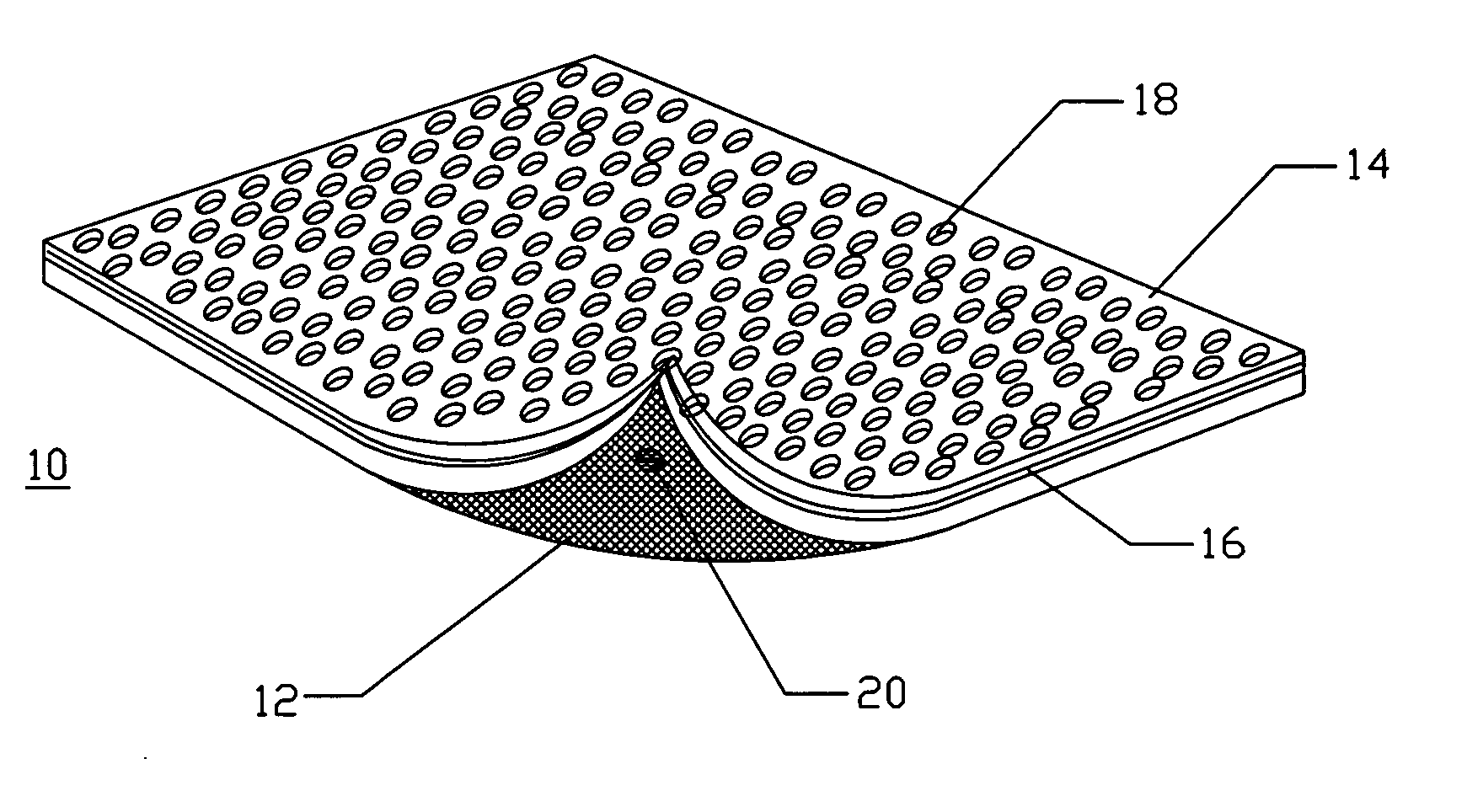
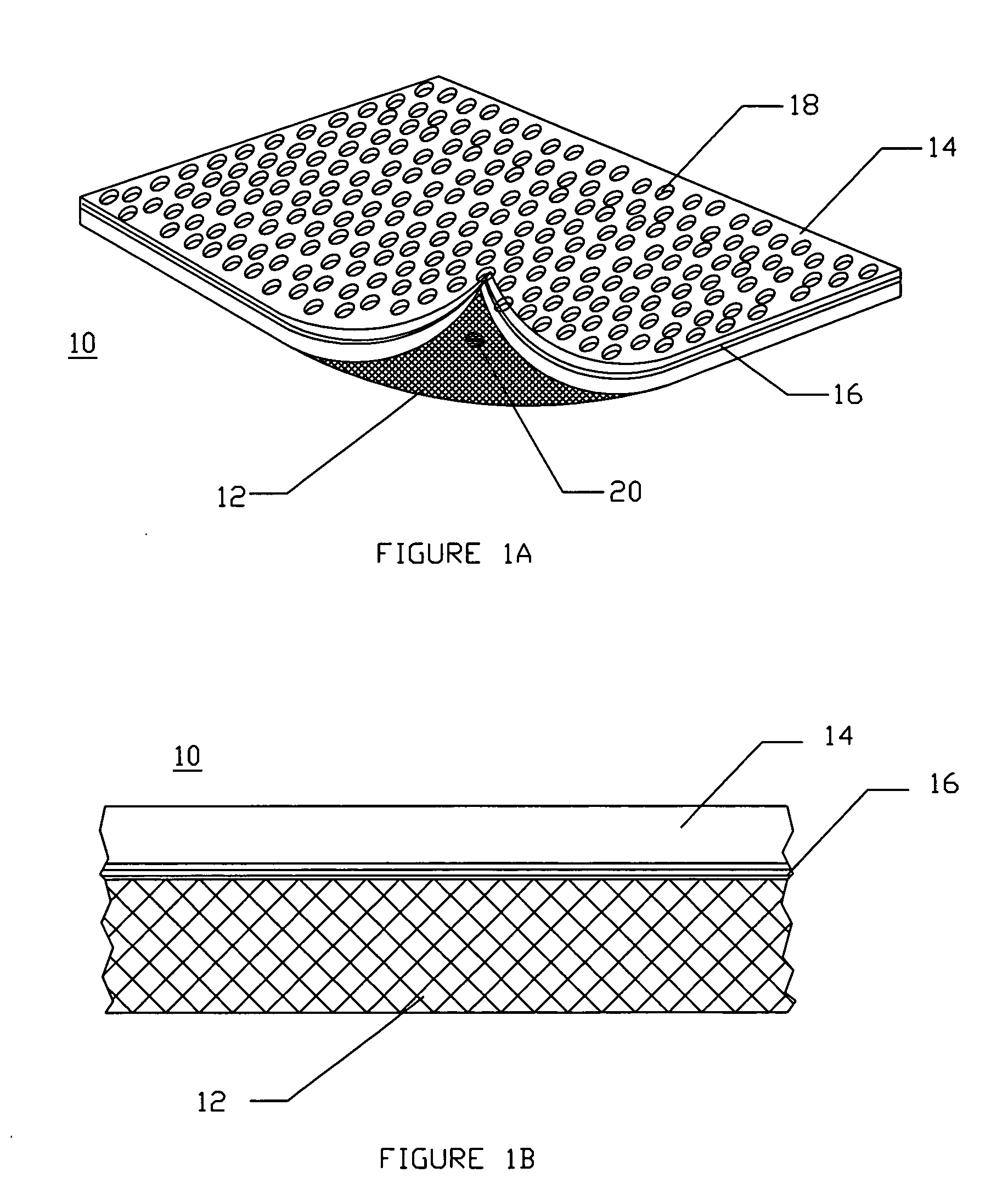
anatomical surface. The exterior surface of the pack is not intrinsically thrombogenic but is capable of serving as a carrier for thrombogenic substances. Said thrombogenic substances can be liquids or solids but are, preferably gels with internal cohesion and
spreadability. Certain regions of the exterior surface of the pack may optionally comprise thrombogenic properties. The pack may be made with a plurality of surfaces, each with distinct characteristics. An exemplary version of the pack has a
thin layer of
polyethylene or
polypropylene, which is impermeable to liquids, covering its entire outer surface. A key
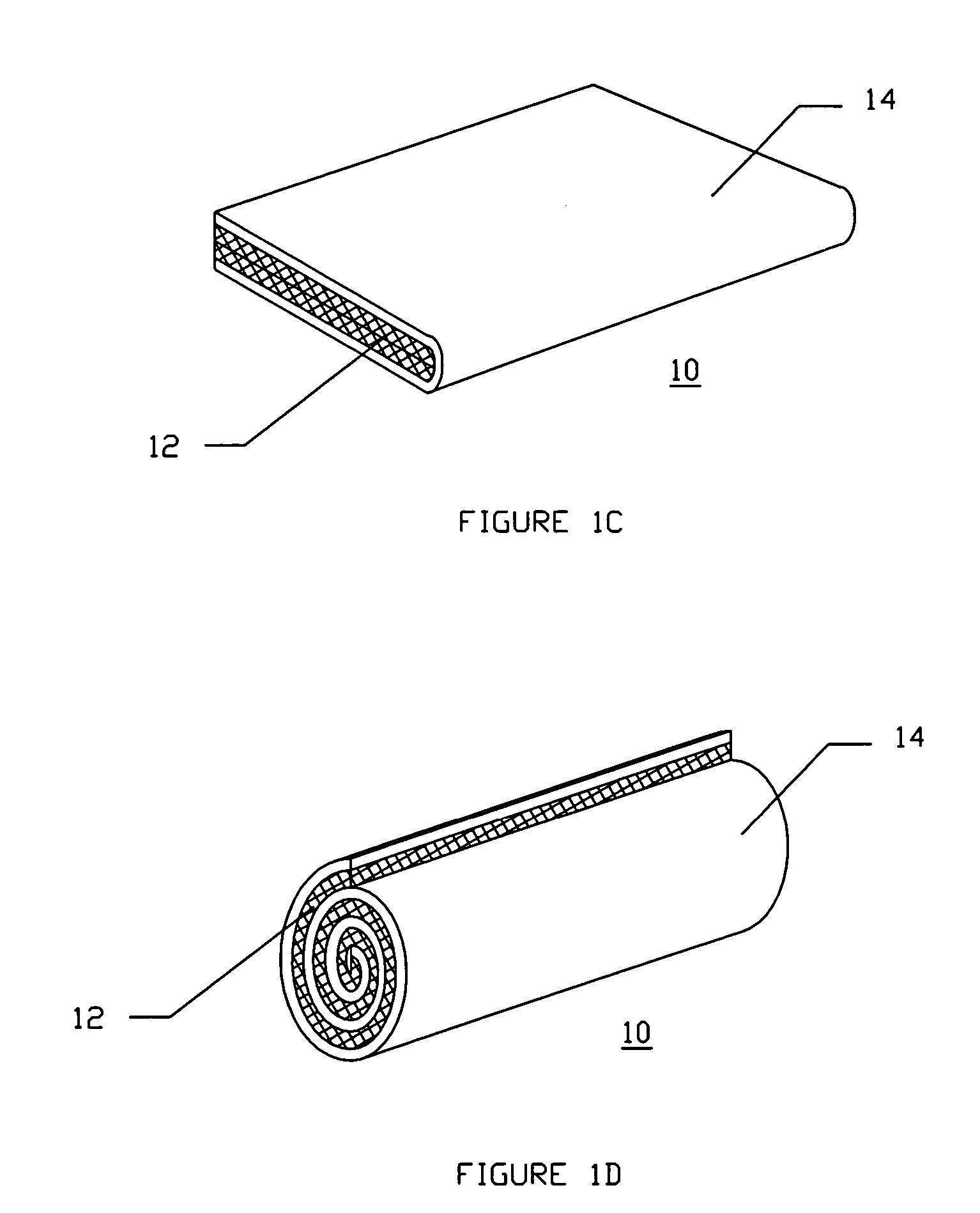
advantage of the present invention, in its wet or dry state, is moldability, flexibility and shapeability to the anatomical contacting surface, including the ability to pack wounds in
solid viscera. The pack is able to distribute pressure within the wound to generate pressure
tamponade. The pack is capable of generating pressure
tamponade without regions of sharp or
high stress such as would be generated by a rigid packing
system. This improvement over certain very hard packing devices allows for better fit to the
anatomy and the immediate formation of an impermeable barrier without the need to wait for blood coagulation to occur to form the hemostatic barrier. The hemostatic pack of the present invention is placed via
open surgery or through laparoscopic
instrumentation. The laparoscopic embodiment includes the capability of reversibly or irreversibly achieving a size and
mass change in the device once it is placed within the patient.
[0012] The present invention distinguishes over the cited prior art because it requires no thrombogenic coatings, although it is capable of
trapping and carrying such pro-thrombogenic coatings on its surface. The outer surface of the haemostatic packing
sponge serves as a carrier by incorporating indents or villi to physically hold the pharmacological, thrombogenic or antibacterial coatings. Since the surface is impermeable to liquids, the arrest of hemorrhage is immediate and does not require
thrombosis to occur. When the packing device of the present invention is removed from the patient, re-bleeding does not occur because there is not penetration of the wound tissues or clot into the interstices of the pack. An additional
advantage of the impermeable pack is a resistance to
bacteria and other pathogenic penetration.
[0013] In another embodiment of the invention, the pack, or wrap, comprises raised ridges or dams on its surface. These ridges or dams are comprised of soft conformable materials that form an edge seal to prevent the escape of blood from a wound. The pack, or wrap, optionally comprises additional regions or borders of enhanced
blood clotting or thrombogenesis to assist with the hemostatic properties of the device.
[0014] In yet another embodiment of the present invention, the hemostatic pack comprises adhesives, fasteners, or the like to allow the packs to adhere to each other, thus forming a syncytium, or contiguous barrier comprised of more than one component, to prevent blood from escaping from a wound.
[0015] In another embodiment of the invention, the hemostatic pack is a
bandage or
peripheral hemostasis system (PHS) that is worn over a vascular wound that communicates with the exterior environment of the patient through a break in the skin. Such wounds, particularly in the extremities of the patient such as the head, neck, arms, legs, hands, and feet, may include severe vascular damage that could result in bleeding to death, or near-exsanguination with its concomitant complications. In an embodiment, a
bandage or PHS is described that comprises one or more external dams that are held against the skin surrounding the wound by force sufficiently capable of sealing the wound from blood leakage. The region inside the dam is bounded by the dams at the perimeter, a liquid impermeable barrier on the exterior, and the skin and wound on the inside. Blood cannot escape from this region as long as the seal between the dam and the skin is intact. This device is most efficacious on patient extremities since the vasculature is typically surrounded by intramuscularly tissue, which cannot be tunneled by blood hemorrhage under systemic arterial pressure to cause blood
pooling. In the
thorax,
abdomen, or
pelvic region, internal body cavities can fill with pressurized blood so the hemostatic pack or wrap is less efficacious in these regions.
[0016] In yet another embodiment of the invention, the bandage or PHS comprises a strap to hold the dam and fluid or liquid impermeable region over the wound. The strap, in a preferred embodiment comprises some elasticity and further comprises a
fastener that is adjustable. The strap, in another embodiment, further comprises a standoff, which is a rigid or semi-rigid member that prevents the strap from circumferentially constricting the
appendage around which the strap is wrapped, yet which allows the strap to pull the dam and fluid impermeable region against the tissue surrounding the wound. The dams and liquid impermeable region therebetween are held against the skin by force in substantially one direction only, not a circumferential or radial force. In yet another embodiment, the bandage comprises a central packing device to exert pressure on the wound to facilitate tamponade. This central packing device may be a folded fabric pad, a sac or a bladder filled with liquid, gas, gel, foam,
powder, or the like. The central packing device may also simply comprise an externally communicating port that allows gas or liquid to be infused into the region between the dams, the liquid impermeable layer and the skin. The gas or liquid may be pressurized to exceed systemic arterial pressure and thus tamponade the wound. In yet another embodiment of the invention, the bandage comprises an inner dam and an outer dam. A vacuum drawn on the region between the inner dam and the outer dam, through a port that communicates through the fluid impermeable layer between the two dam regions, holds the bandage against the skin and prevents blood escape under systemic arterial pressure.


 Login to View More
  Login to View More