
Sinus tarsi implant
a technology of tarsi and implants, which is applied in the field of enhancing and correcting skeletal mechanics of medical devices, can solve the problems of direct or ultimate fracture, significant deleterious effects on the bony structure, and anatomical mal-alignment, and achieves accurate placement, less trauma, and increased mechanical retention
- Summary
- Abstract
- Description
- Claims
- Application Information
AI Technical Summary
Benefits of technology
Problems solved by technology
Method used
Image

Examples
Embodiment Construction
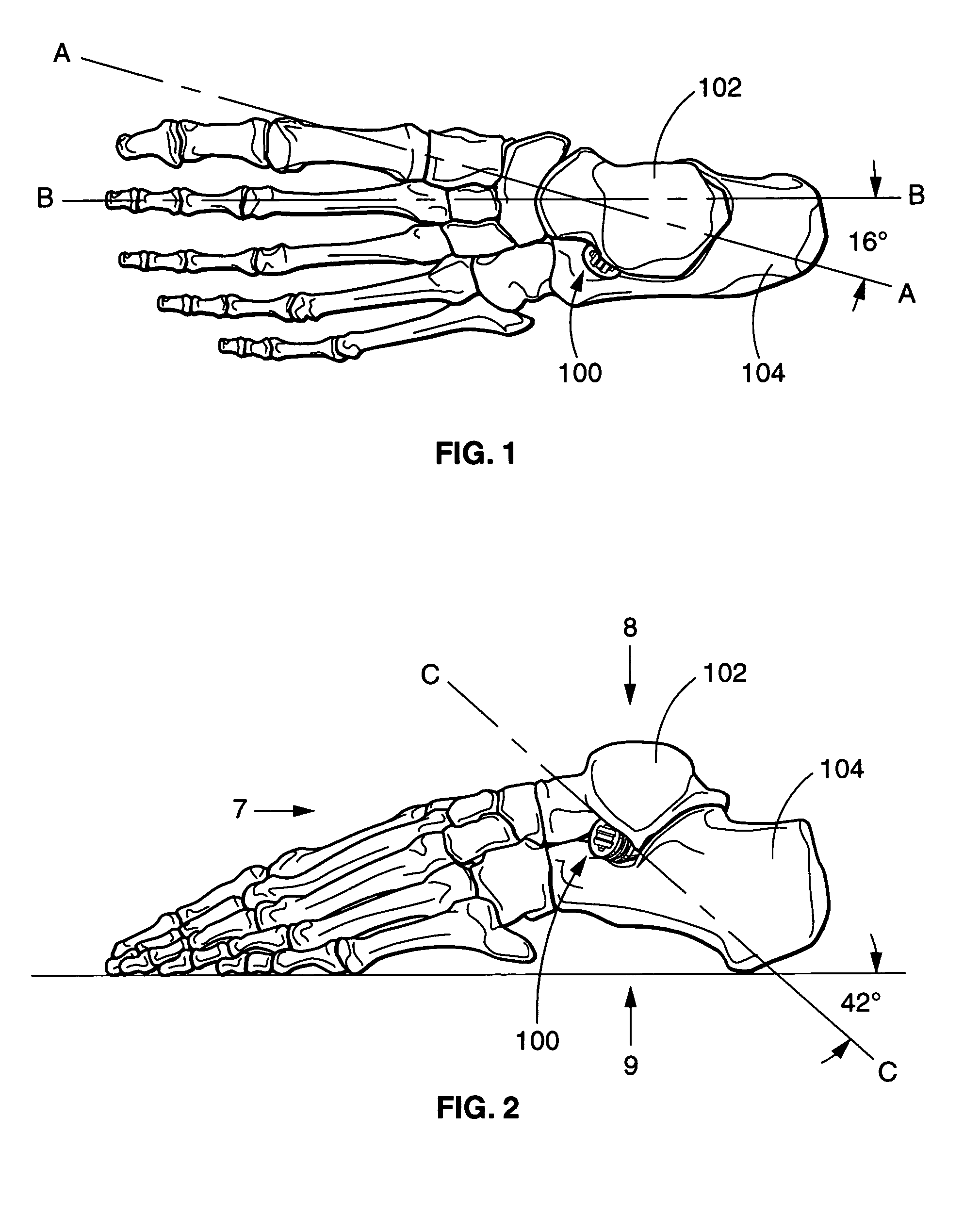
[0037] Referring now to the drawings wherein like numerals indicate the parts, FIG. 1 is a schematic representation of a patient's foot with a sinus tarsi implant 100 placed in accordance with a preferred embodiment of the invention. As described previously, the implant operates by arthroeresis (blocking of motion) of the patient's subtalar joint. The subtalar joint is the articulation between the talus 102 superiorly and the calcaneus 104 inferiorly. FIG. 1 also illustrates an axis A-A of subtalar joint motion which is approximately 16 degrees measured from a midline axis B-B of a human foot.
[0038]FIG. 2 depicts the sinus tarsi implant 100, talus 102 and calcaneus 104 in a side view. Also shown, axis C-C of subtalar joint motion is approximately 42 degrees measured with respect to a horizontal plane. FIG. 2 further discloses line-of-sight views “7,”“8,” and “9” for FIGS. 7-9 respectively.
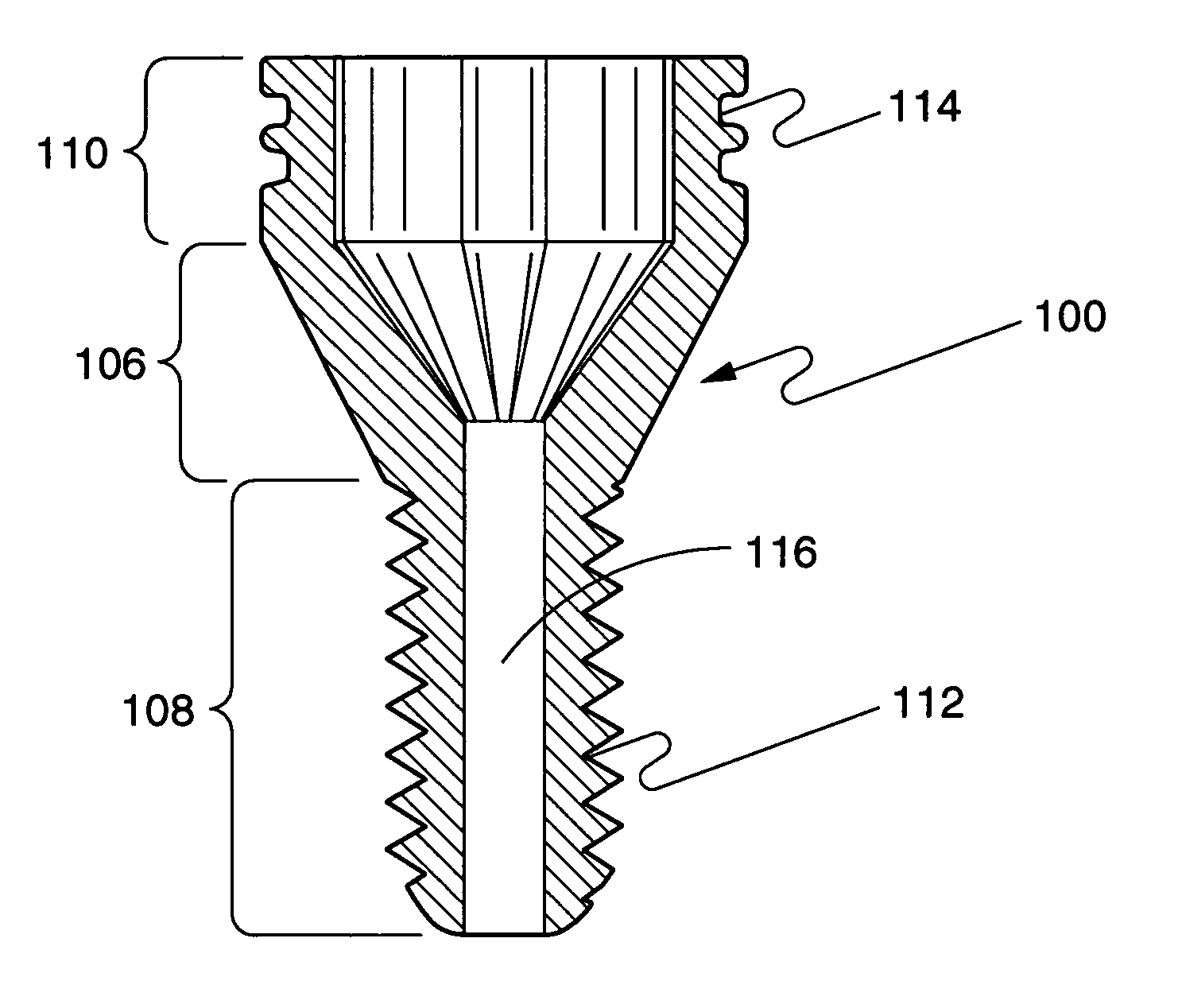
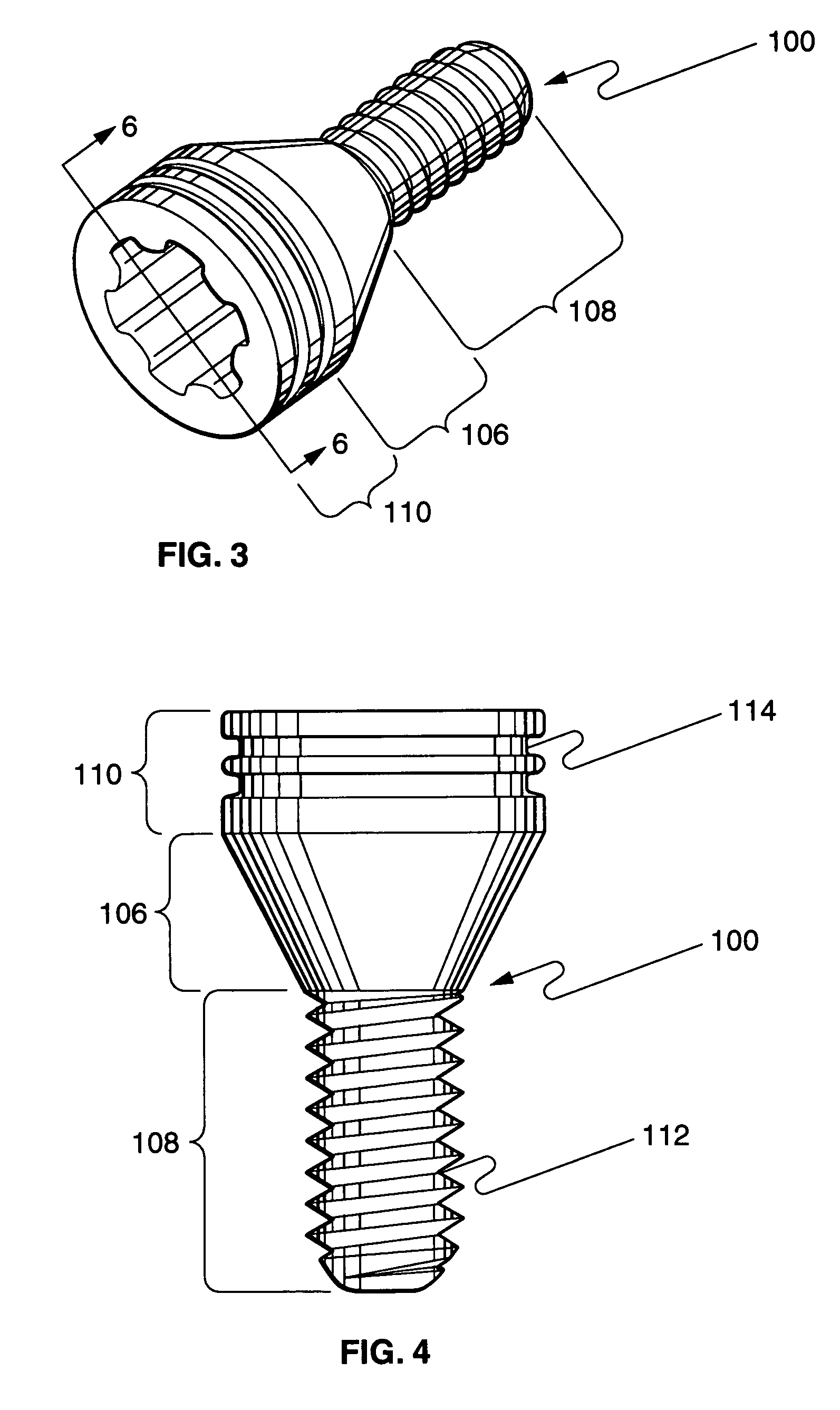
[0039]FIG. 3 illustrates a perspective view of an implant 100 comprising a first member 106 w...
PUM
 Login to View More
 Abstract
Description
Claims
Application Information
 Login to View More