
Object detection for an interactive human interface device
- Summary
- Abstract
- Description
- Claims
- Application Information
AI Technical Summary
Benefits of technology
Problems solved by technology
Method used
Image

Examples
Embodiment Construction
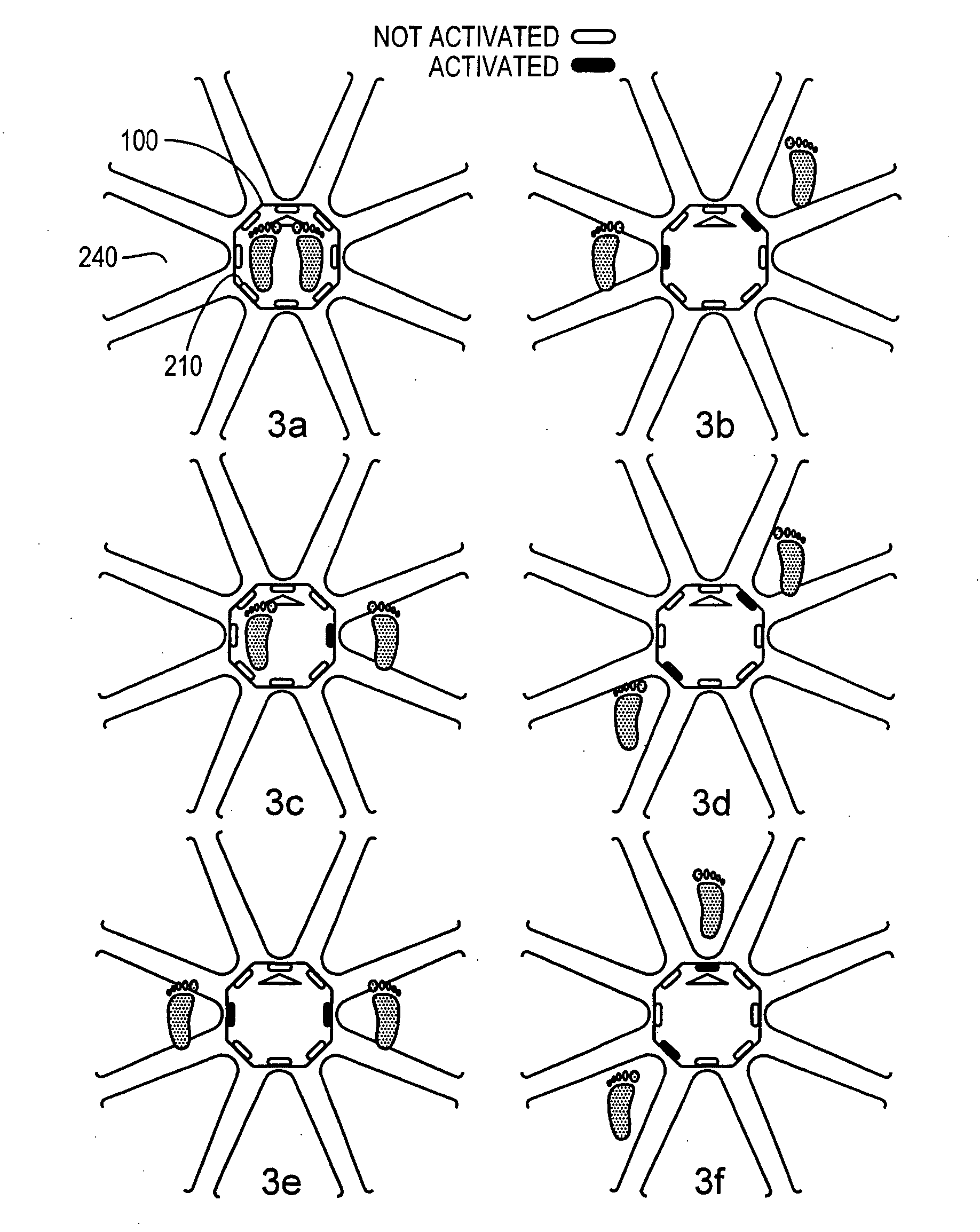
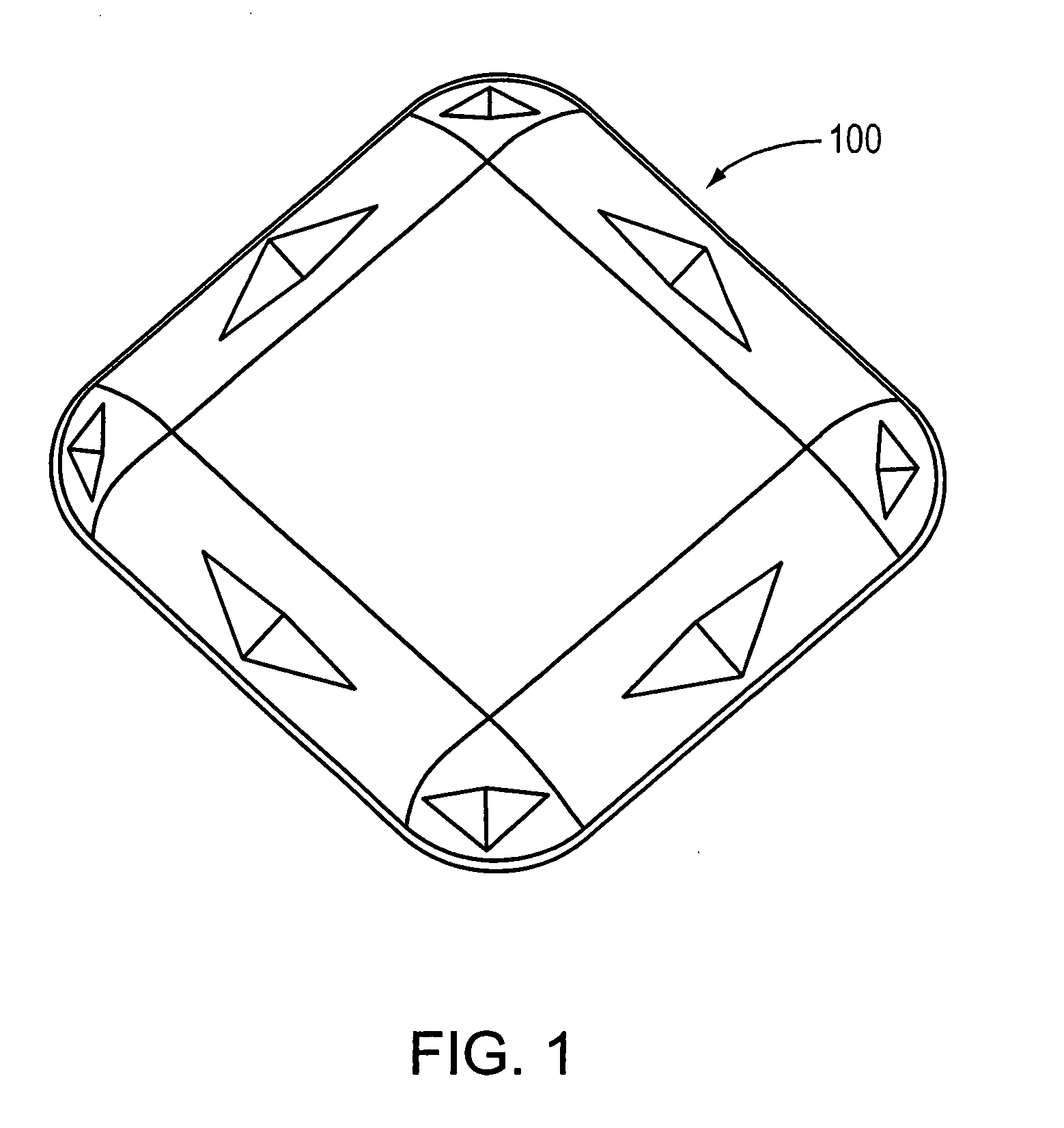
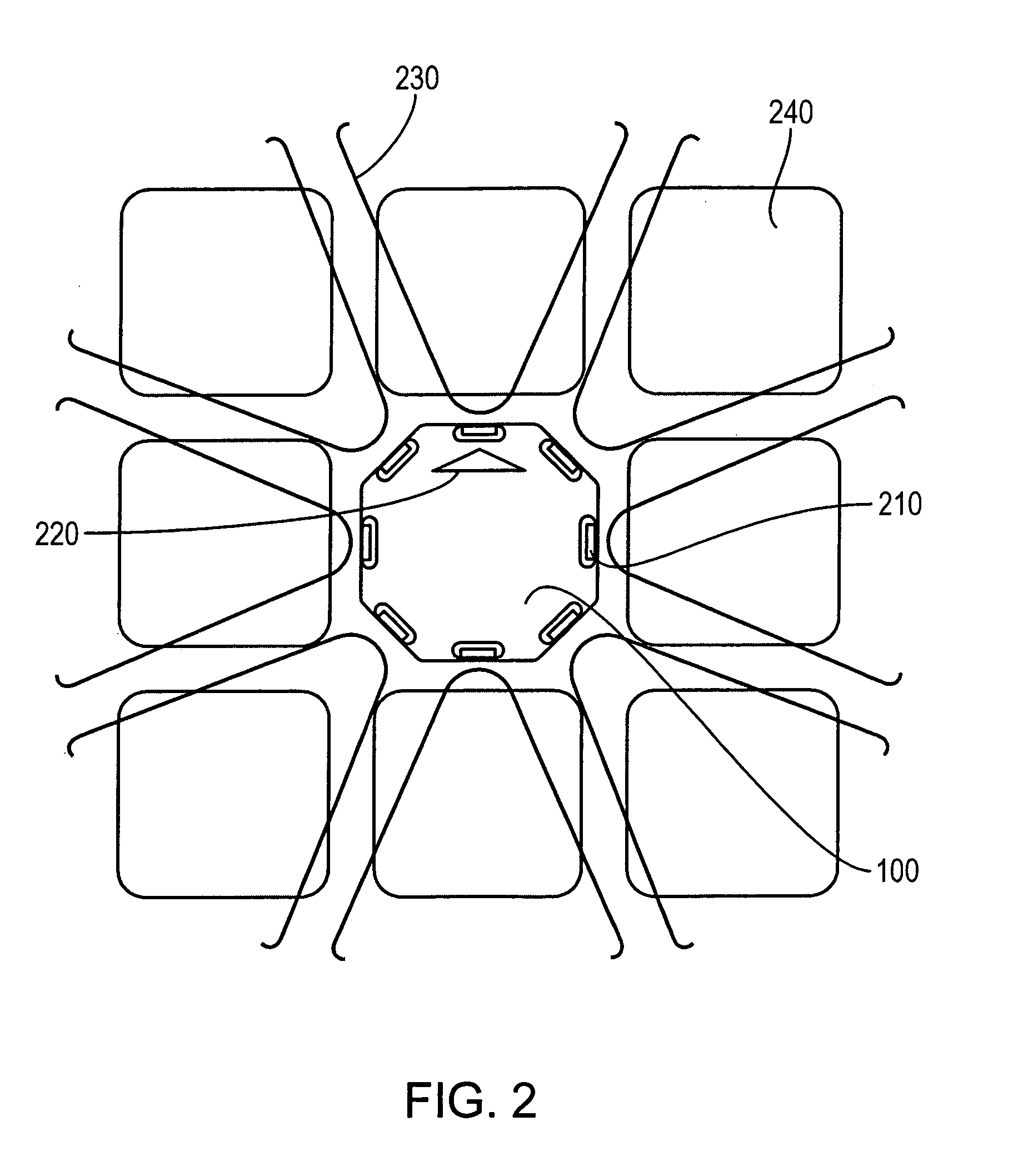
[0021]FIGS. 1 and 2 illustrate one embodiment 100 of the present invention, the operation of which is best understood from FIG. 2, which illustrates the general form-factor and optical characteristics thereof. The device 100 is surrounded by numerous sensing modules 210, each of which has an operational area 230 throughout which the sensing module 210 can detect the presence, removal and / or movement of an object within a zone 240 that roughly equates to the operational area 230. These zones 240 may then be attributed to a particular function or operation of a game—such as steps on a dance-pad wherein the zones 240 correspond to a segment of a dance floor. The device may also include an arrow 220 or some similar indication that a particular side represents the “front” of the unit for implementations in which the orientation of the device is germane to the operation of the game. Using the dance-pad game as an exemplary implementation for the device 100, proper orientation of the devic...
PUM
 Login to View More
 Abstract
Description
Claims
Application Information
 Login to View More