
Hydraulic synchronizing coupler for a free piston engine
a free piston engine and hydraulic synchronization coupler technology, applied in the direction of free piston engines, machines/engines, mechanical apparatus, etc., can solve the problems of high friction, limited efficiency, and inability to achieve effective homogeneous charge, facilitate effective homogeneous charge, and facilitate combustion ignition engine operation
- Summary
- Abstract
- Description
- Claims
- Application Information
AI Technical Summary
Benefits of technology
Problems solved by technology
Method used
Image

Examples
Embodiment Construction
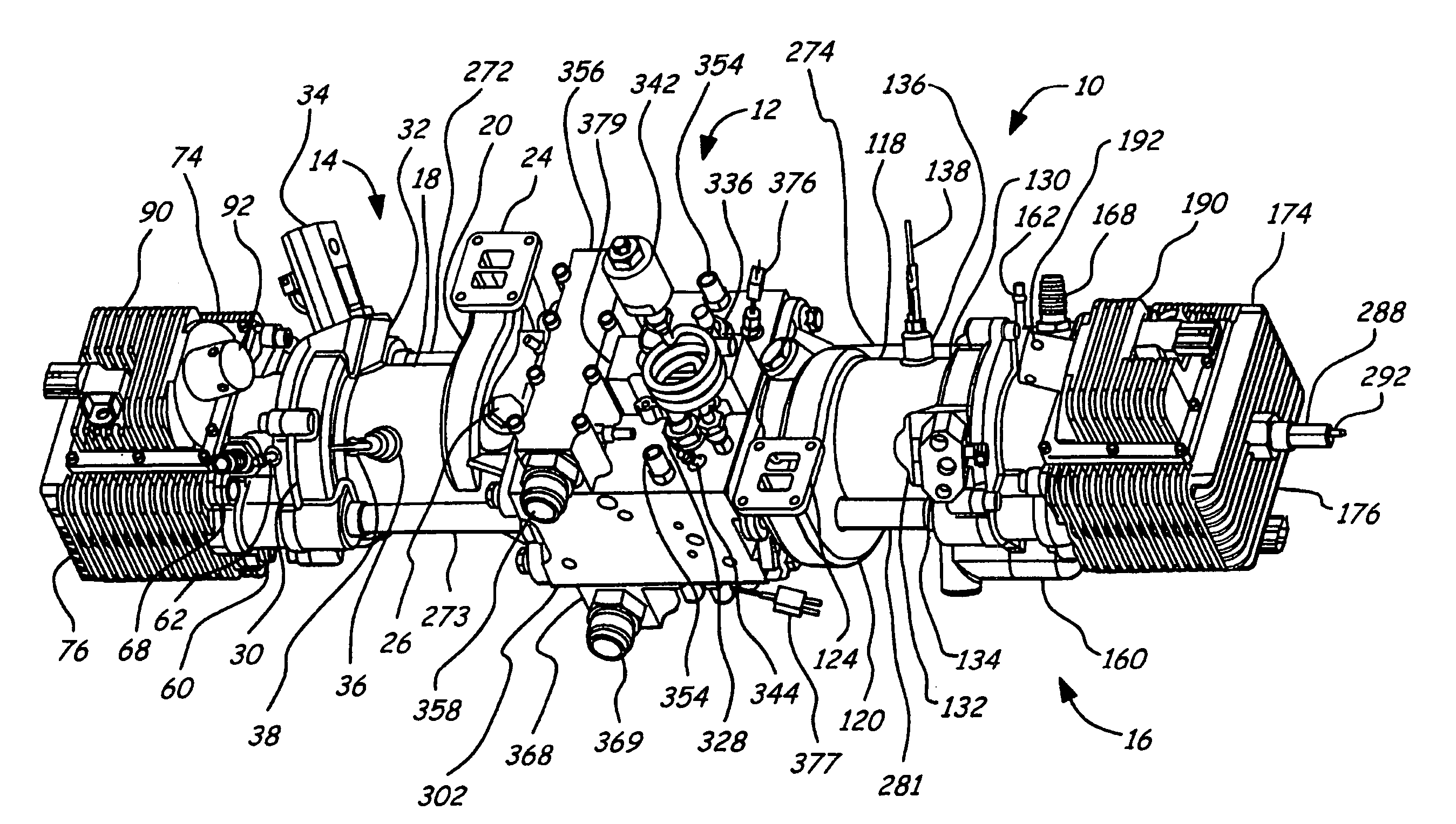
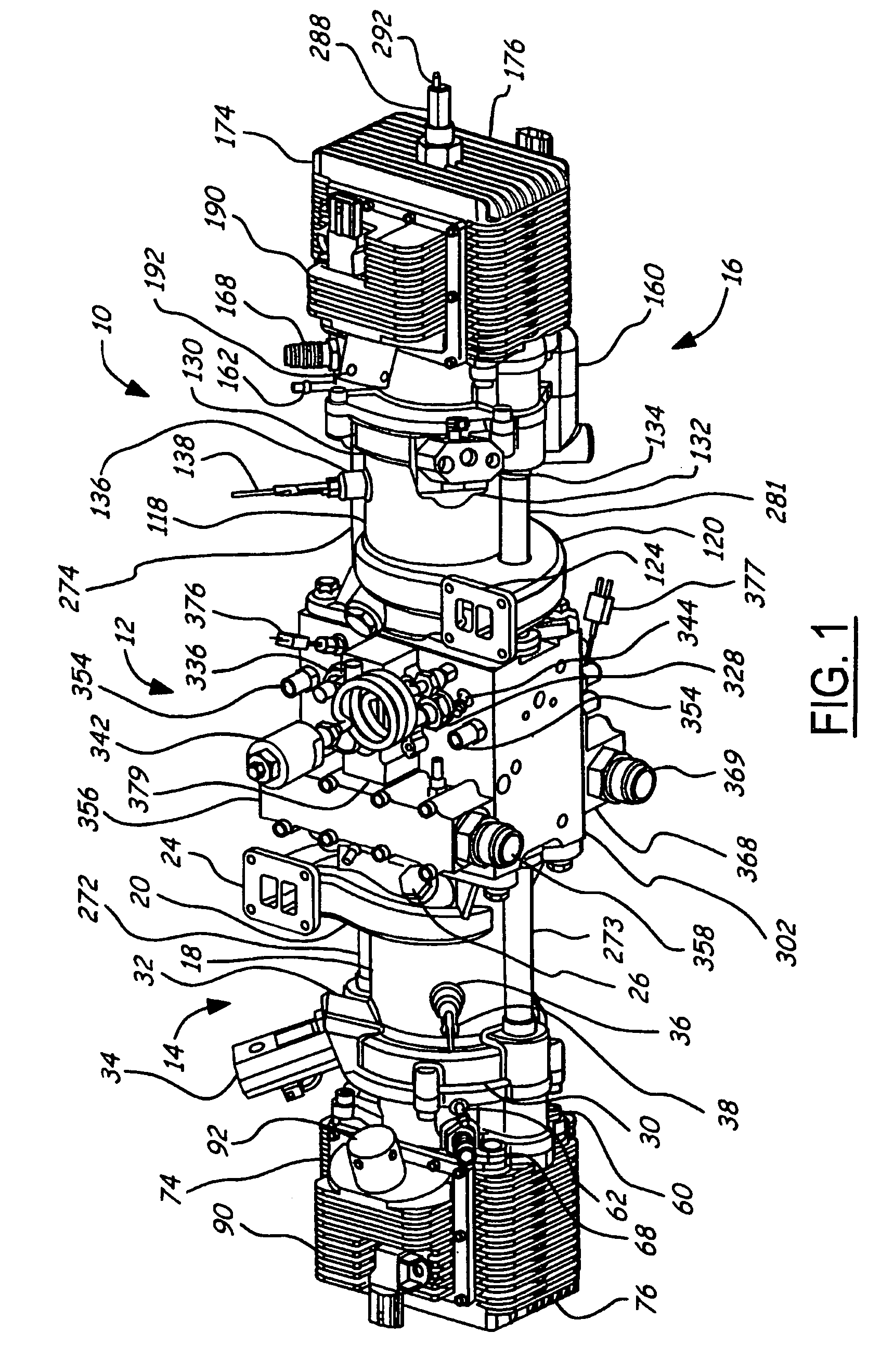
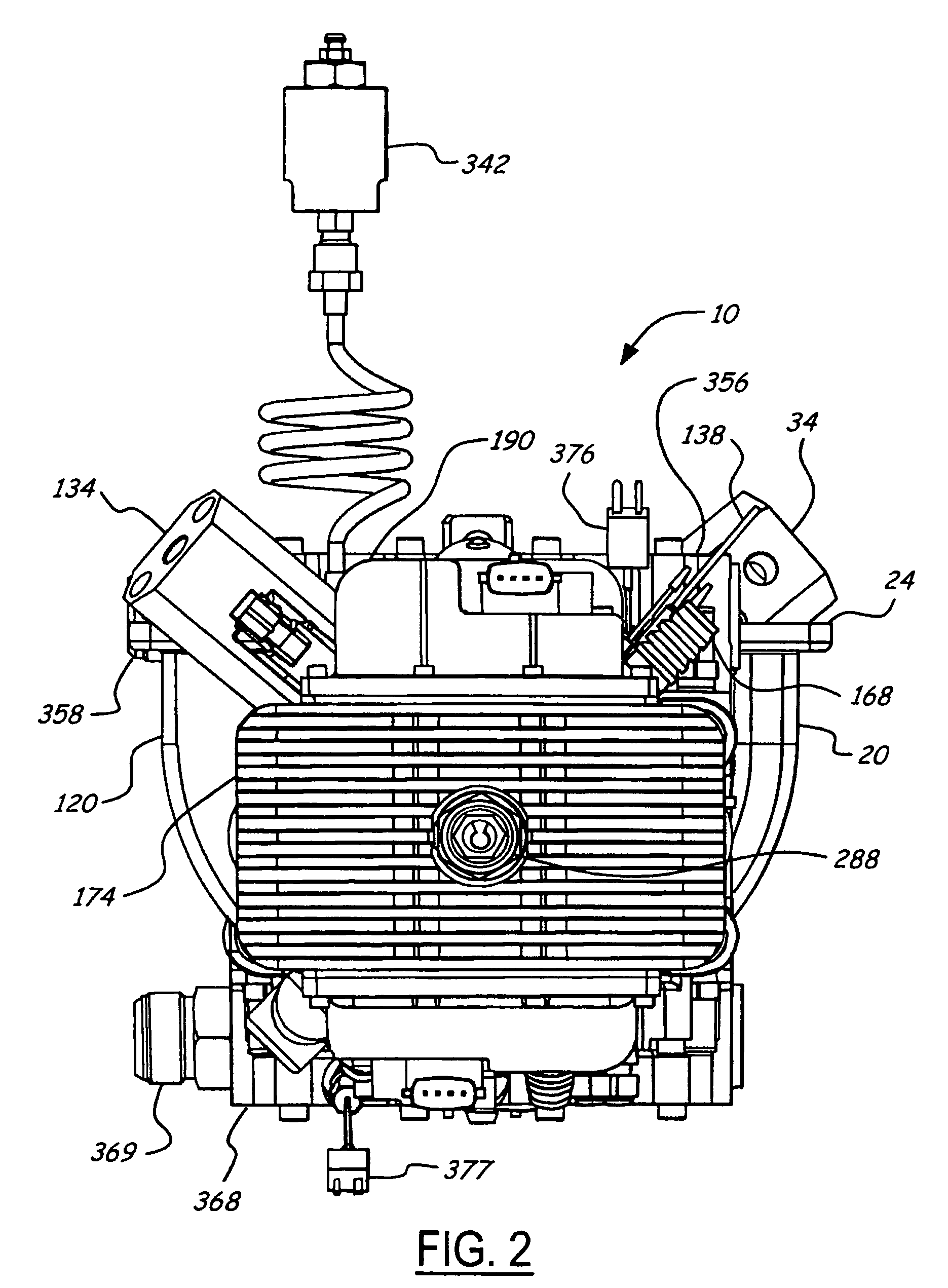
[0025]FIGS. 1-11 illustrate an opposed piston, opposed cylinder, hydraulic, free piston engine 10. The engine 10 includes a hydraulic pump block assembly 12, with a first piston / cylinder assembly 14 extending therefrom, and a second piston / cylinder assembly 16 extending from the hydraulic pump block assembly 12 in the opposite direction so they are in line. The timing of the first piston / cylinder assembly 14 is opposite to the timing of the second piston / cylinder assembly 16. Thus, when one is at top dead center, the other is at bottom dead center. Moreover, the motion is along or parallel to a single axis of motion. This configuration of free piston engine allows for a more inherently balanced engine.
[0026] Additionally, the following description discloses an engine that not only stores energy produced by the engine in the form of pressurized fluid, but also employs some of this pressurized fluid to start and, at times, assist in controlling the engine operation and maintaining th...
PUM
 Login to View More
 Abstract
Description
Claims
Application Information
 Login to View More