

Projecting dependencies to generate target language dependency structure
a dependency structure and projecting technology, applied in the field of machine translation, can solve the problem of not being able to effectively represent syntax in machine translation, and achieve the effect of effective phrasal statistical machine translation
- Summary
- Abstract
- Description
- Claims
- Application Information
AI Technical Summary
Benefits of technology
Problems solved by technology
Method used
Image

Examples
Embodiment Construction
[0040] The present invention deals with machine translation using syntactic dependency trees. However, prior to describing the present invention in greater detail, one illustrative environment in which the present invention can be used will be discussed.
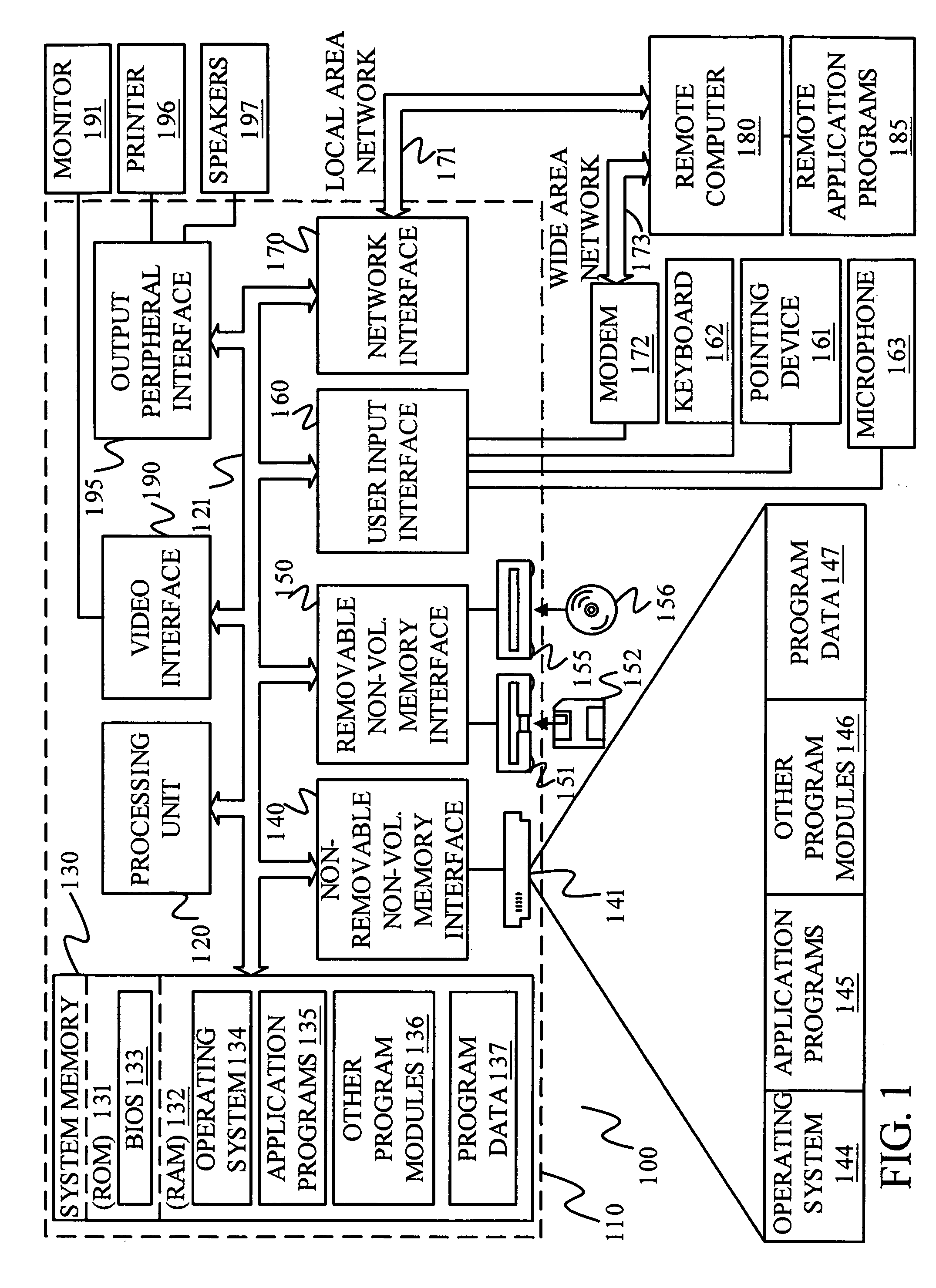
[0041]FIG. 1 illustrates an example of a suitable computing system environment 100 on which the invention may be implemented. The computing system environment 100 is only one example of a suitable computing environment and is not intended to suggest any limitation as to the scope of use or functionality of the invention. Neither should the computing environment 100 be interpreted as having any dependency or requirement relating to any one or combination of components illustrated in the exemplary operating environment 100.
[0042] The invention is operational with numerous other general purpose or special purpose computing system environments or configurations. Examples of well known computing systems, environments, and / or configurati...
PUM
 Login to View More
 Abstract
Description
Claims
Application Information
 Login to View More