[0009] The present invention provides a conduit that can transmit a signal over great distances and that can therefore be readily detected by toning equipment. In addition, the conduit of the invention can be readily coupled to provide extended lengths of conduit. In particular, the present invention uses a continuous wire to provide the toning signal that is capable of being torn out through the conduit to allow the conduit to be coupled over extended lengths by forming an
electrical connection between the wire of adjacent segments of conduit. In addition, the connectors used for the conduit can be connected flush against the exterior surface of the conduit to prevent the leakage of
moisture into the conduit and thus prevent damage to the cable within the conduit. The conduit of the invention also has excellent crush strength as is desired in the art. The conductive wire also includes a
coating that allows the conductive wire to be protected in the underground environment and that facilitates the
continuous production of the conduit of the invention.
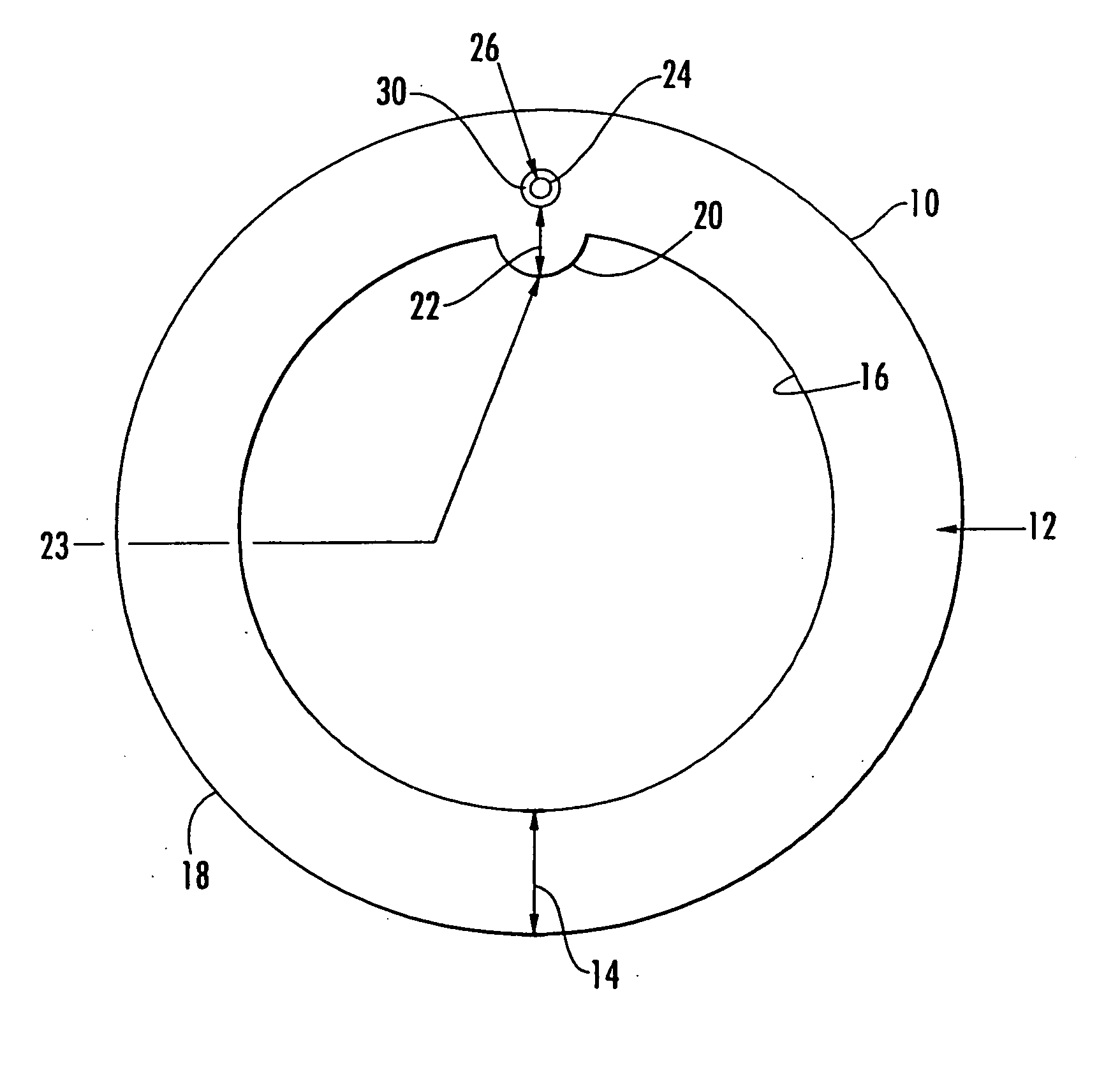
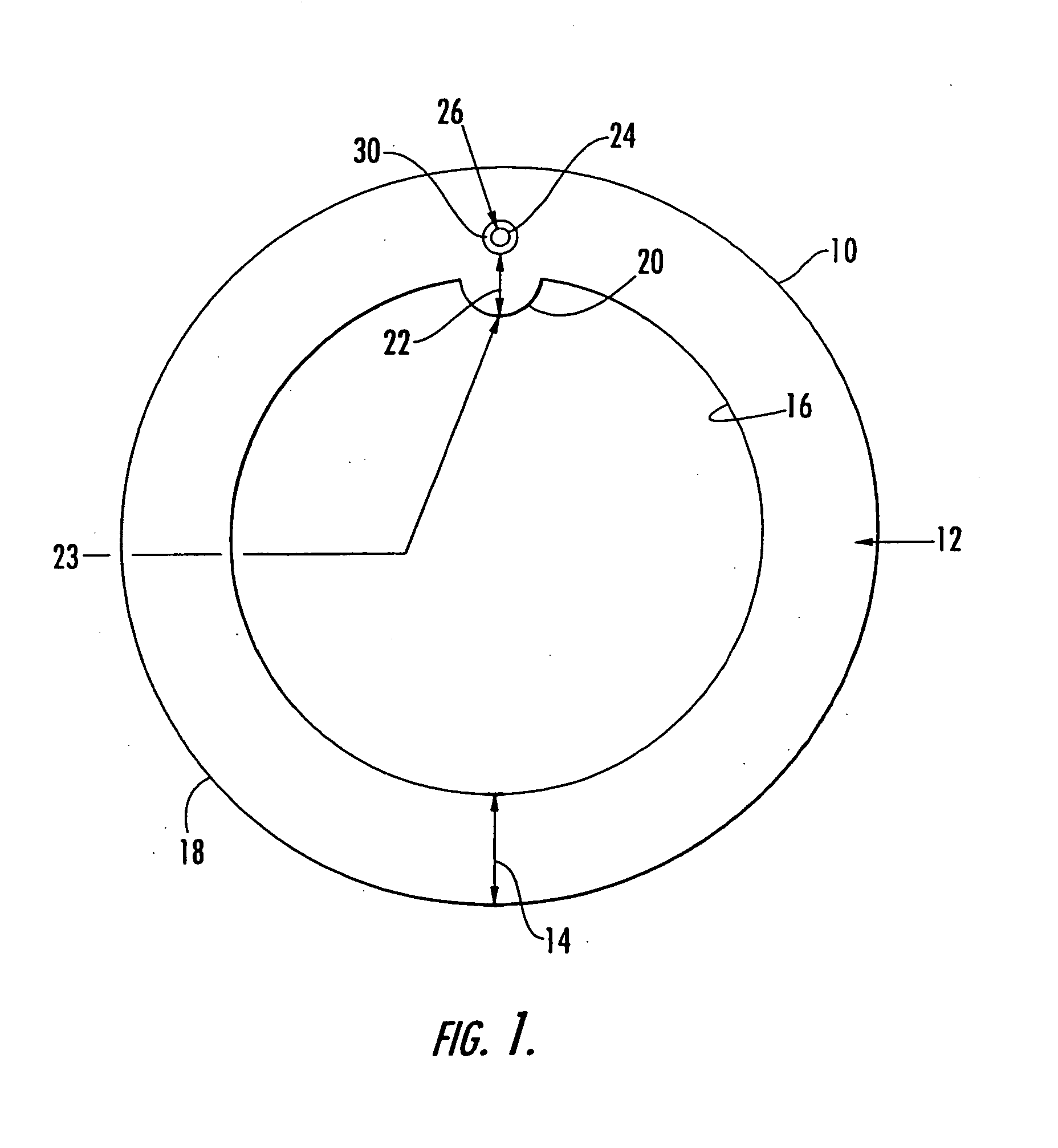
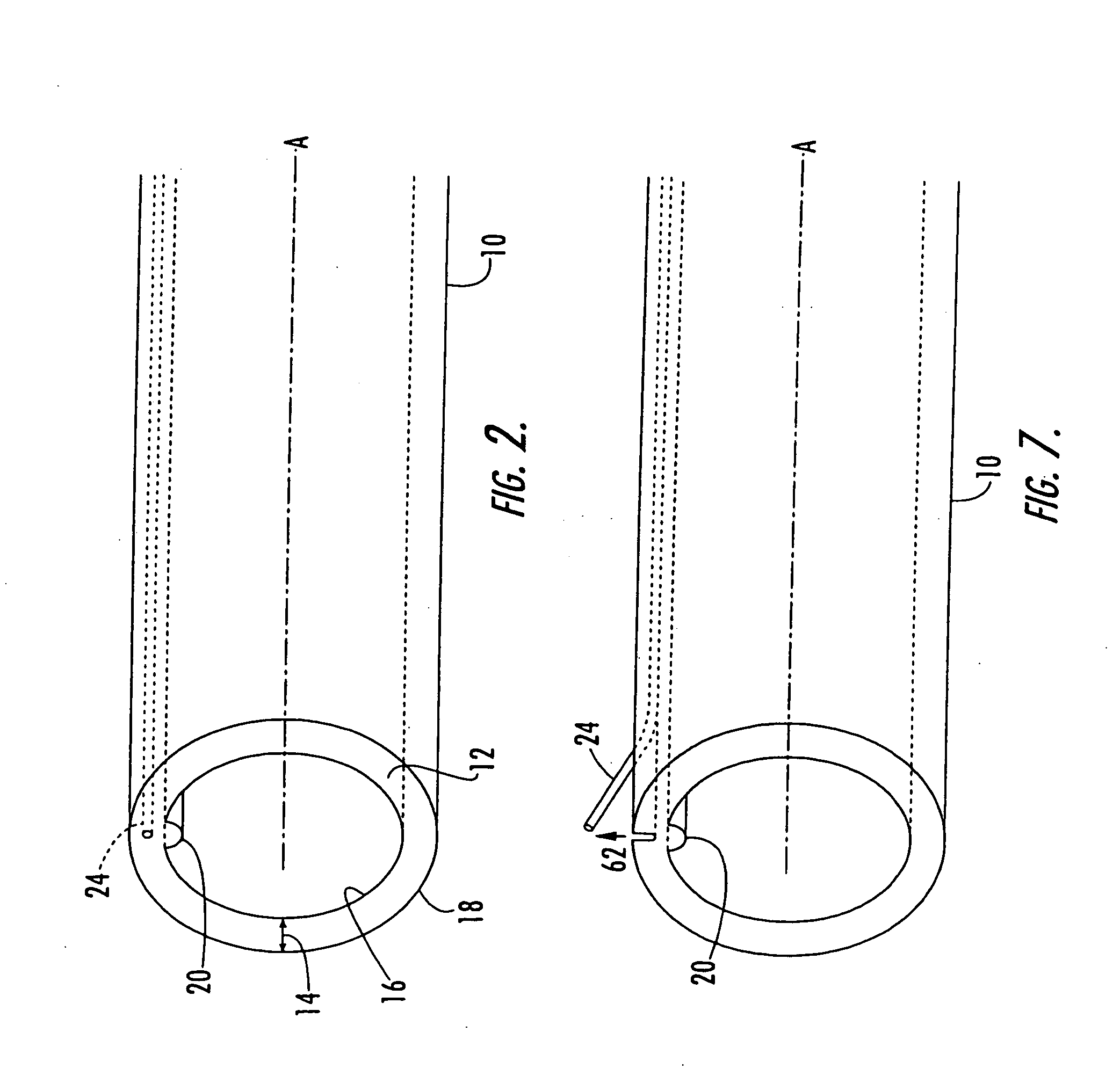
[0010] The above advantages are achieved through the use of a toneable conduit that includes an elongate polymeric tube having a wall with an interior surface, an exterior surface, and a predetermined wall thickness. A channel extends longitudinally within the wall of the elongate polymeric tube and a stabilizing rib preferably extends longitudinally along the interior surface of the wall of the elongate polymeric tube and is located radially inward from the channel. A continuous wire is coincident with the channel in the elongate polymeric tube and is preferably coated with a
coating composition that prevents the wire from adhering to the
polymer melt used to form the elongate polymeric tube. Preferably, the wire has a tensile strength of at least about 150 lbs. and is preferably a
copper-clad steel wire,
copper-clad aluminum wire,
copper wire or
tin copper wire. More preferably, the wire is copper-clad steel wire. The wire also preferably has a
diameter from about 0.32 mm to about 2.59 mm. More preferably, the wire has a
diameter of 1.02 mm. In accordance with the invention, the wire is capable of transmitting a toning signal to allow the conduit to be detected by toning equipment and is capable of being torn out of the polymeric tube to allow the conduit to be coupled. The wire is preferably coated with a
coating composition that is formed of a high
melting temperature polymeric material, preferably having a
melting temperature of at least about 500° F. Preferably, the high
melting temperature polymeric material is selected from the group consisting of fluoropolymers, polyamides, polyesters, polycarbonates,
polypropylene, polyurethanes, polyacetals, polyacrylics, epoxies and
silicone polymers and is more preferably
polytetrafluoroethylene. Preferably, the conduit is formed of
polyethylene or
polyvinyl chloride and more preferably high-density
polyethylene (HDPE). The conduit also preferably has a smooth exterior surface and can further include at least one additional rib (in addition to the stabilizing rib) extending longitudinally along the interior surface of the elongate polymeric tube to facilitate the installation of cable within the conduit.


 Login to View More