
Hydrocarbon resid processing and visbreaking steam cracker feed
a technology hydrocarbon resid, which is applied in the field of making olefins, can solve the problems of substantial (and expensive) processing of the starting feedstock of a conventional olefin production plant, patents that do not adequately teach steam cracking hydrocarbon streams, and achieve the effects of reducing the hydrogen content of steam cracker feed, and reducing the cost of production
- Summary
- Abstract
- Description
- Claims
- Application Information
AI Technical Summary
Benefits of technology
Problems solved by technology
Method used
Image

Examples
Embodiment Construction
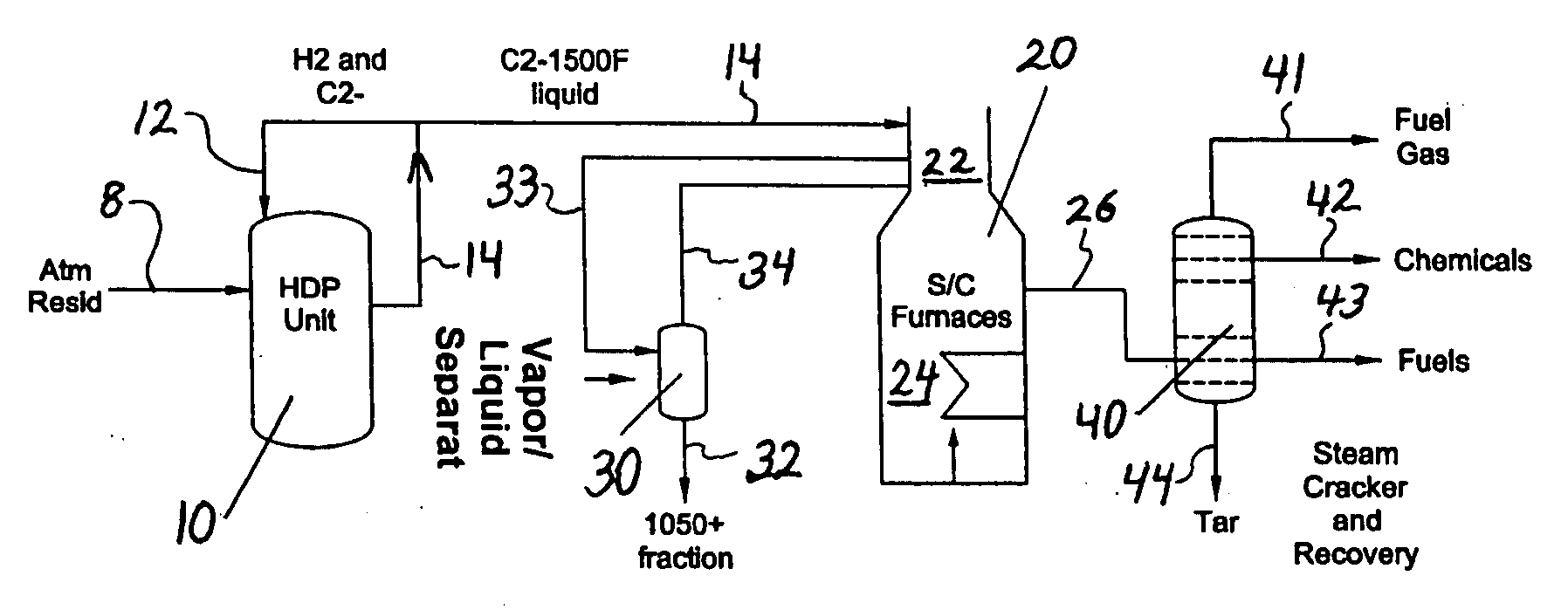
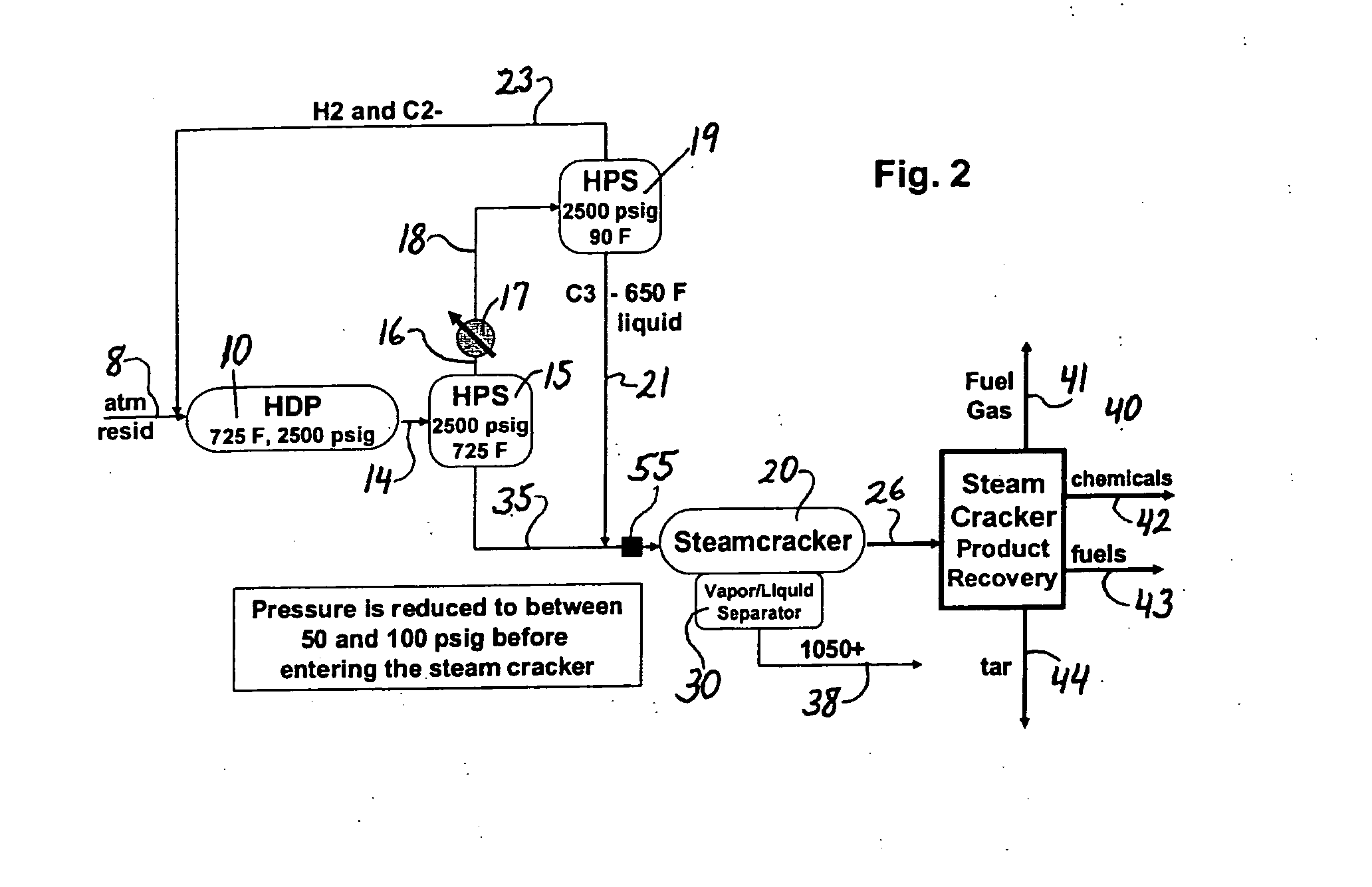
[0031] In one embodiment, the resid-containing, incipient thermally cracked effluent from a hydroprocessor, preferably a resid hydroprocessor, including those resid fractions having a boiling point of less than about 1050° F. (about 566° C.) and preferably those resid fractions having a boiling point of less than about 1100° F. (about 593° C.), are further cracked substantially, such as in a visbreaker / separator, and used as feed for a steam cracker or other thermal pyrolysis unit. In the pyrolysis unit, the vaporized fractions are converted to desired products including olefins. The terms thermal pyrolysis unit, pyrolysis unit, steam cracker, and steamcracker are used synonymously herein; all refer to what is conventionally known as a steam cracker, even though steam is optional.
[0032] According to the invention a crude or fraction thereof containing resid is hydroprocessed. Typically, resid hydroprocessing according to the present invention may be carried out at a temperature of ...
PUM
| Property | Measurement | Unit |
|---|---|---|
| temperature | aaaaa | aaaaa |
| temperature | aaaaa | aaaaa |
| temperature | aaaaa | aaaaa |
Abstract
Description
Claims
Application Information
 Login to View More