Detection of Analytes in a Dual-mediator Electrochemical Test Strip
Active Publication Date: 2007-12-27
AGAMATRIX INC
View PDF26 Cites 140 Cited by
Summary
Abstract
Description
Claims
Application Information
AI Technical Summary
This helps you quickly interpret patents by identifying the three key elements:
Problems solved by technology
Method used
Benefits of technology
Benefits of technology
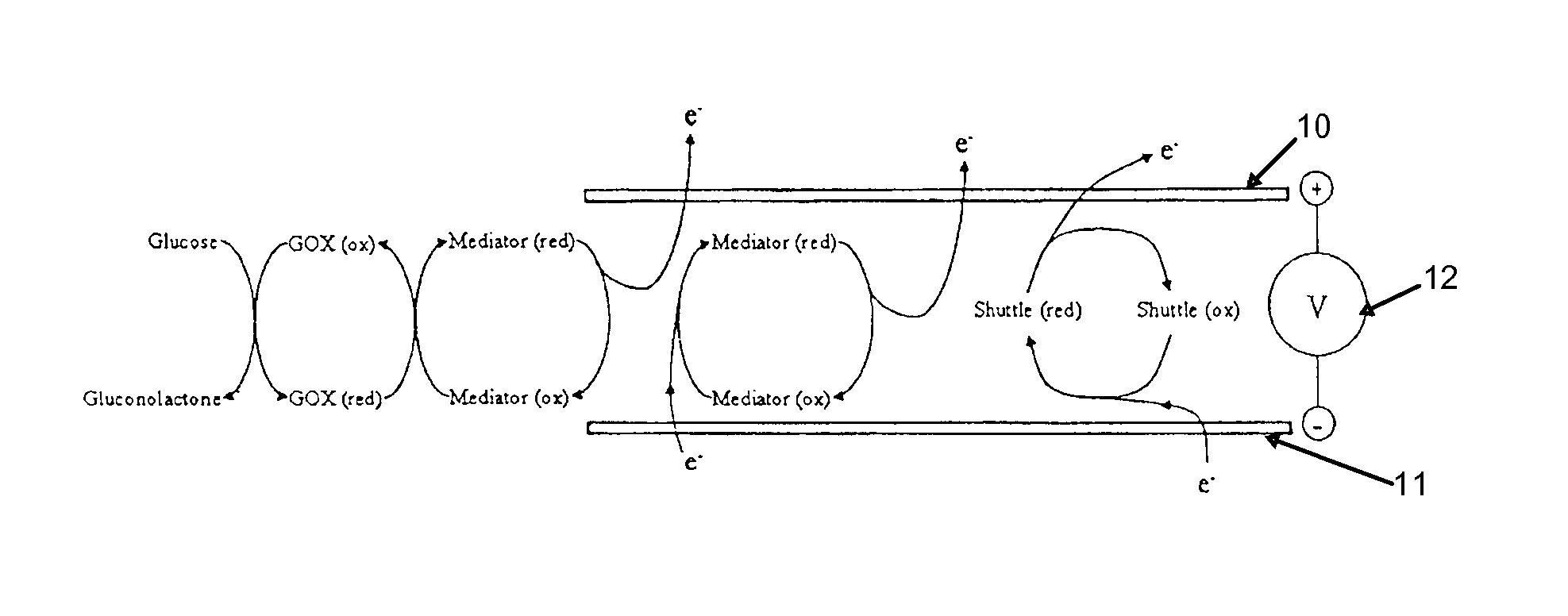
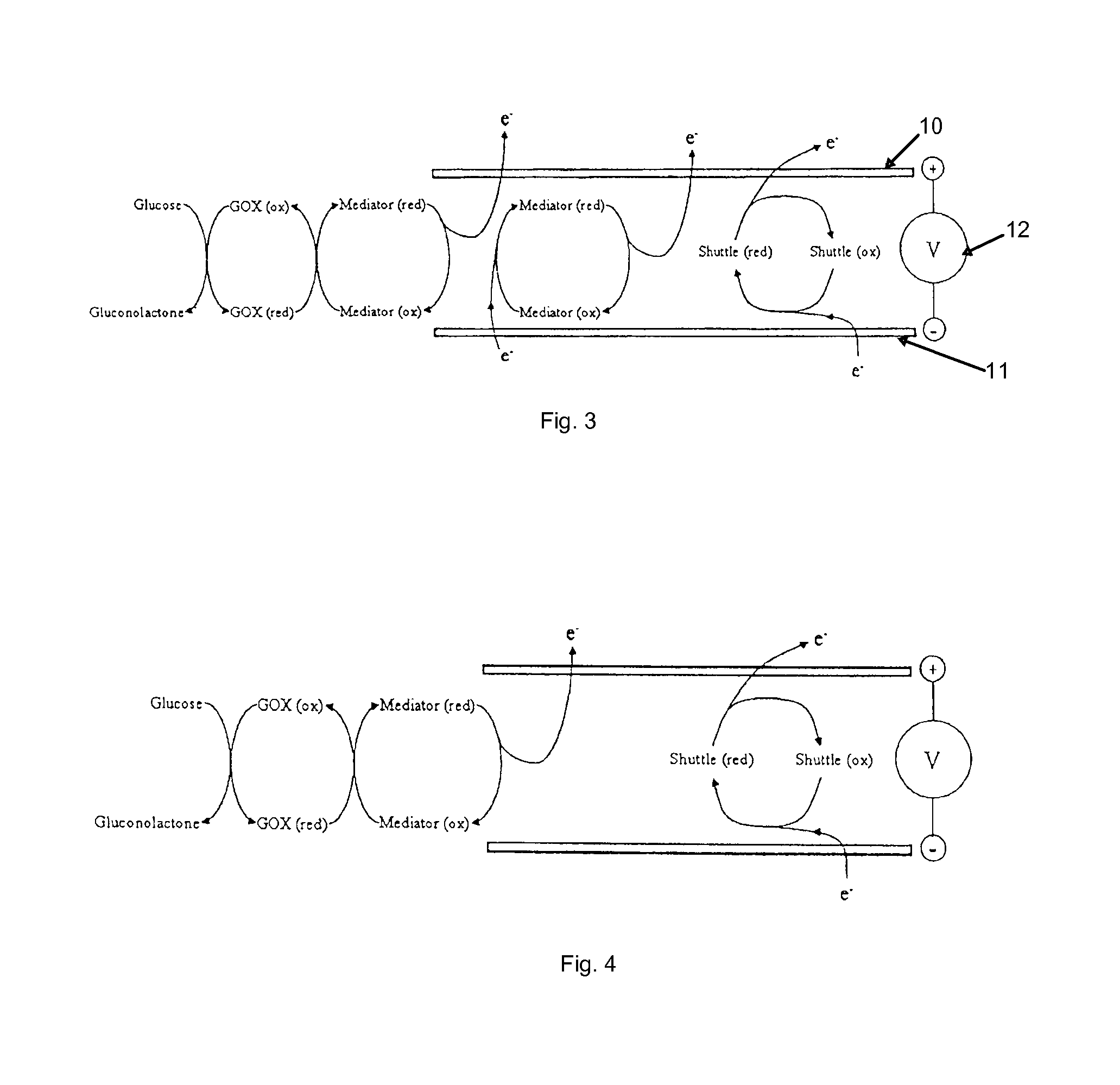
[0005] The present invention provides for improved determination of an analyte such as glucose in a sample by making use of a plurality of electron transfer reagents, for example two electron transfer reagents, that work together to transfer electrons between the enzyme and the electrodes. A first electron transfer a
Problems solved by technology
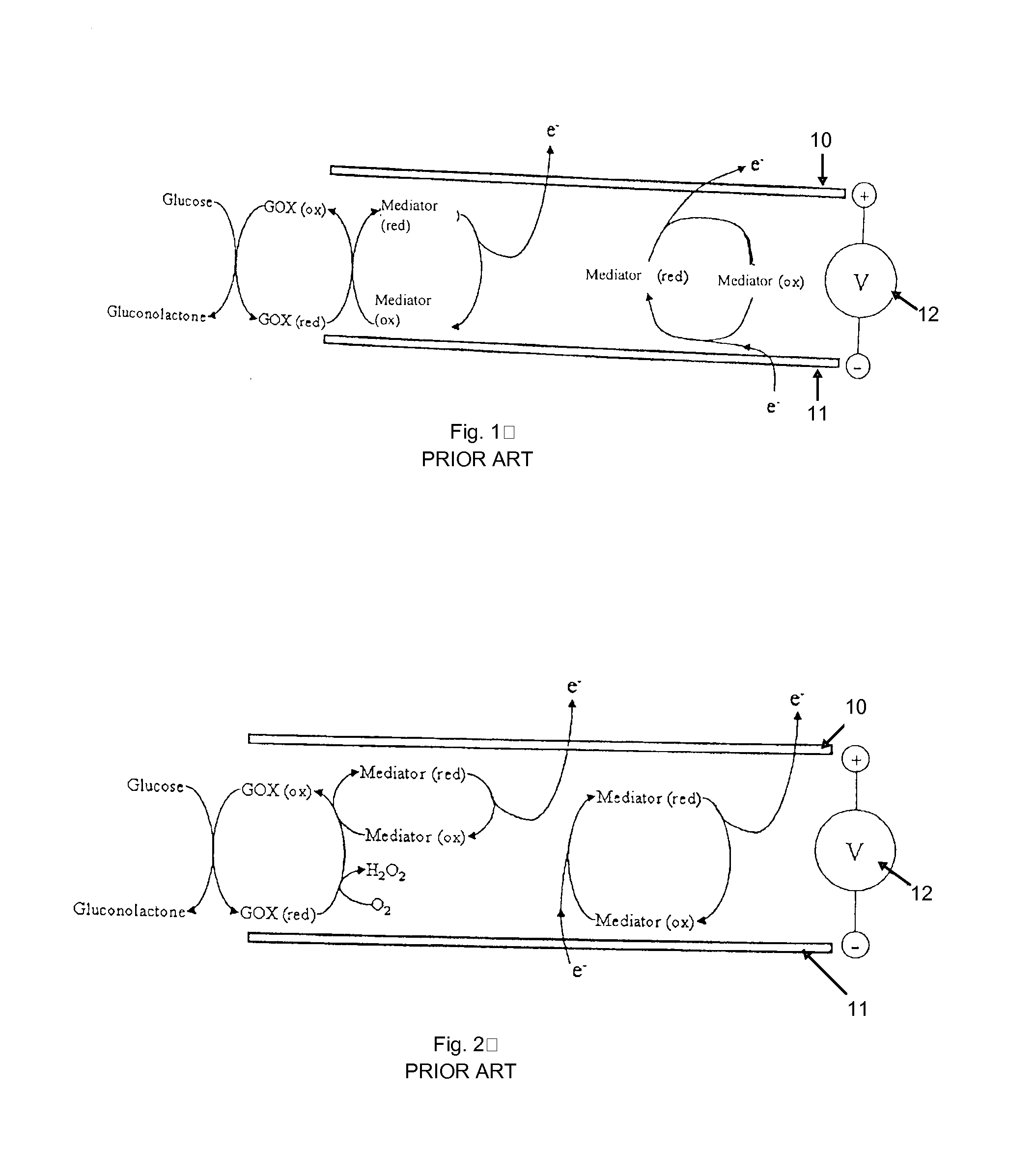
In addition, if the kinetics of the reaction with the enzyme are slow, the reduced enzyme may also react with oxygen present in this sample, leading to errors as a result in differences in hematocrit and blood pO2.
It is frequently the case, however, that compounds that meet the desired criteria for redox potential and kinetics are poorly soluble in aqueous solutions, such as blood.
This means that the maximum concentration of mediator is limited, and as a result that the maximum amount of signal that can be generated is limited.
Method used
the structure of the environmentally friendly knitted fabric provided by the present invention; figure 2 Flow chart of the yarn wrapping machine for environmentally friendly knitted fabrics and storage devices; image 3 Is the parameter map of the yarn covering machine
View more
Image
Smart Image Click on the blue labels to locate them in the text.
Viewing Examples
Smart Image
Click on the blue label to locate the original text in one second.
Reading with bidirectional positioning of images and text.
Smart Image
Examples
Experimental program
Comparison scheme
Effect test
example 1
[0077] Calibration curves were prepared to compare the performance of a reagent formulae that had ferricyanide alone as the mediator, and one in accordance with the invention that use ferricyanide as a shuttle and the poorly soluble PF6 salt of [Os(MeBpy)2(Im)2]2+ / 3+ as a mediator for the reaction of glucose and glucose oxidase. In each case, the amount of glucose oxidase was the same, and the applied voltage was 150 mV. The two reagent formulations were as follows:
1. Ferricyanide alone, as both shuttle and mediator: reagent: 100 mM ferri, 5 mM phosphate buffer pH 8.1, +stabilizers, sample: 200 mM citrate buffer pH 4.1, 133 nK NaCl
2. Ferricyanide (as a shuttle)+Osmium salt (as efficient mediator): reagent: saturated (<1 mM) Osmium salt, 100 mM ferri, 5 mM phosphate buffer pH 8.1, and stabilizers, sample 50 mM phosphate buffer pH 8.1, 133 mM NaCl.
[0078] In each case, the stabilizers were polyethyleneglycol and erythritol. Sample pH is different in each case. -The chosen pH repre...
example 2
[0080] A reagent formulation was prepared as follows:
[0081] 100 mM phosphate buffer (pH 7.0), 100 mM ferricyanide, 50 mN alanine anhydride, 1 mM Os(Mebpy)2PicCl (˜1 mg / ml), 2.6 mg / ml Surfactant 10 G (Arch Chemicals).
[0082] Good results measuring glucose were obtained using this formulation.
example 3
[0083] A reagent formulation was prepared as follows:
[0084] 100 mM phosphate buffer (pH 7.0), 100 mM ferricyanide, 50 mN alanine anhydride, saturated (2Im2](PF6)2, 2.6 mg / ml Surfactant 10 G (Arch Chemicals), 1% w / v silica (AERODISP W7520N, Degussa).
[0085] Good results measuring glucose were obtained using this formulation.
[0086] In the formulas above, MeBpy=4,4′ dimethyl-2,2′-bipyridyl, Pic=Picolinate, the conjugate base of Picolinic Acid. Alanine Anhydride is a stabilizer (See U.S. Pat. No. 3,243,356) and silica is a stabilizer (See, U.S. Pat. No. 3,556,945).
the structure of the environmentally friendly knitted fabric provided by the present invention; figure 2 Flow chart of the yarn wrapping machine for environmentally friendly knitted fabrics and storage devices; image 3 Is the parameter map of the yarn covering machine
Login to View More
PUM
Property
Measurement
Unit
Electric potential / voltage
aaaaa
aaaaa
Current
aaaaa
aaaaa
Login to View More
Abstract
Determination of an analyte such as glucose in a sample is done making use of a plurality of electron transfer reagents, for example two electron transfer reagents, that work together to transfer electrons between the enzyme and the electrodes. The first electrontransfer agent is a mediator that interacts with the enzyme after it has acted on the analyte to regenerate enzyme in its active form. The second electron transfer agent is a shuttle that interacts with the electrodes and optionally the mediator. The oxidation and reduction of the shuttle serves as the major source of current that is measured as an indication of analyte.
Description
[0001] This application claims the benefit of U.S. Provisional Application Ser. No. 60 / 805,918, filed Jun. 27, 2007, which is incorporated herein by reference in its entirety.BACKGROUND OF THE INVENTION [0002] This application relates to the electrochemical detection of analytes in a test sample. The invention is particularly applicable to the detection of glucose in a sample of blood or other biological fluid using a disposable electrochemical test strip. [0003]FIG. 1 shows a schematic representation of a conventional enzyme biosensor for the electrochemical detection of glucose. The biosensor has a working electrode 10 and counter electrode 11 in a circuit with a voltage source 12. The sample is disposed between the electrodes 10,11 to complete the circuit. When glucose is present, glucose oxidase, GOXox present in the sensor oxidizes the glucose to gluconolactone and reduced enzyme, GOXred is formed. An oxidized mediator, MEDox, present in the sensor restores the enzyme to the ac...
Claims
the structure of the environmentally friendly knitted fabric provided by the present invention; figure 2 Flow chart of the yarn wrapping machine for environmentally friendly knitted fabrics and storage devices; image 3 Is the parameter map of the yarn covering machine
Login to View More
Application Information
Patent Timeline
Application Date:The date an application was filed.
Publication Date:The date a patent or application was officially published.
First Publication Date:The earliest publication date of a patent with the same application number.
Issue Date:Publication date of the patent grant document.
PCT Entry Date:The Entry date of PCT National Phase.
Estimated Expiry Date:The statutory expiry date of a patent right according to the Patent Law, and it is the longest term of protection that the patent right can achieve without the termination of the patent right due to other reasons(Term extension factor has been taken into account ).
Invalid Date:Actual expiry date is based on effective date or publication date of legal transaction data of invalid patent.


 Login to View More