

Method for requesting an uplink resource allocation during a downlink data transmission
a data transmission and resource allocation technology, applied in the field of data transmission, can solve the problems of heavy downlink traffic, slow response time of node b, empty uplink buffer most of the time,
- Summary
- Abstract
- Description
- Claims
- Application Information
AI Technical Summary
Benefits of technology
Problems solved by technology
Method used
Image

Examples
Embodiment Construction
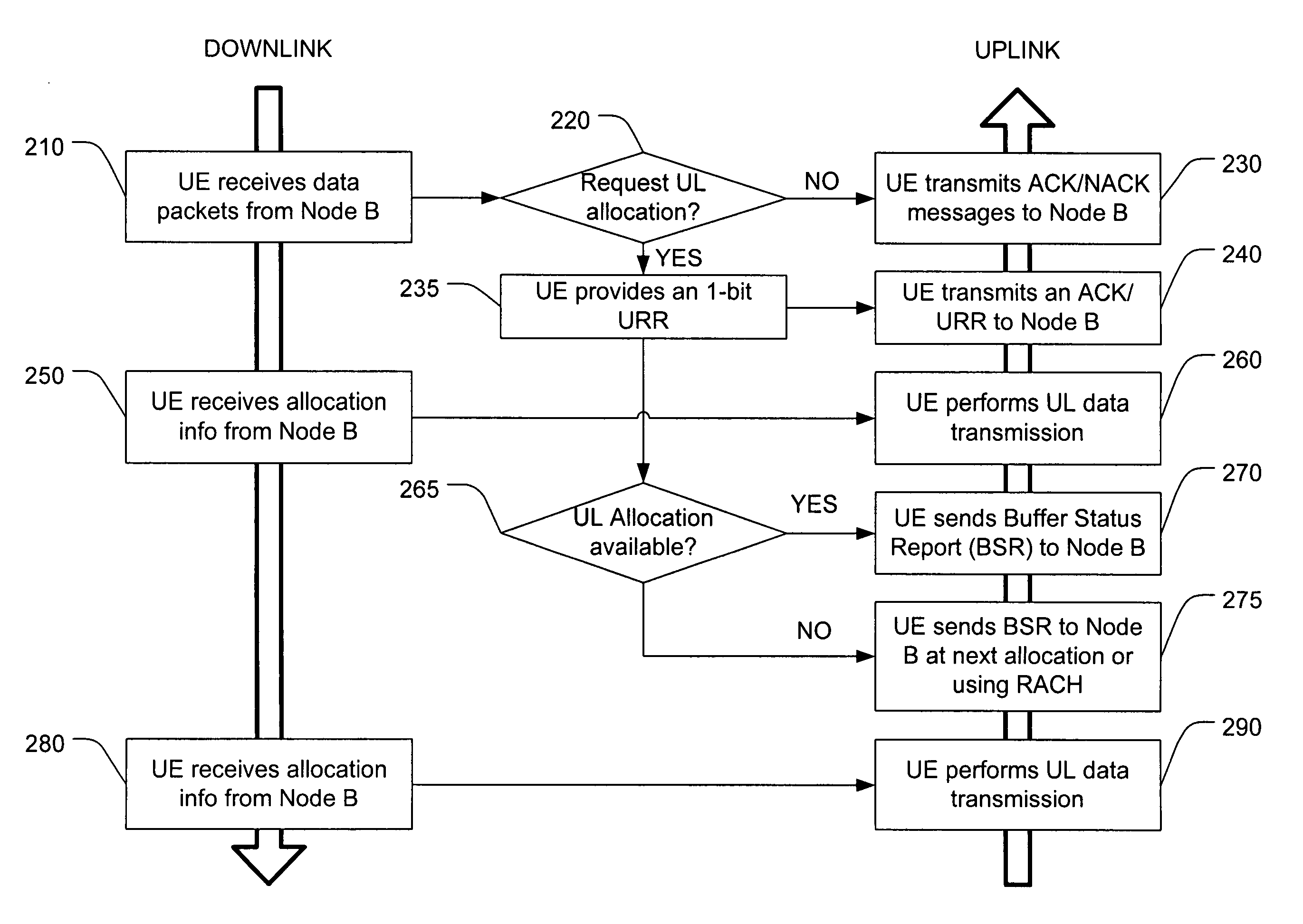
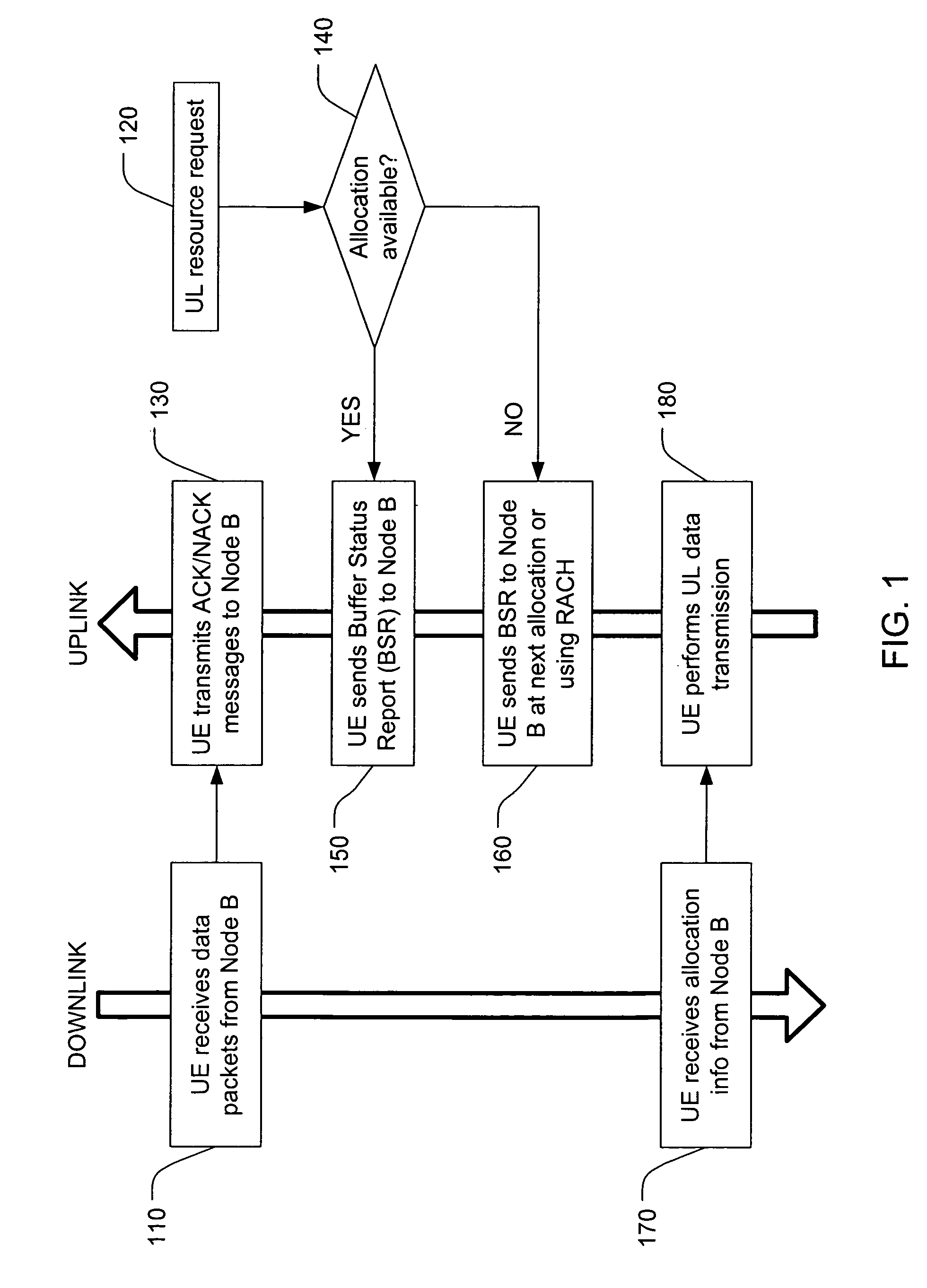
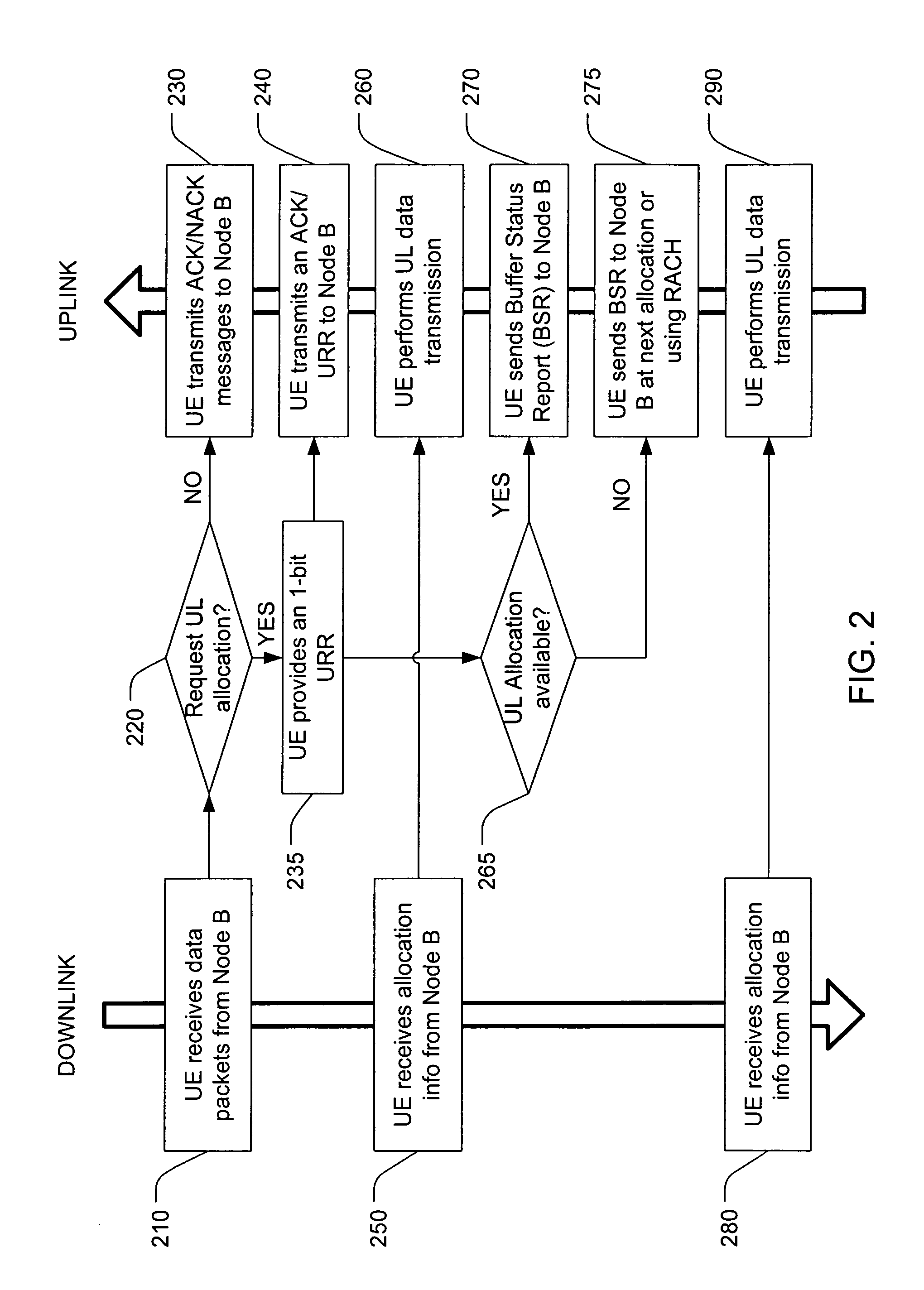
[0035]As mentioned in the Background of the Invention section, the uplink resource allocation is handled by a scheduler in the Node B. If a UE is in an active downlink session, for example receiving a large amount of data from the Node B (such as downloading contents from a web site), the buffer in the UE for temporarily storing untransmitted uplink data is normally empty or near empty. The scheduler in the Node B, accordingly, would not assign uplink resources to that UE. The UE may, however, request some uplink resource allocation for future use. In requesting the uplink resource for future use, an uplink buffer status report, indicating the amount of data that is buffered in the logical channel queues in the UE MAC, is provided by the UE to the scheduler. Since there is not much untransmitted data in the buffer. The scheduler might not grant the requested resource allocation immediately.
[0036]The scheduling requests are sent in the same way as uplink data transmissions. If a UE's...
PUM
 Login to View More
 Abstract
Description
Claims
Application Information
 Login to View More