As a result of this, the sound
signal is not transmitted, or is transmitted only incompletely, to the
inner ear via the ossicular chain, and this leads to impaired hearing.
With the known auditory ossicle prostheses, the sound conduction between the tympanic membrane and the
inner ear is often made possible only to a limited extent, since these prostheses are able only to an extremely limited extent to replace the natural anatomical features of the ossicular chain.
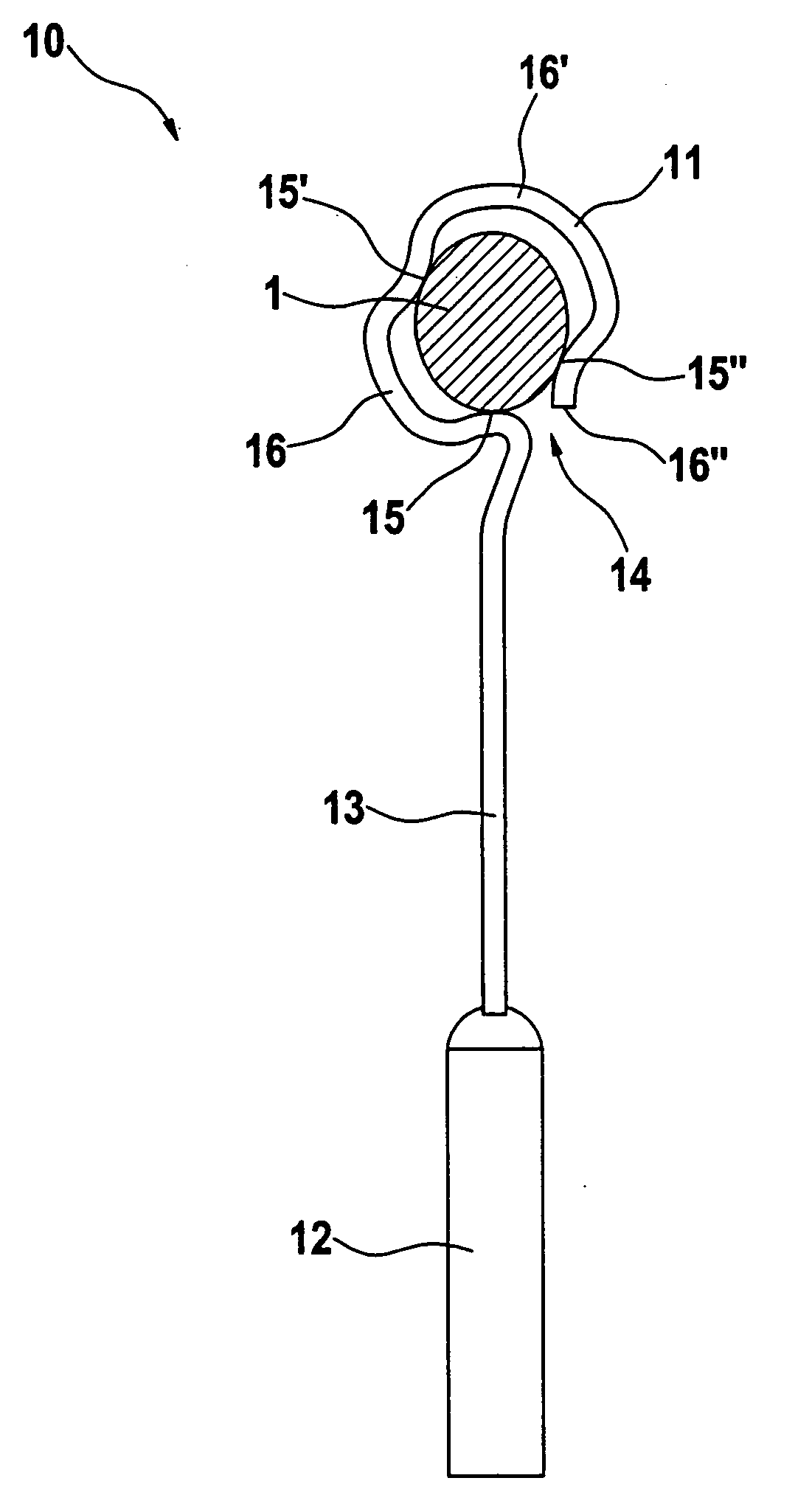
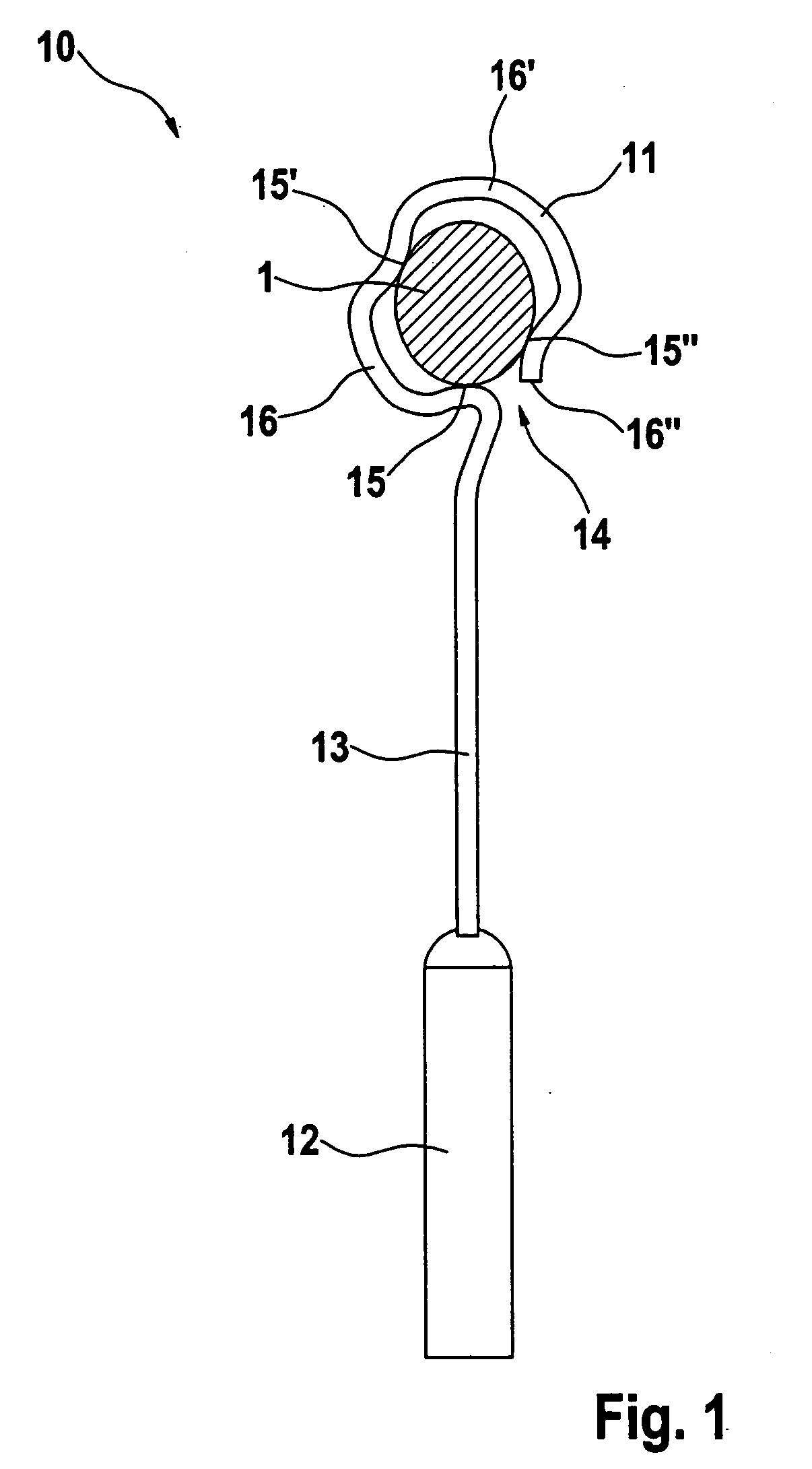
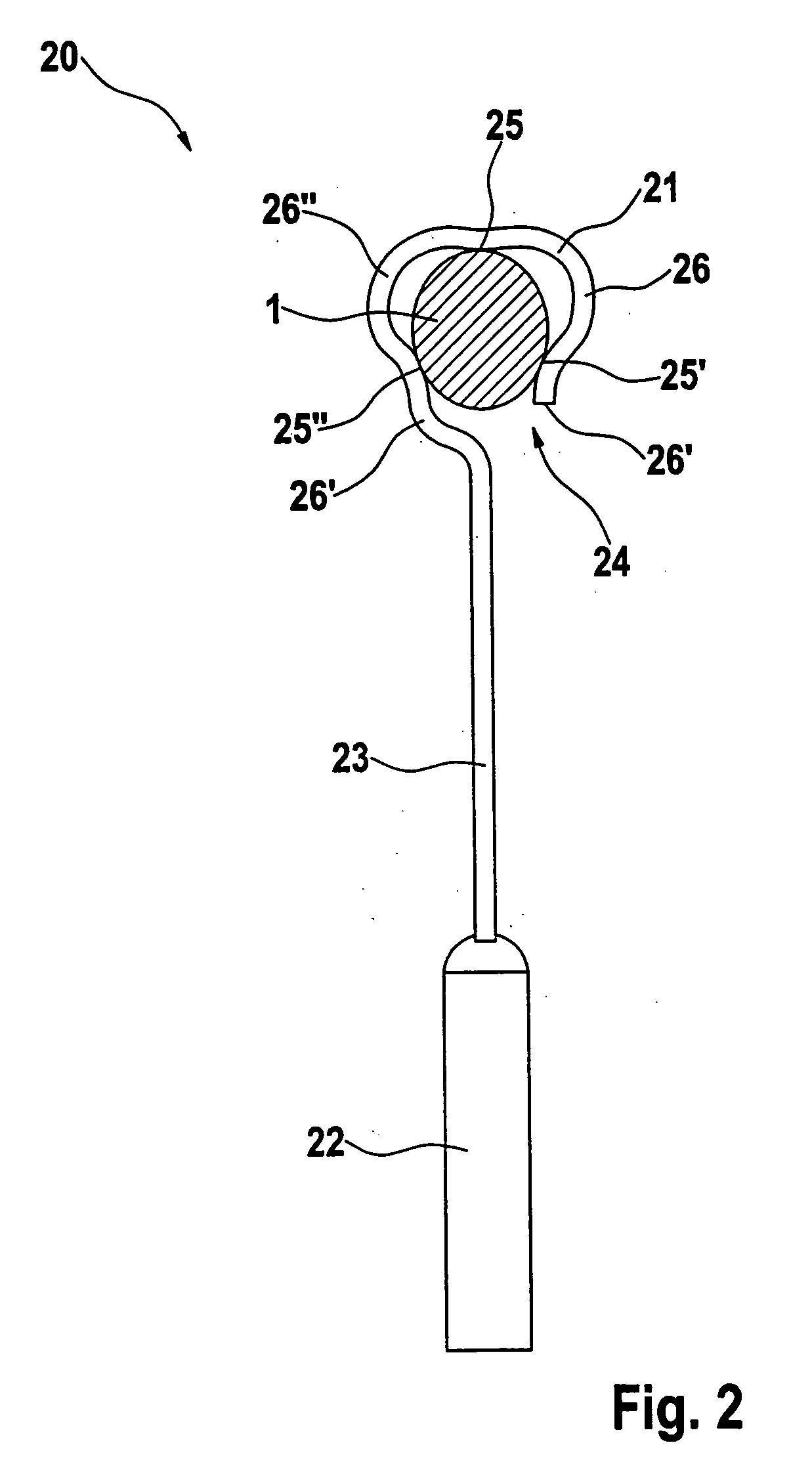
An important problem when fitting an auditory ossicle prosthesis lies in the connection of the prosthesis to a member of the ossicular chain, since this connection should of course on the one hand be secure and permanent, but on the other hand should also be reasonably easy for the operator to establish.
However, special tools are needed to widen the eyelet and to make it easier to push the prosthesis onto the process of the anvil, and also to fix the prosthesis by pressing the slotted eyelet together, which proves quite awkward in practice.
However, in the course of implantation, tilting of the prosthesis could occur, which would make the operation more difficult for the surgeon.
However, the known loop prostheses of the kind described in WO 02 / 0698590 A1 or U.S. Pat. No. 6,554,861 B2 have the considerable
disadvantage that they completely enclose the corresponding point of attachment on the auditory ossicle, generally the process of the anvil or the manubrium of the hammer, which in practice can often lead to strangulation of the mucosa
lying on the surrounded
bone area and, consequently, to
necrosis of the structures
lying behind this.
Alternatively, however, the loop can also be constructed from wire material, which simplifies production, but can still entail the disadvantages described above.
During this period,
scars form and generate unpredictable forces, which can lead to the prosthesis shifting from its local position.
In addition to the post-operative change of position, a further problem also arises after implantation of auditory ossicle prostheses.
Any implantation material introduced into the body, in the context of a reconstruction of the
middle ear and of its structures, is therefore subject to a particular stress arising from the fact that it lies in a contaminated and infected environment, which generally attacks the material.
Since the aim of implanting an auditory ossicle prosthesis must be that the
implant remains in the patient's
middle ear for as long as possible and without complications, a protracted
attack of the material can lead to damage of the prosthesis and / or to
local infection.
Both consequences are unacceptable.



 Login to View More
  Login to View More