Method and therapeutic apparatus for normalizing function of sinus cilia using heat
What is AI technical title?
AI technical title is built by Patsnap AI team. It summarizes the technical point description of the patent document.
a technology of sinus cilia and therapeutic apparatus, which is applied in the direction of therapeutic heating, contraceptive devices, therapeutic cooling, etc., can solve the problems of sinus problem, cough and fever, nasal congestion with thick nasal secretions, etc., and achieve the effect of optimizing cilia performance and normalizing the function of sinus cilia
Inactive Publication Date: 2011-08-25
SANKER DANIEL ALLEN
View PDF6 Cites 36 Cited by
Summary
Abstract
Description
Claims
Application Information
AI Technical Summary
This helps you quickly interpret patents by identifying the three key elements:
Problems solved by technology
Method used
Benefits of technology
Benefits of technology
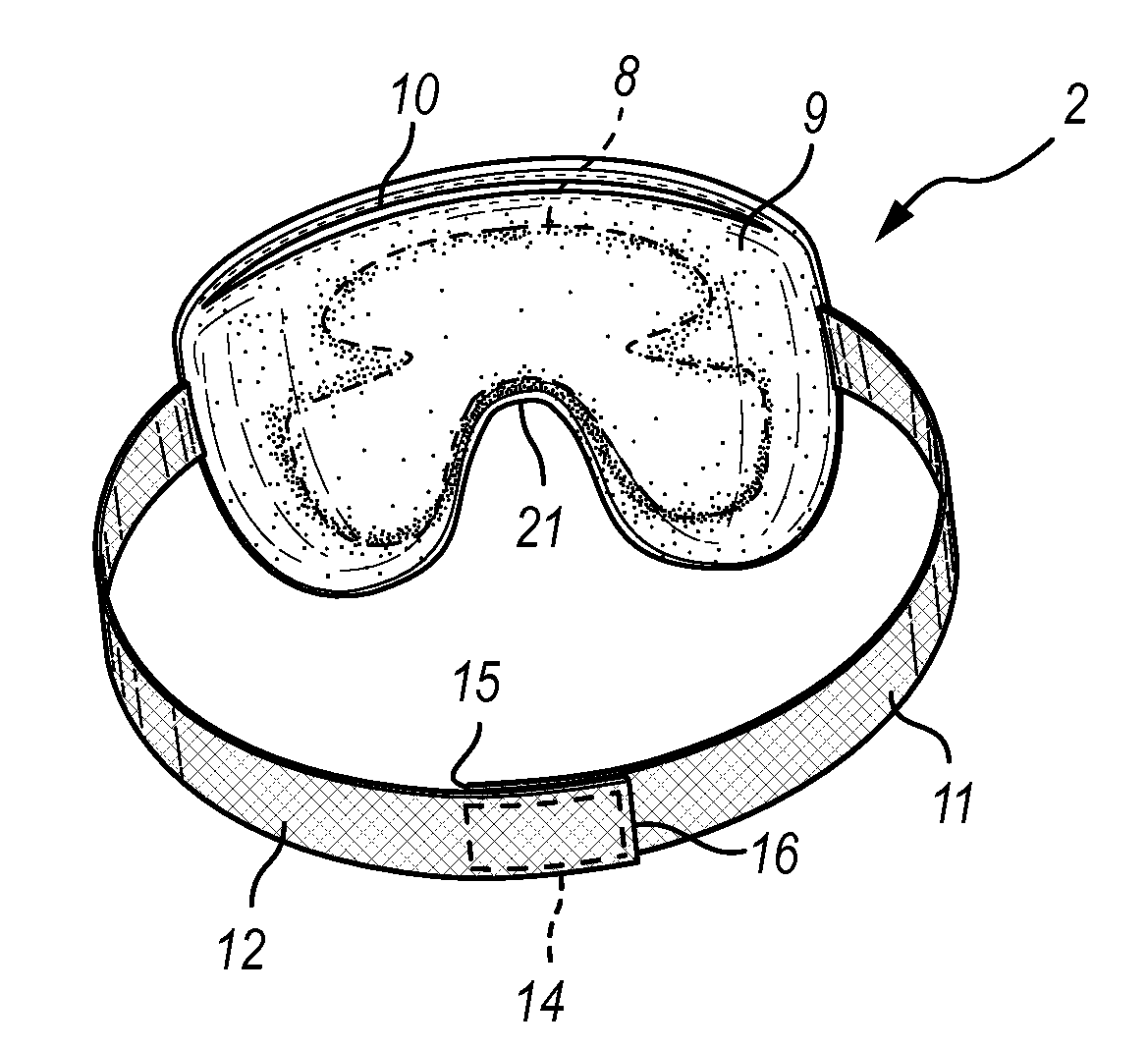
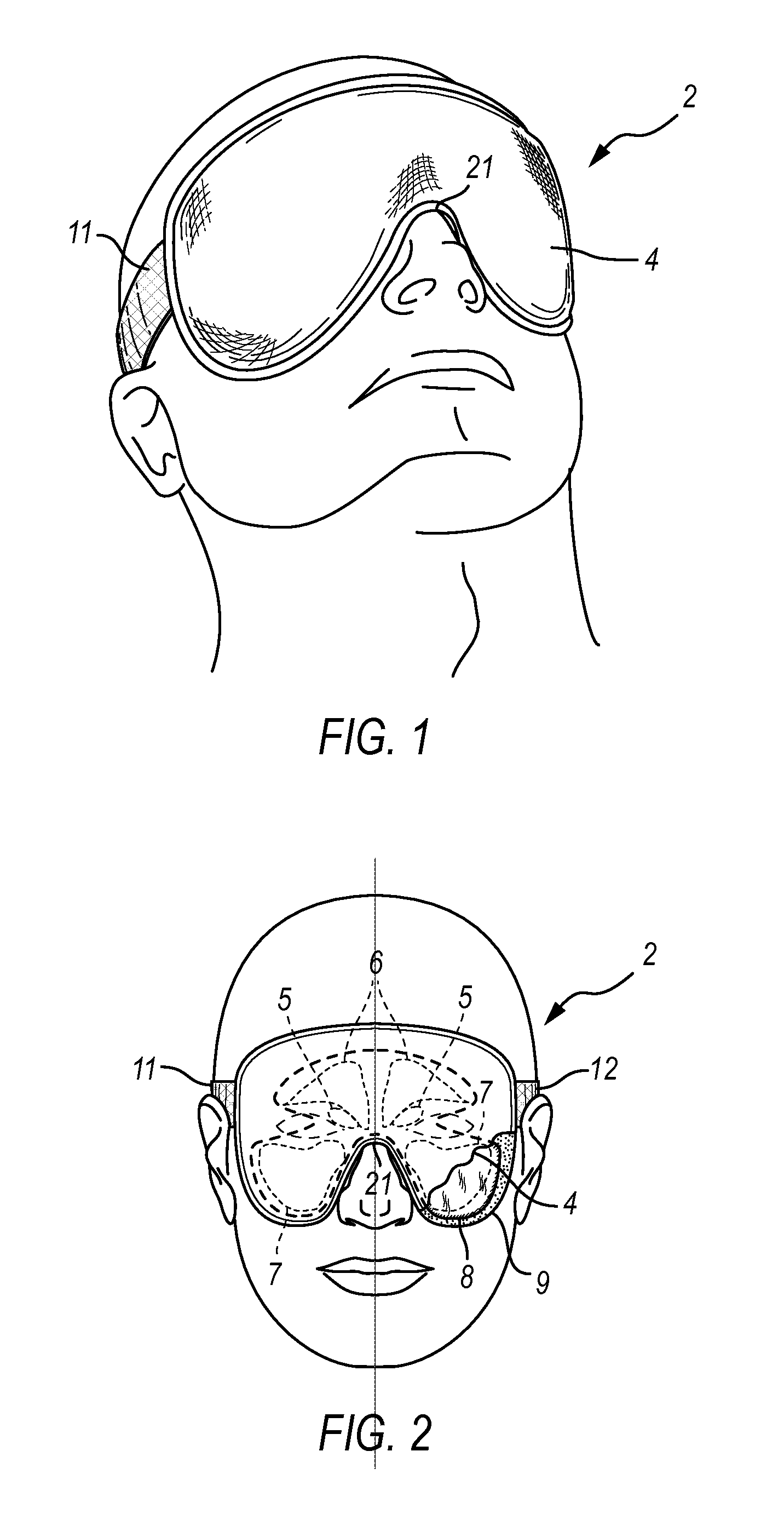
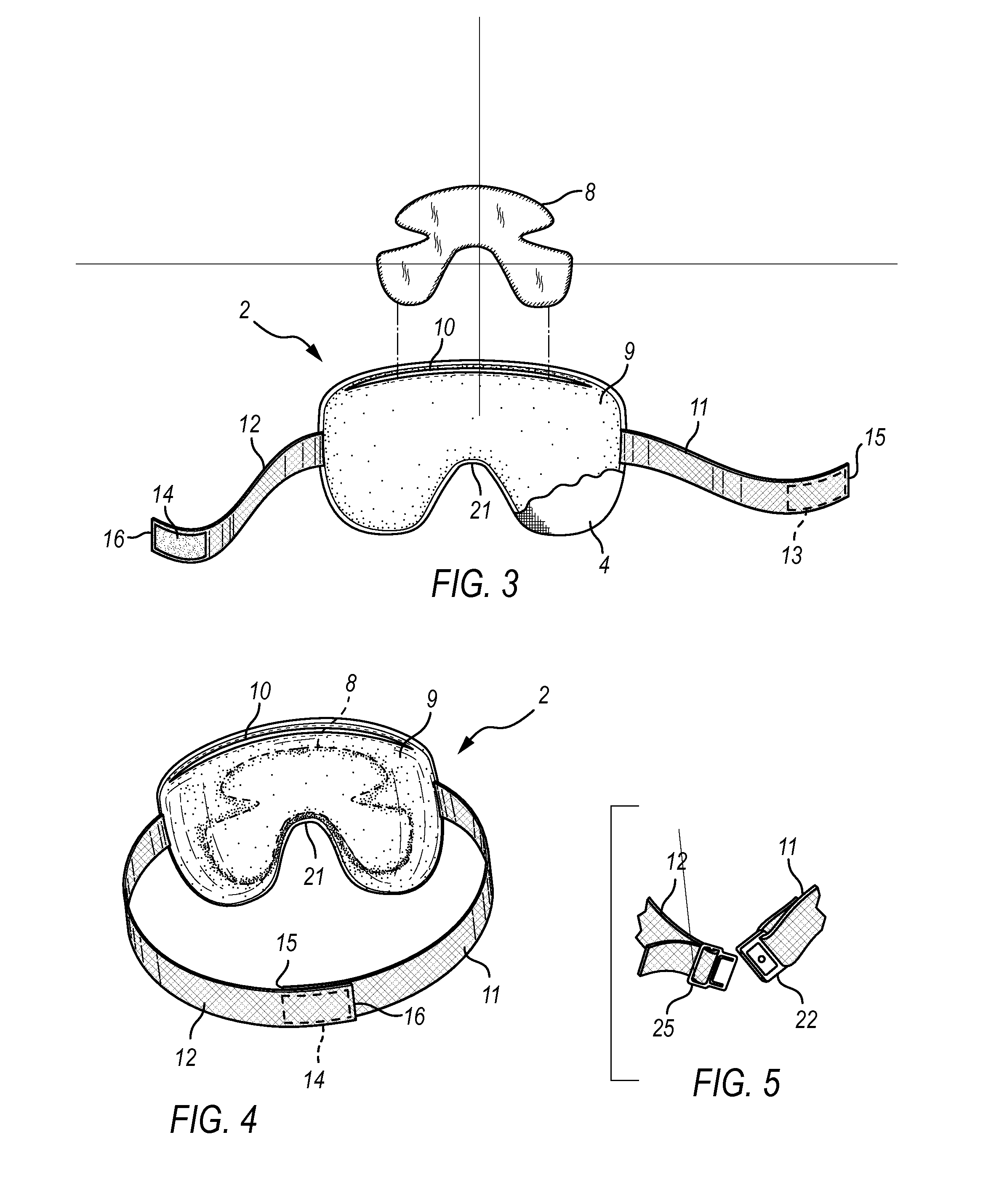
[0046]The invention is a method and therapeutic apparatus for normalizing function of the sinus cilia using heat. It wraps around the head in a method similar to sleep shades, but the apparatus includes a heated element that sits on the face above the primary sinus cavities in the human head. The invention provides a non-surgical, non-invasive, drug-free therapeutic apparatus and method, of using thermal energy-in-transfer to normalize poor sinus cilia function that can cause upper respiratory problems. The heated element is inserted by the user into a pocket on the device, and it is removed after use. The heated element can be either a disposable packet that draws heat from air activated heat packets, gel packs, microwavable bean bags, instant chemical packs, hot water bottles, electric heating pads or silica hot packs. Most importantly, the heat pack must provide a temperature of the packet up to 140 degrees Fahrenheit for up to 18 hours. As contained heat pack is held in place above the sinus cavities on the face with a band that circle around the head, the sinus cavities and cilia within are heated beyond normothermia closer to 104 degrees Fahrenheit which optimizes cilia performance.
[0047]The nasal and sinus cavity membranes have thousands of very small hair-like organelles called cilia. They are capable of rhythmic beating like oars, and they keep the sinus cavities clear and clean from debris, pollutants and excessive drainage. When they are pulsating according to their normal rhythm, they move the bacteria from front to back of the nose. This system is called The Mucociliary Clearance system and consists of the cells of the surface of the nose, the cilia, and the mucus. They operate best if brought to a temperature slightly above normal human body temperature, also known as normothermia. If the Mucociliary Clearance system is performing abnormally, problems can include: sinus irritation, sinus infection, or sinusitis which may include inflammation of the sinuses and nasal passages, headache or pressure in the eyes, nose, and cheek area or on one side of the head. A person with a sinus problem may also have coughs and fever, bad breath, and nasal congestion with thick nasal secretions. The apparatus and method includes a mask with a pocket cavity that accommodates the heating element. When the apparatus is affixed to the human head with the heating element engaged, the warmth helps to restore normal cilia function by bringing the temperature of the sinus cavities to a more optimal temperature which is above normothermia.
Problems solved by technology
If the Mucociliary Clearance system is performing abnormally, problems can include: sinus irritation, sinus infection, or sinusitis which may include inflammation of the sinuses and nasal passages, headache or pressure in the eyes, nose, and cheek area or on one side of the head.
A person with a sinus problem may also have coughs and fever, bad breath, and nasal congestion with thick nasal secretions.
Method used
the structure of the environmentally friendly knitted fabric provided by the present invention; figure 2 Flow chart of the yarn wrapping machine for environmentally friendly knitted fabrics and storage devices; image 3 Is the parameter map of the yarn covering machine
View more
Image
Smart Image Click on the blue labels to locate them in the text.
Viewing Examples
Smart Image
Click on the blue label to locate the original text in one second.
Reading with bidirectional positioning of images and text.
Smart Image
Examples
Experimental program
Comparison scheme
Effect test
Embodiment Construction
[0083]The following detailed description should be read with reference to the illustrations or drawings. The drawings should not necessarily be scaled with embodiments which were not created to limit the scope of the invention.
[0084]Embodiments of the present invention include an apparatus and a method that is made useful for normalizing sinus cilia function. The method along with the apparatus could be used as a relief for those who suffer from abnormal sinus cilia function. The method used is a thermal energy in-transfer which normalizes poor sinus cilia function that can also cause upper respiratory track problems.
[0085]The apparatus used, in one embodiment, is composed of a garment appliance that is wrapped around the human face. The said garment article is flexible and sufficiently supple to conform to the face and head's contours. The garment is also composed of both inner and outer adjacent layer of cloth which forms the pouch for receiving and supporting the heating packet t...
the structure of the environmentally friendly knitted fabric provided by the present invention; figure 2 Flow chart of the yarn wrapping machine for environmentally friendly knitted fabrics and storage devices; image 3 Is the parameter map of the yarn covering machine
Login to View More
PUM
Login to View More
Abstract
The invention relates to a non-surgical and non-invasive drug-free therapeutic apparatus and method of using thermal energy-in-transfer to normalize poor sinus cilia function that can cause upper respiratory tract problems. The nasal and sinus cavity membranes have thousands of very small hair-like organelles called cilia. They are capable of rhythmic beating like oars, and they keep the sinus cavities clear of debris, pollutants and excessive drainage. This Mucociliary Clearance System performs best at a temperature slightly above the human body's normothermia. The method and therapeutic apparatus includes a mask with a pocket cavity that accommodates a heating element. The heating element can use heat from a disposable heating pack. When the apparatus is affixed to the human head with the heating element engaged, the warmth helps restore normal cilia function by bringing the temperature of the sinus cavities to a more optimal temperature which is above normothermia.
Description
REFERENCES CITED[0001]U.S. Patent Documents1,743,801January 1930Reynolds1,917,117July 1933Hines1,924,315August 1933 Hemphill et al.2,191,937February 1940 Low2,305,080December 1942 Hemphill2,342,840February 1944 Cadous2,671,898March 1954Wade2,716,981September 1955More2,891,252June 1959Lazo2,946,133July 1960Williams4,425,917January 1984Kuznetz4,512,830April 1985Hulett et al.4,532,410July 1985Wehmeyer4,612,934September 1986Borkan4,635,625January 1987Teeple4,649,908March 1987Ghaly4,676,247June 1987Van Cleve4,688,572August 1987Hubbard et al.4,854,319November 1987 Tobi4,872,217March 1988Kitayama4,815,144March 1989Martin4,848,334July 1989Bellm4,972,832November 1990 Trapini et al.5,020,711June 1991Kelley5,038,779August 1991Barry et al.5,072,598December 1991 Dibrell5,088,549February 1992 Schneider5,148,804September 1992Hill et al.5,146,625September 1992Steele et al.5,190,036March 1993Linder5,230,333July 1993Yates et al.5,197,292March 1993McPherson5,295,949March 1994Hathaway5,305,470April 199...
Claims
the structure of the environmentally friendly knitted fabric provided by the present invention; figure 2 Flow chart of the yarn wrapping machine for environmentally friendly knitted fabrics and storage devices; image 3 Is the parameter map of the yarn covering machine
Login to View More
Application Information
Patent Timeline
Application Date:The date an application was filed.
Publication Date:The date a patent or application was officially published.
First Publication Date:The earliest publication date of a patent with the same application number.
Issue Date:Publication date of the patent grant document.
PCT Entry Date:The Entry date of PCT National Phase.
Estimated Expiry Date:The statutory expiry date of a patent right according to the Patent Law, and it is the longest term of protection that the patent right can achieve without the termination of the patent right due to other reasons(Term extension factor has been taken into account ).
Invalid Date:Actual expiry date is based on effective date or publication date of legal transaction data of invalid patent.
Login to View More
Patent Type & AuthorityApplications(United States)



 Login to View More
  Login to View More