
Models for Guiding Physical Work
a technology models, applied in the field of models for guiding physical work, can solve the problems of ineffective computing devices with respect to helping users assemble or disassemble physical products, and no current way to use such mobile devices for some common types of user tasks,
- Summary
- Abstract
- Description
- Claims
- Application Information
AI Technical Summary
Problems solved by technology
Method used
Image

Examples
Embodiment Construction
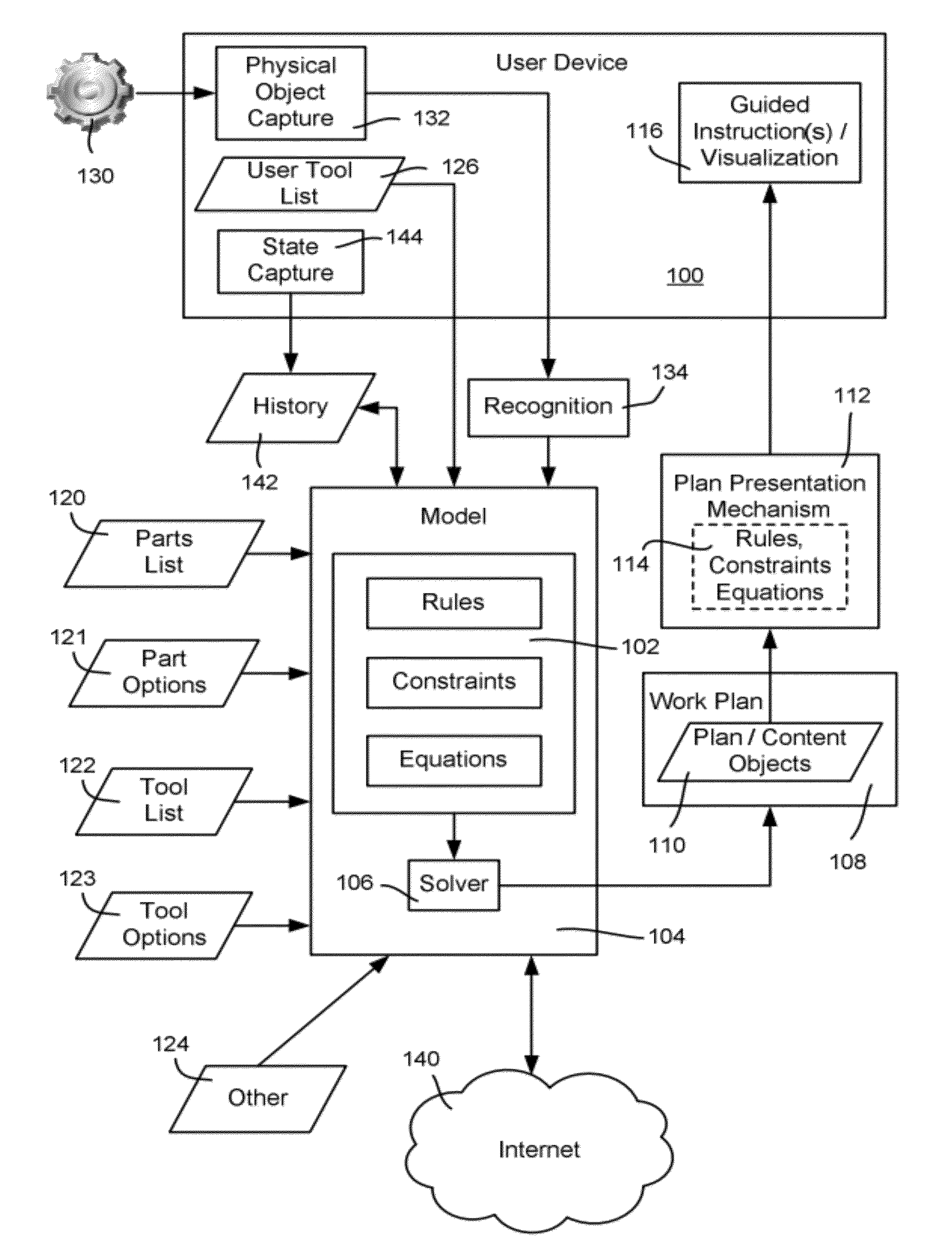
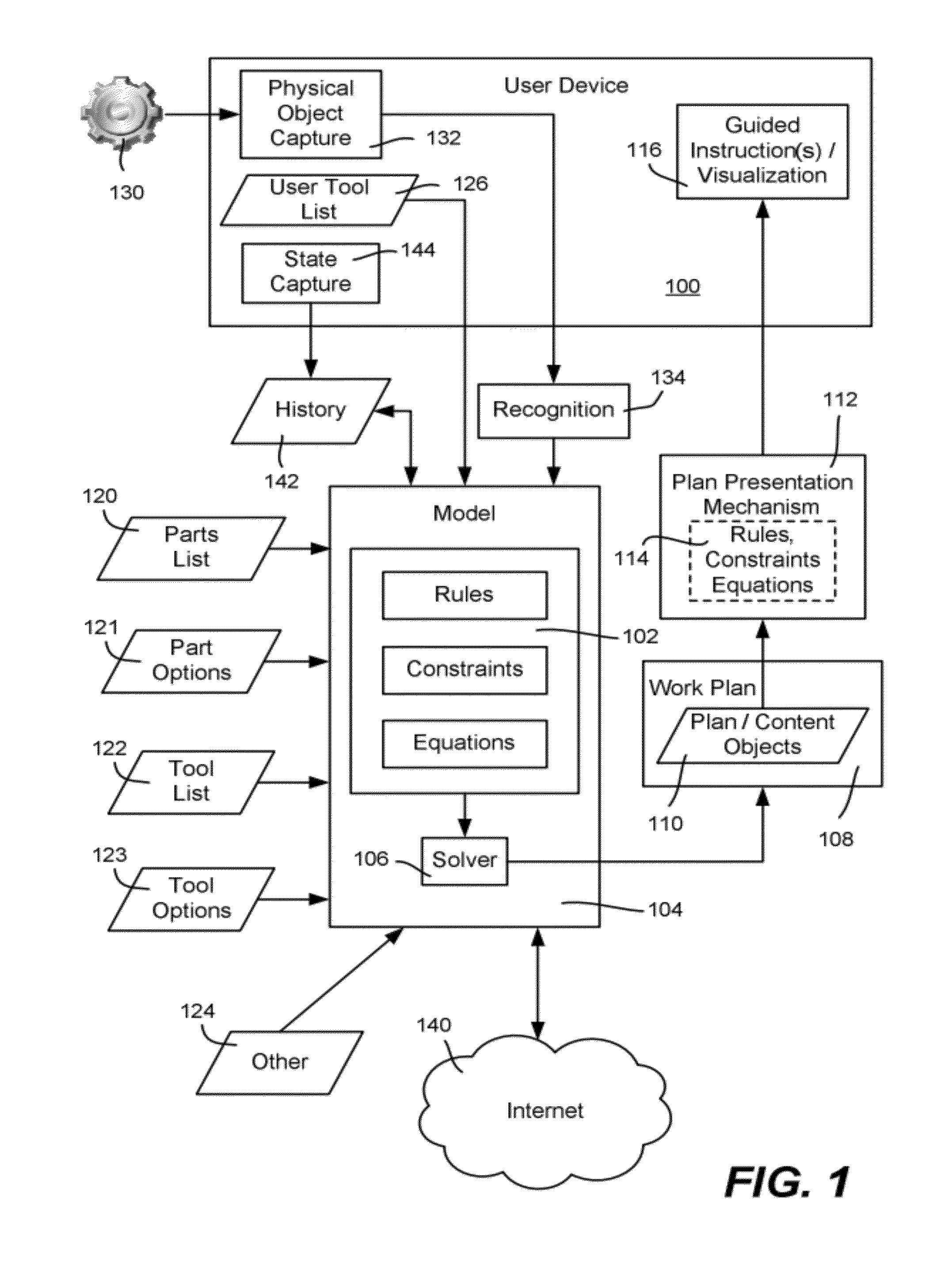
[0016]Various aspects of the technology described herein are generally directed towards providing a user experience that interactively guides the user through a task, based on pre-established rules, constraints and / or equations incorporated into a model or set of models. In general, a user inputs information representing some item or set of items that exists in the physical world into the model, possibly along with other information, and the model outputs a plan that guides the user's work based upon that information and other data to which the model has access. The user may input the information via an image that is recognized as the item, an RFID tag, a barcode, and so forth. The user may tag an object, e.g., by a device pointing action or user gesture, and an object may be identified by a user, spatial coordinate recognition, or recognition by relative positioning (including angle, distance, containment) from another object / feature (e.g., a mountain peak). The guidance may be in ...
PUM
 Login to View More
 Abstract
Description
Claims
Application Information
 Login to View More