Unlock instant, AI-driven research and patent intelligence for your innovation.

Buried Layer of An Integrated Circuit

a technology of integrated circuits and buried layers, applied in the direction of semiconductor devices, electrical devices, transistors, etc., can solve the problems of crystalline defects, insufficient protection effect of sacrificial oxide, and insufficient transit of consumed semiconductor materials, so as to reduce the downside of implantation

Active Publication Date: 2012-12-27
MACRONIX INT CO LTD
View PDF3 Cites 0 Cited by
  • Summary
  • Abstract
  • Description
  • Claims
  • Application Information

AI Technical Summary

Benefits of technology

This approach effectively minimizes crystalline lattice damage during implantation, allowing for precise doping with reduced defects, resulting in improved performance metrics such as lower sheet resistance and higher breakdown voltage in integrated circuits.

Problems solved by technology

Unfortunately, as the energetic dopants penetrate the substrate material damage to the crystalline structure results.
Collisions with the nuclei of the substrate material knock the substrate nuclei out of the crystalline lattice, resulting in crystalline defects.
As with the prior sacrificial oxide, this consumed semiconductor material had also been transited by, and damaged by, the implanted dopants.
Below 50 angstroms, it is believed that the sacrificial oxide is too thin to provide a substantial protective effect against implantation damage.
Above 300 angstroms, it is believed that the energies required to implant the ions to sufficient depth become impractically high.

Method used

the structure of the environmentally friendly knitted fabric provided by the present invention; figure 2 Flow chart of the yarn wrapping machine for environmentally friendly knitted fabrics and storage devices; image 3 Is the parameter map of the yarn covering machine
View more

Image

Smart Image Click on the blue labels to locate them in the text.
Viewing Examples
Smart Image
  • Buried Layer of An Integrated Circuit
  • Buried Layer of An Integrated Circuit
  • Buried Layer of An Integrated Circuit

Examples

Experimental program
Comparison scheme
Effect test

Embodiment Construction

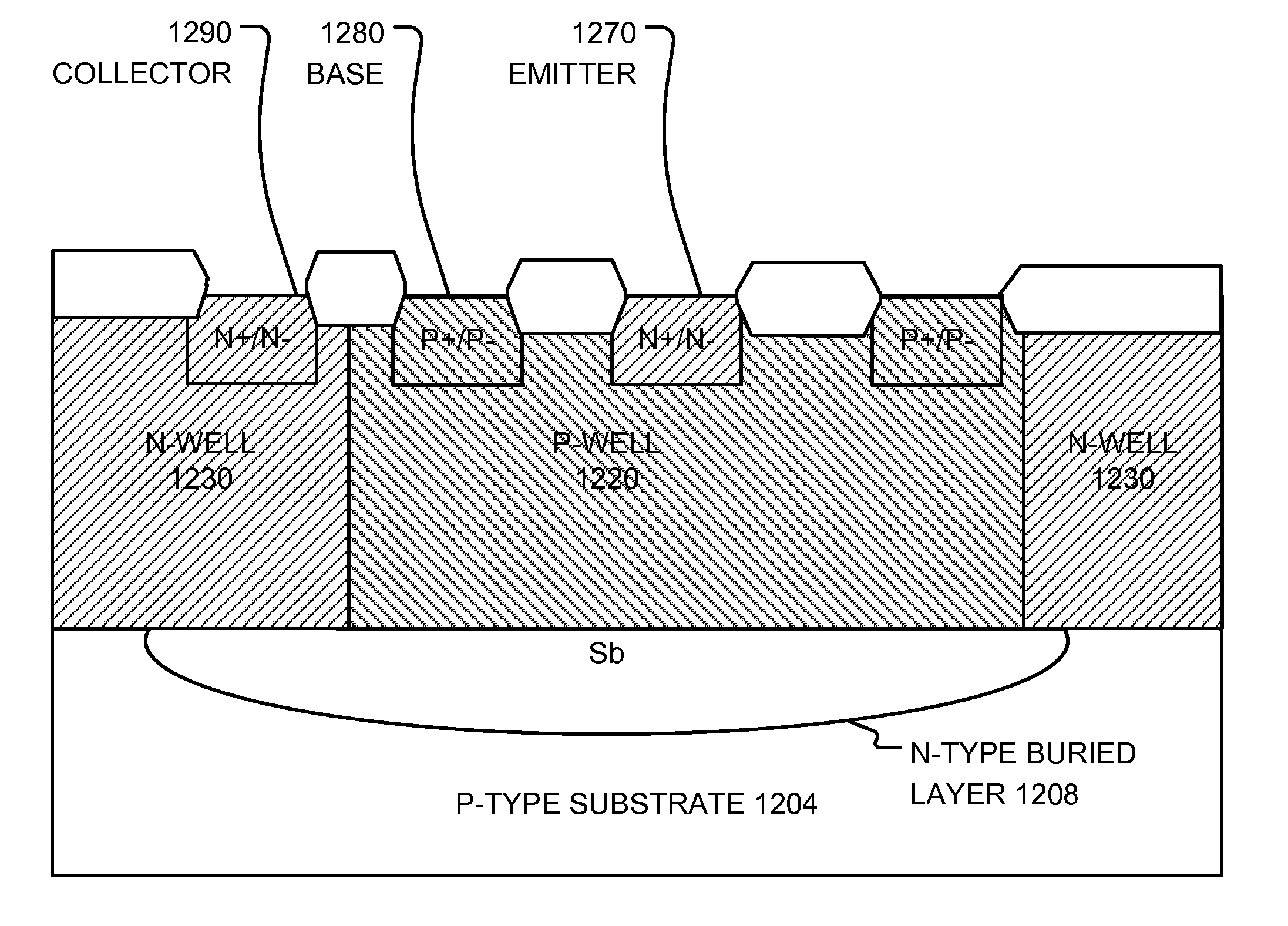
[0094]An n-type buried layer in a p-type substrate generally isolates the p-type substrate from the p-type well. An n-type buried layer in a p-type substrate also reduces resistance of an n-well in a p-type substrate.

[0095]A p-type buried layer in an n-type substrate generally isolates the n-type substrate from the n-type well. A p-type buried layer in an n-type substrate also reduces resistance of a p-well in an n-type substrate.

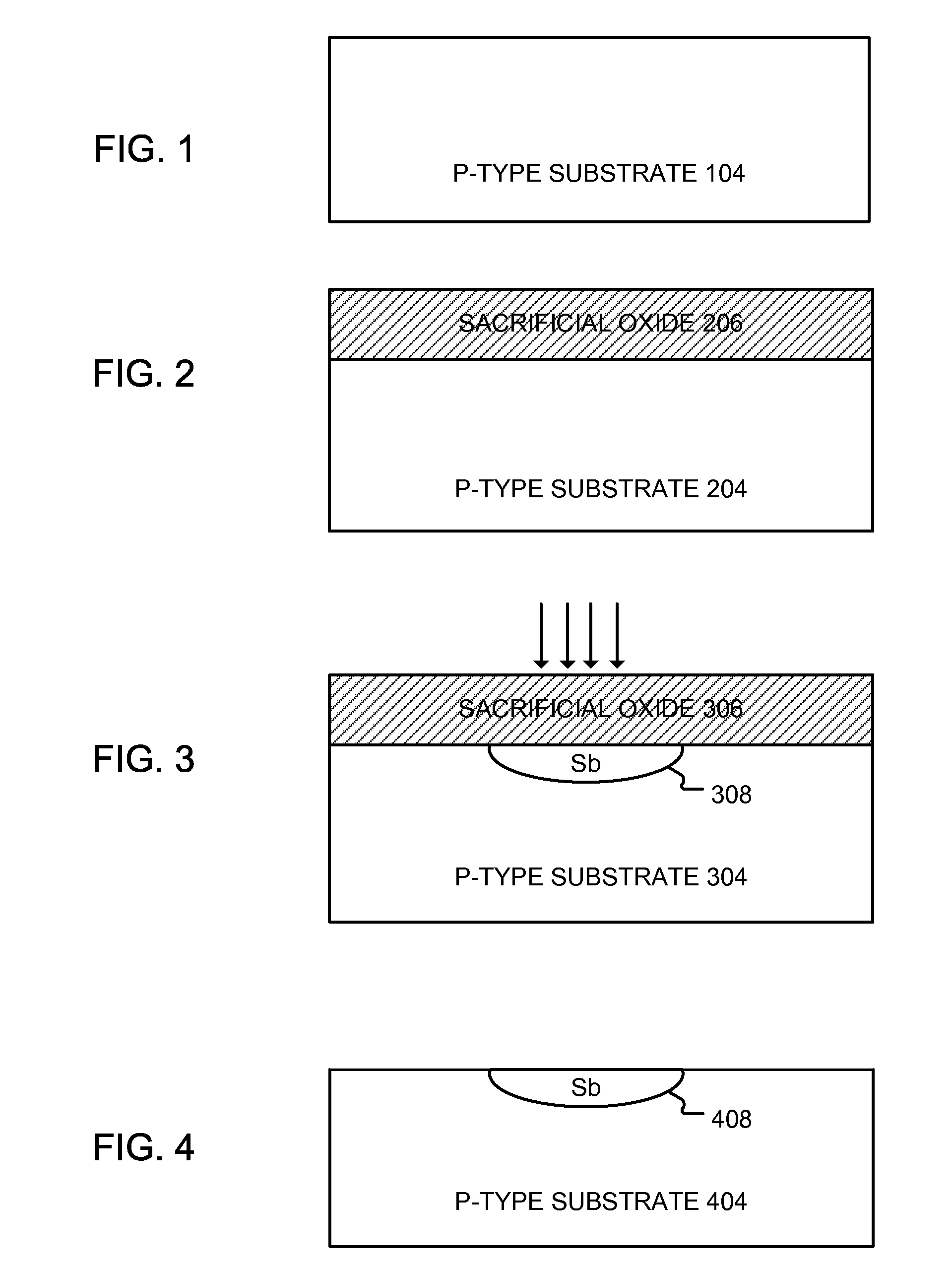
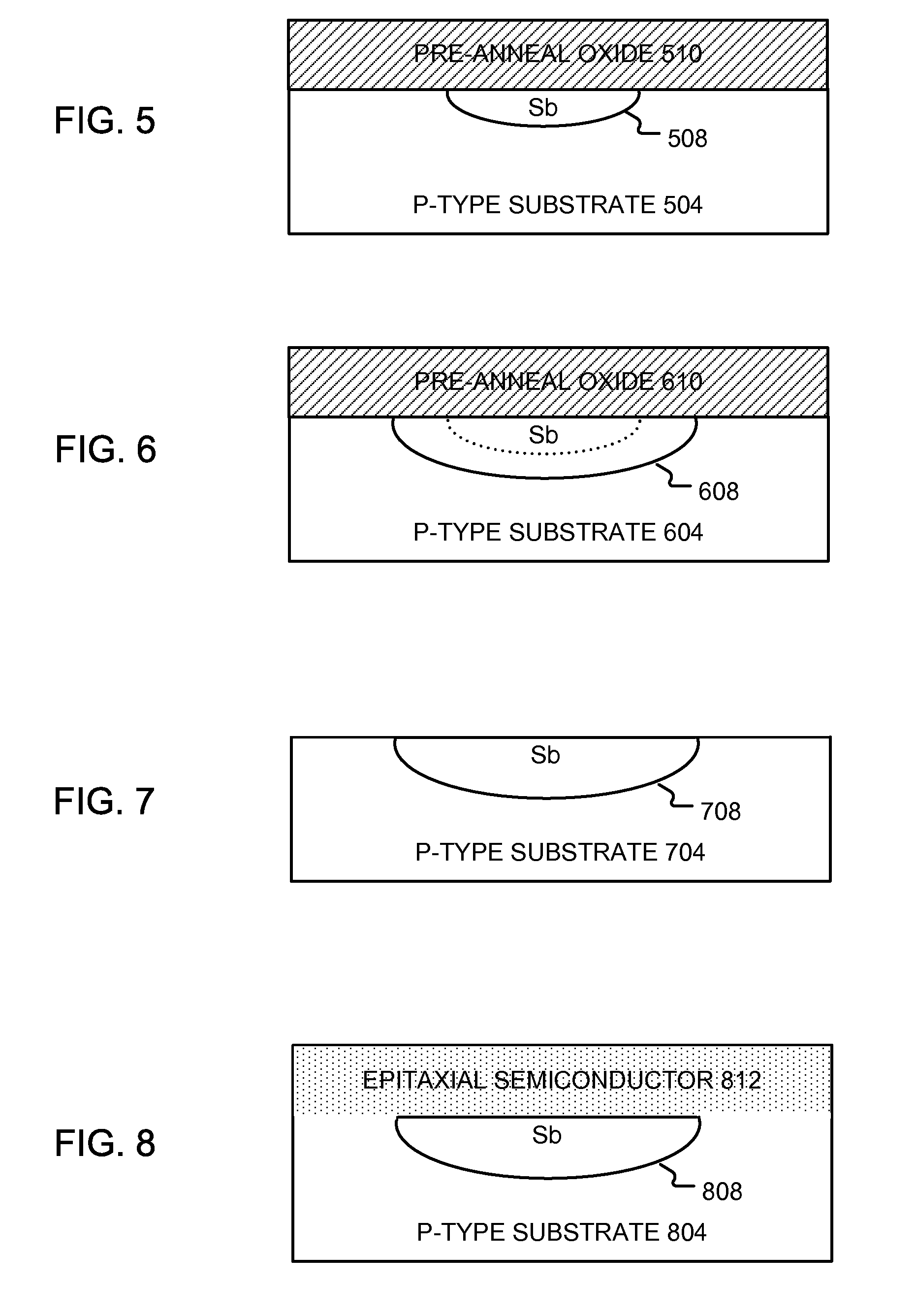
[0096]FIGS. 1-8 show a process flow of making an n-type buried layer on a p-type substrate.

[0097]FIG. 1 shows a p-type substrate 104 on which the n-type buried layer is grown. A p-type epitaxial layer over a substrate is also considered a type of p-type substrate.

[0098]FIG. 2 shows the formation of a sacrificial oxide 206 on the p-type substrate 204.

[0099]The sacrificial oxide is made with a thickness of between about 50 and 300 angstroms. Below 50 angstroms, it is believed that the sacrificial oxide is too thin to provide a substantial protective effect ag...

the structure of the environmentally friendly knitted fabric provided by the present invention; figure 2 Flow chart of the yarn wrapping machine for environmentally friendly knitted fabrics and storage devices; image 3 Is the parameter map of the yarn covering machine
Login to View More

PUM

No PUM Login to View More

Abstract

Various aspects of the technology are directed to integrated circuit manufacturing methods and integrated circuits. In one method, a first charge type buried layer in a semiconductor material of an integrated circuit by implanting first charge type dopants of the first charge type buried layer through a sacrificial oxide over the semiconductor material and through an intermediate region of the semiconductor material transited by the implanted first charge type dopants. When the implanted dopants pass through the sacrificial oxide, damage to the semiconductor crystalline lattice is averted. If the sacrificial oxide were absent, the implanted dopants would have passed through and damaged the semiconductor crystalline lattice instead. Later, a pre-anneal oxide is grown and removed.

Description

RELATED APPLICATIONS[0001]This application is a divisional of U.S. patent application Ser. No. 12 / 549,869, filed 28 Aug. 2009 entitled Buried Layer of An Integrated Circuit, which is incorporated by reference as if fully set forth herein.BACKGROUND[0002]1. Field of the Invention[0003]The described technology relates to forming a n-type or p-type buried layer with few defects in an integrated circuit.[0004]2. Description of Related Art[0005]Implantation of dopants is a more accurate alternative to diffusion. Unfortunately, as the energetic dopants penetrate the substrate material damage to the crystalline structure results. Collisions with the nuclei of the substrate material knock the substrate nuclei out of the crystalline lattice, resulting in crystalline defects. Accordingly, the use of implantation technology is a tradeoff of more precise doping in exchange for damage to the semiconductor crystal structure.SUMMARY[0006]The described technology reduces the downside of implantatio...

Claims

the structure of the environmentally friendly knitted fabric provided by the present invention; figure 2 Flow chart of the yarn wrapping machine for environmentally friendly knitted fabrics and storage devices; image 3 Is the parameter map of the yarn covering machine
Login to View More

Application Information

Patent Timeline
no application Login to View More
Patent Type & Authority Applications(United States)
IPC IPC(8): H01L29/06
CPCH01L21/2652H01L21/324H01L21/761H01L29/0821H01L29/78H01L29/167H01L29/66272H01L29/7322H01L29/107
Inventor HUANG, YIN-FUCHANG, MING RONGLIEN, SHIH-CHIN
Owner MACRONIX INT CO LTD