
Bone morphogenetic protein receptor binding agents and methods of their use
a technology of bmp ligands and binding agents, which is applied in the direction of fused cells, peptides, antibody medical ingredients, etc., can solve the problems of complex signaling interactions, limited systemic delivery, and poor suitability of bmp ligands as therapeutic candidates
- Summary
- Abstract
- Description
- Claims
- Application Information
AI Technical Summary
Benefits of technology
Problems solved by technology
Method used
Image

Examples
example 1
Over-Expression of BMP4 in Primary Human Tumors
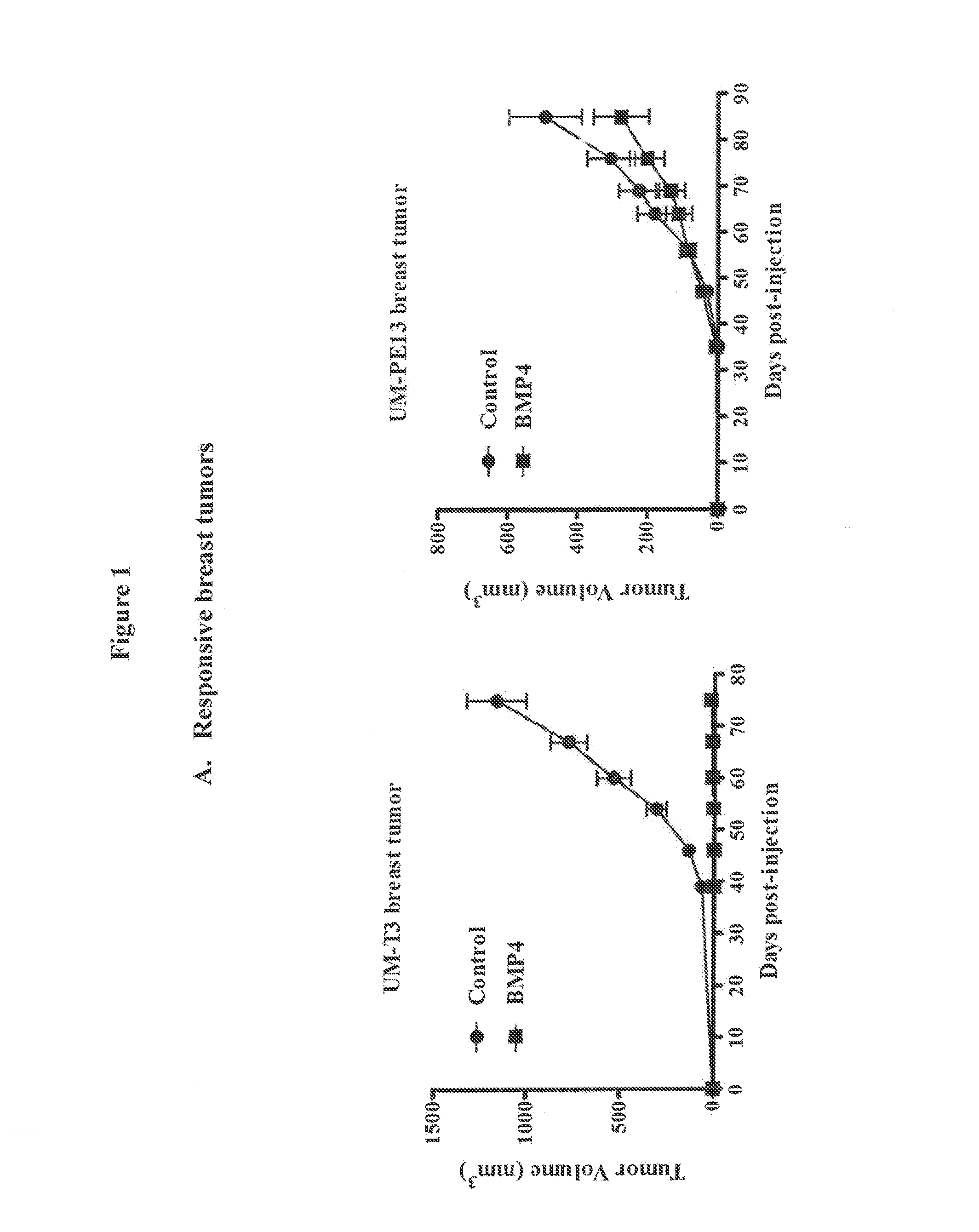
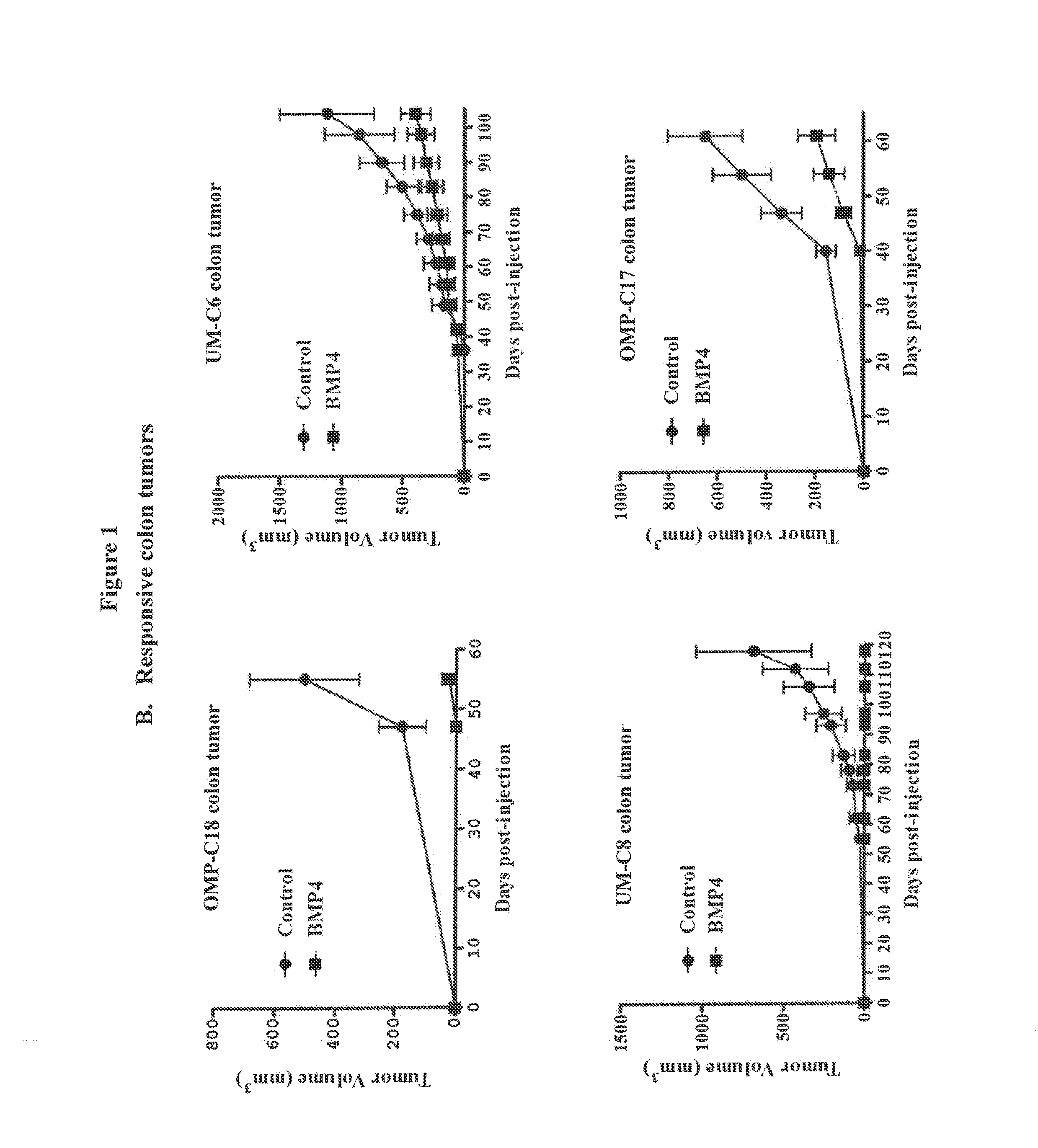
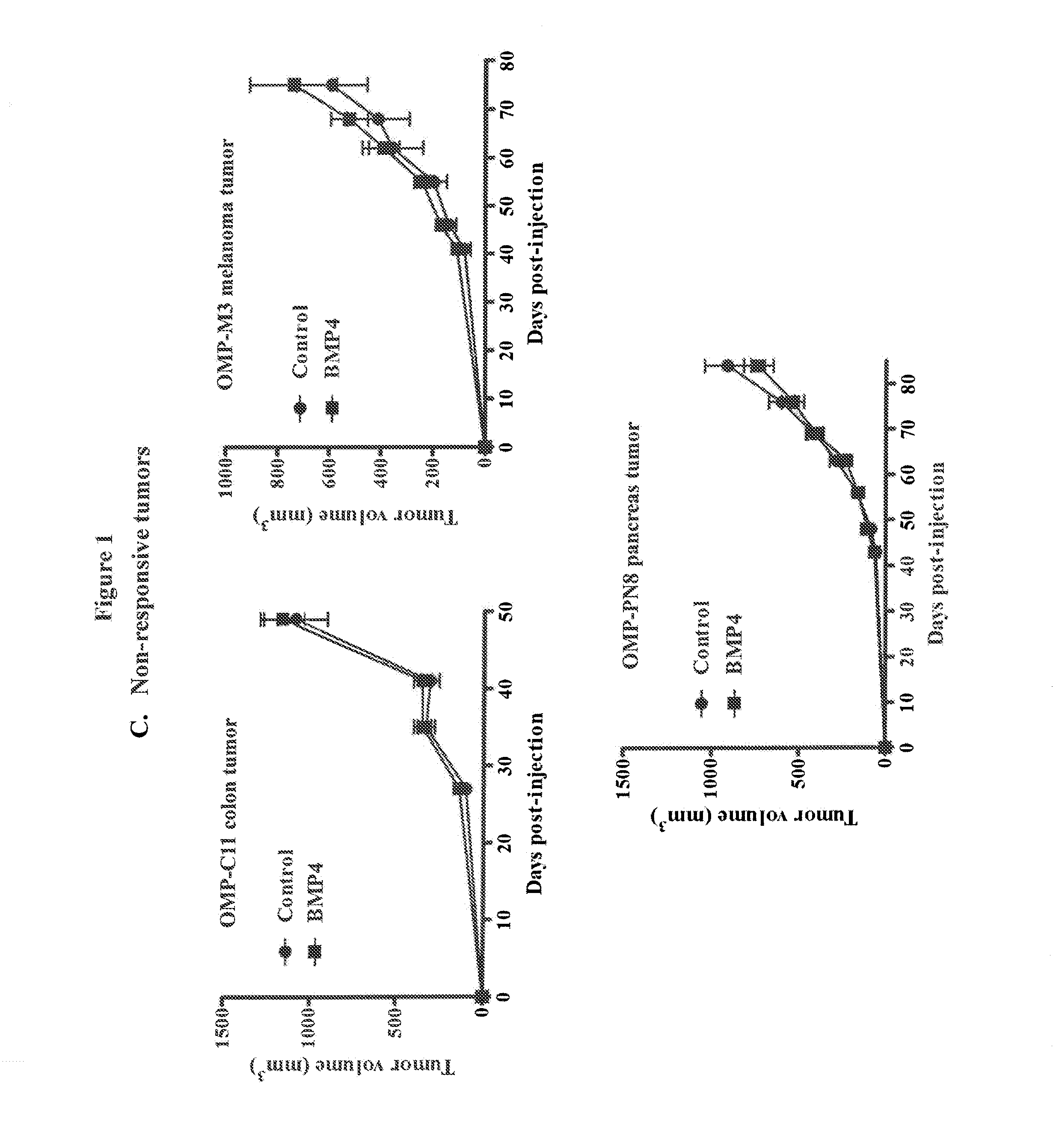
[0228]Lentivial expression of BMP4 in tumor xenografts was used to evaluate the impact of BMP signaling activation on tumor engraftment and tumor growth. BMP4 was over-expressed in a variety of primary human tumors using a lentiviral delivery system. Tumor take and tumor growth from tumors over-expressing BMP4 were evaluated in mouse xenograft models. The primary human tumors used were breast tumors UM-T3 and UM-PE13, colon tumors UM-C6, UM-C8, OMP-C11, OMP-C17 and OMP-C18, pancreatic tumor OMP-PN8 and melanoma tumor OMP-M3.
[0229]An HIV-1-based lentiviral vector containing a constitutive BMP2 / BMP4 fusion gene-IRES-GFP expression cassette with a CMV promoter (LentiBMP4-GFP) was used to transduce freshly isolated tumor cells ex vivo. The lentiviral vector was constructed as described in Peng et al., 2001, Mol. Therapy. 4:95-104. Single cell suspensions were obtained from minimally passaged xenografts by mechanical dissociation and enzymat...
example 2
BMP4 Treatment of Colon Tumor OMP-C18
[0231]Single cell suspensions of colon tumor OMP-C18 were obtained from minimally passaged xenografts by mechanical dissociation and enzymatic digestion with collagenase III and DNaseI for 2 hours at 37° C. Approximately 50,000 cells were injected subcutaneously in the flanks of NOD-SCID mice. On day 29 when the tumors reached an average size of 150 mm3, the mice were randomized, and placed in groups of 10. An adenoviral vector was used to deliver a CMV-BMP4 cassette (Ad-BMP4) to the mice and to express BMP4. An adenoviral vector containing a Fc cassette (Ad-Fc) was used as a negative control vector. 109 pfus of the appropriate vector were administered to each mouse through a single tail vein injection. Tumor growth was monitored over the next 11 days and tumors were measured weekly with a digital caliper. BMP4 was detected in mouse sera after adenoviral delivery by Western blot analyses and the amount of BMP4 was found to remain stable for the d...
example 3
FACS Analysis of BMP4-Treated Colon Tumor OMP-C18
[0233]OMP-C18 colon tumors from Example 2 were harvested and analyzed by FACS for the expression of cancer stem cell markers ESA, CD44 and CD166. Single cell suspensions were obtained from the BMP4-treated and the control-treated tumors by mechanical dissociation and enzymatic digestion with collagenase III and DNaseI for 2 hours at 37° C. Approximately 1×10⁶ cells of each tumor were incubated in 100 μl of staining solution with a mixture of the following antibodies: 1 μl biotinylated anti-mouse H-2Kd, 0.5 μl biotinylated anti-mouse CD45, 20 μl phycoerythrin (PE)-conjugated anti-human CD166, 2 μl allophycocyanin (APC)-conjugated anti-human ESA and 2 μl PE-Cy7-conjugated anti-human and anti-mouse CD44. A second incubation with 0.5 μl PE-Cy5.5-conjugated streptavidin was performed to detect the mouse cells bound with biotinylated antibodies. DAPI was added to the final solution to allow for detection of dead cells. The cells were analyz...
PUM
| Property | Measurement | Unit |
|---|---|---|
| temperature | aaaaa | aaaaa |
| pH | aaaaa | aaaaa |
| pH | aaaaa | aaaaa |
Abstract
Description
Claims
Application Information
 Login to View More