
Method for producing patch, and patch
a production method and patch technology, applied in the field of patch production methods, can solve the problems of uneven adhesive layer residue, reduced adhesiveness, complicated production process, etc., and achieve the effects of reducing variation in reducing the variation of skin permeation of the drug, and easy giving
- Summary
- Abstract
- Description
- Claims
- Application Information
AI Technical Summary
Benefits of technology
Problems solved by technology
Method used
Image

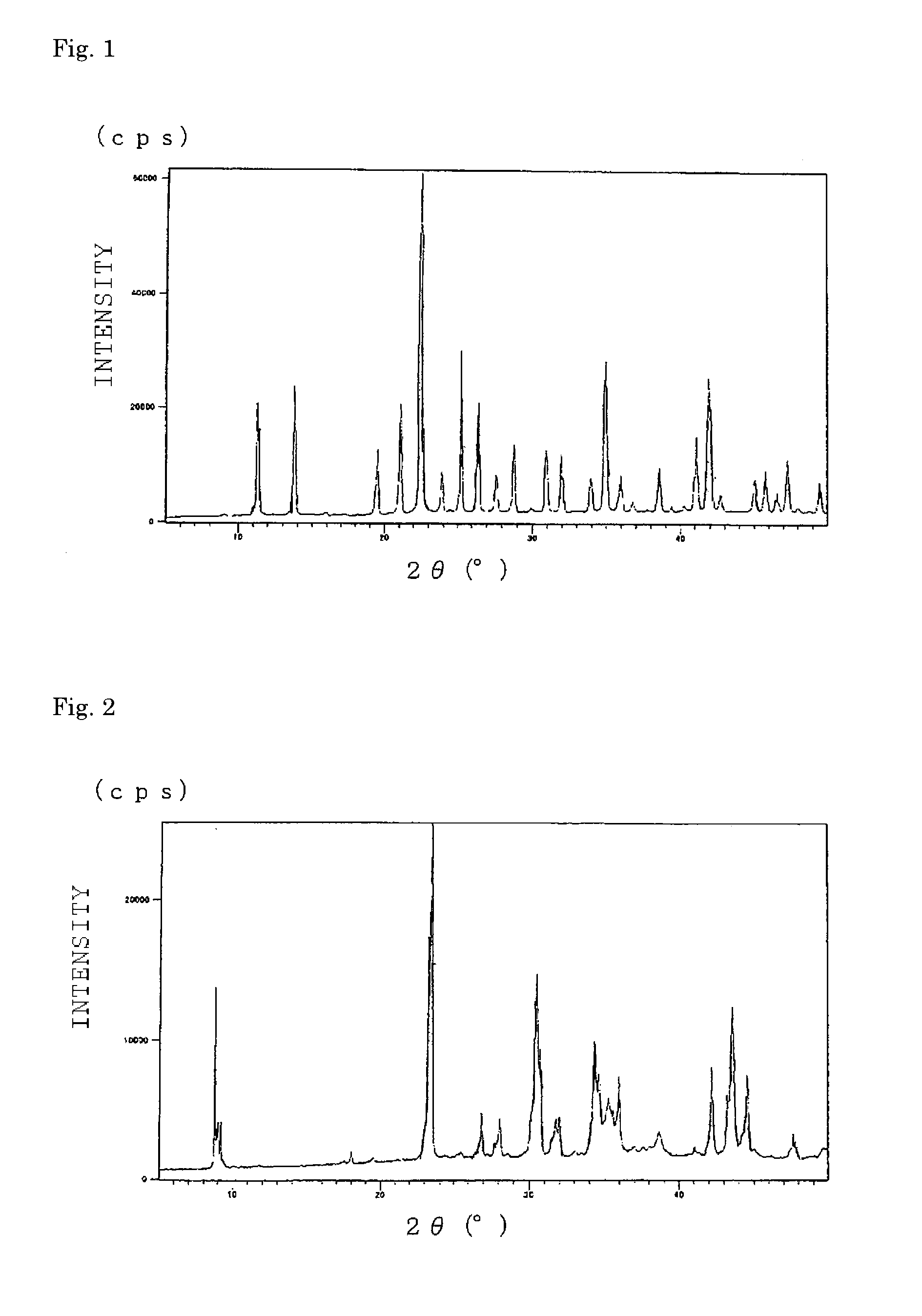
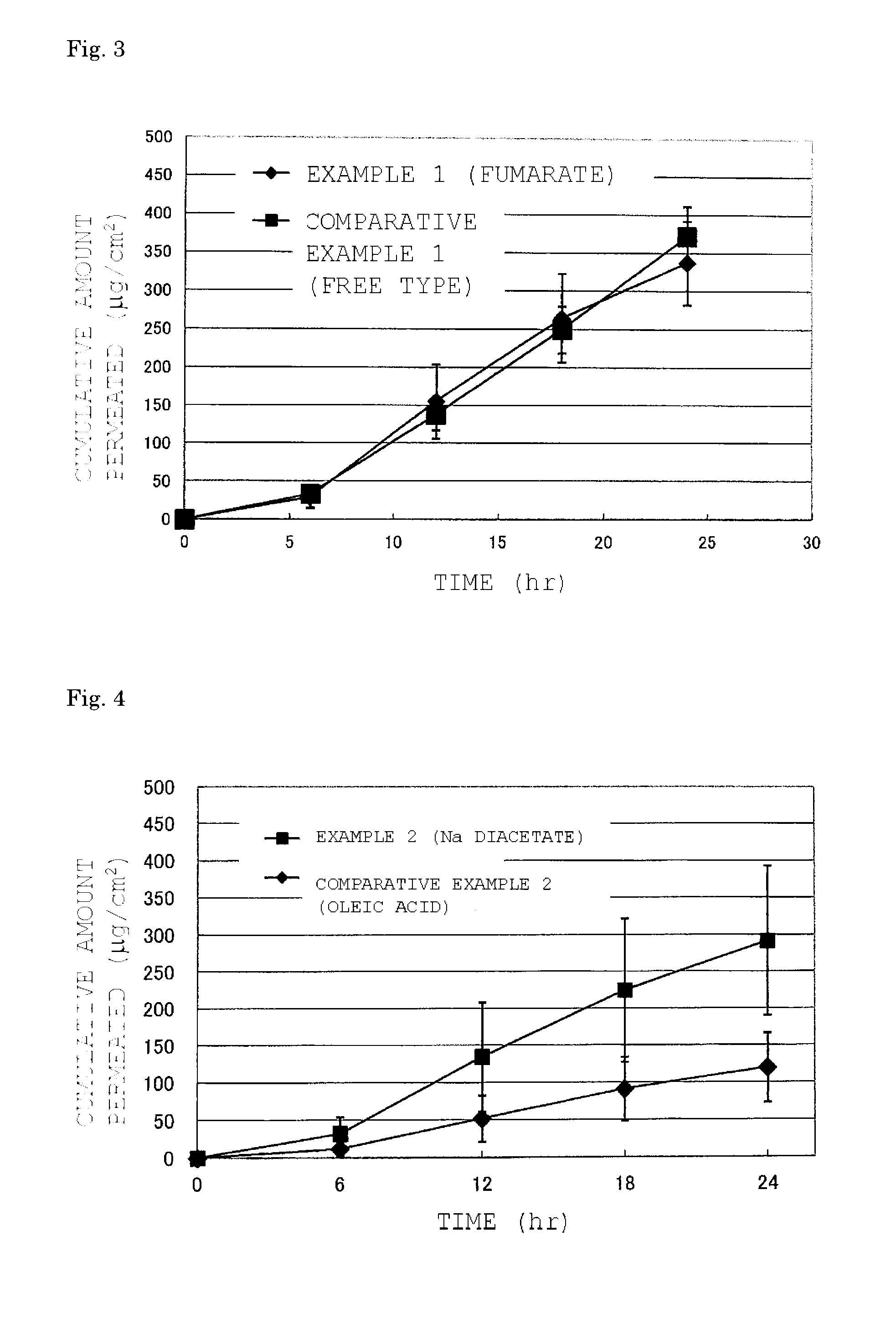
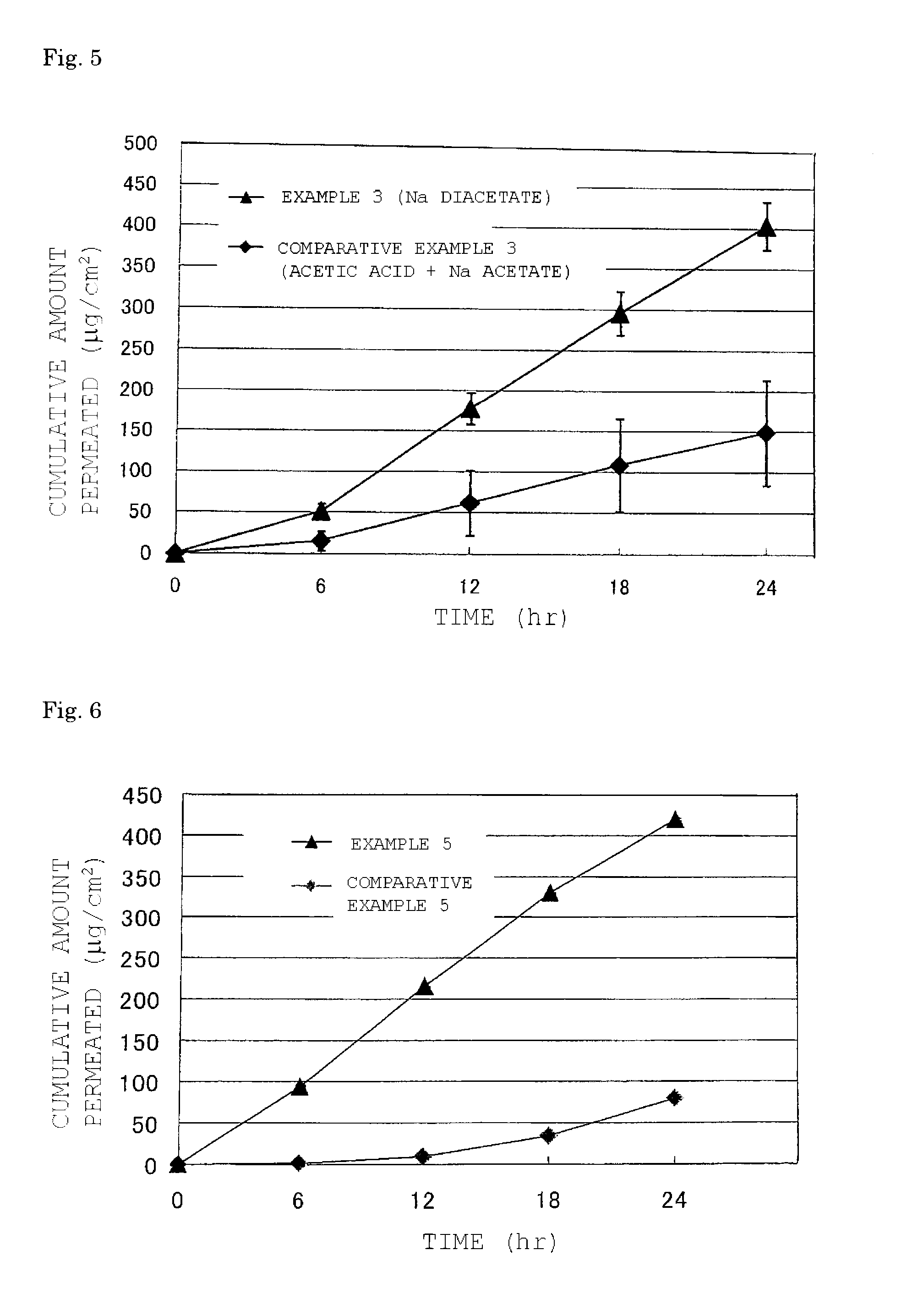
Examples
example 1
[0101]First, 10.0 parts by mass of sodium diacetate, 5.0 parts by mass of emedastine fumarate, 18.0 parts by mass of a styrene-isoprene-styrene block copolymer (SIS), 5.0 parts by mass of a methacrylate copolymer (trade name: EUDRAGIT, produced by Rohm Pharma GmbH), 8.0 parts by mass of polyisobutylene (PIB), 39.0 parts by mass of a petroleum-based tackifier resin (trade name: Alcon, produced by Arakawa Chemical Industries, Ltd.), 5.0 parts by mass of sucrose fatty acid ester, 5.0 parts by mass of sorbitan trioleate, and 5.0 parts by mass of diisopropanolamine were mixed in toluene and stirred with a propeller mixer to obtain an uniform adhesive layer composition (the concentration of a nonvolatile content: 50% by mass). Next, this adhesive layer composition was coated on one surface of a 75-μm-thick mold release liner layer made of polyethylene terephthalate such that the thickness after drying was 100 μm. This was dried at 60° C. for 20 minutes to form an adhesive layer. Next, a 3...
examples 2 to 4
[0102]Patches were obtained in the same way as in Example 1 except that the composition of an adhesive layer composition was as shown in Table 1. In an adhesive layer of the obtained patch, the molar ratios of emedastine fumarate to sodium diacetate (the number of moles of emedastine fumarate:the number of moles of sodium diacetate) were 1:7.5 in Example 2 and 1:6 in Example 3. The molar ratio between setiptiline maleate and sodium diacetate (the number of moles of setiptiline maleate:the number of moles of sodium diacetate) in Example 4 was 1:10.5.
PUM
| Property | Measurement | Unit |
|---|---|---|
| diffraction angle | aaaaa | aaaaa |
| molar ratio | aaaaa | aaaaa |
| skin permeation | aaaaa | aaaaa |
Abstract
Description
Claims
Application Information
 Login to View More