
A catheter assembly
a catheter and assembly technology, applied in the field of catheter assembly, can solve the problems of not being suitable for indwelling catheters, not being suitable for catheters, and difficult for users to reduce dexterity
- Summary
- Abstract
- Description
- Claims
- Application Information
AI Technical Summary
Benefits of technology
Problems solved by technology
Method used
Image

Examples
Embodiment Construction
[0086]It should be understood that the detailed description and specific examples, while indicating embodiments of the invention, are given by way of illustration only, since various changes and modifications within the spirit and scope of the invention will become apparent to those skilled in the art from this detailed description.
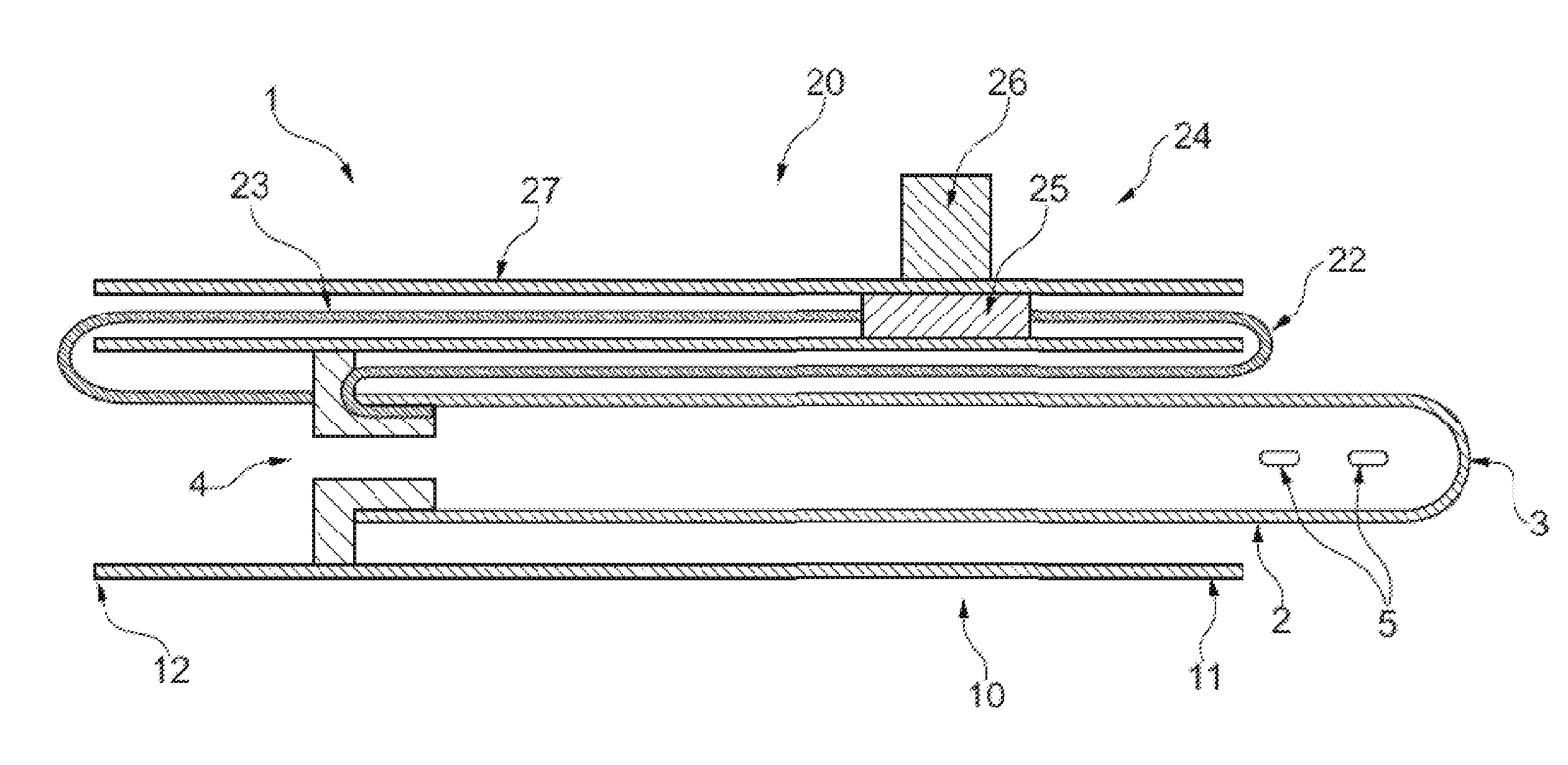
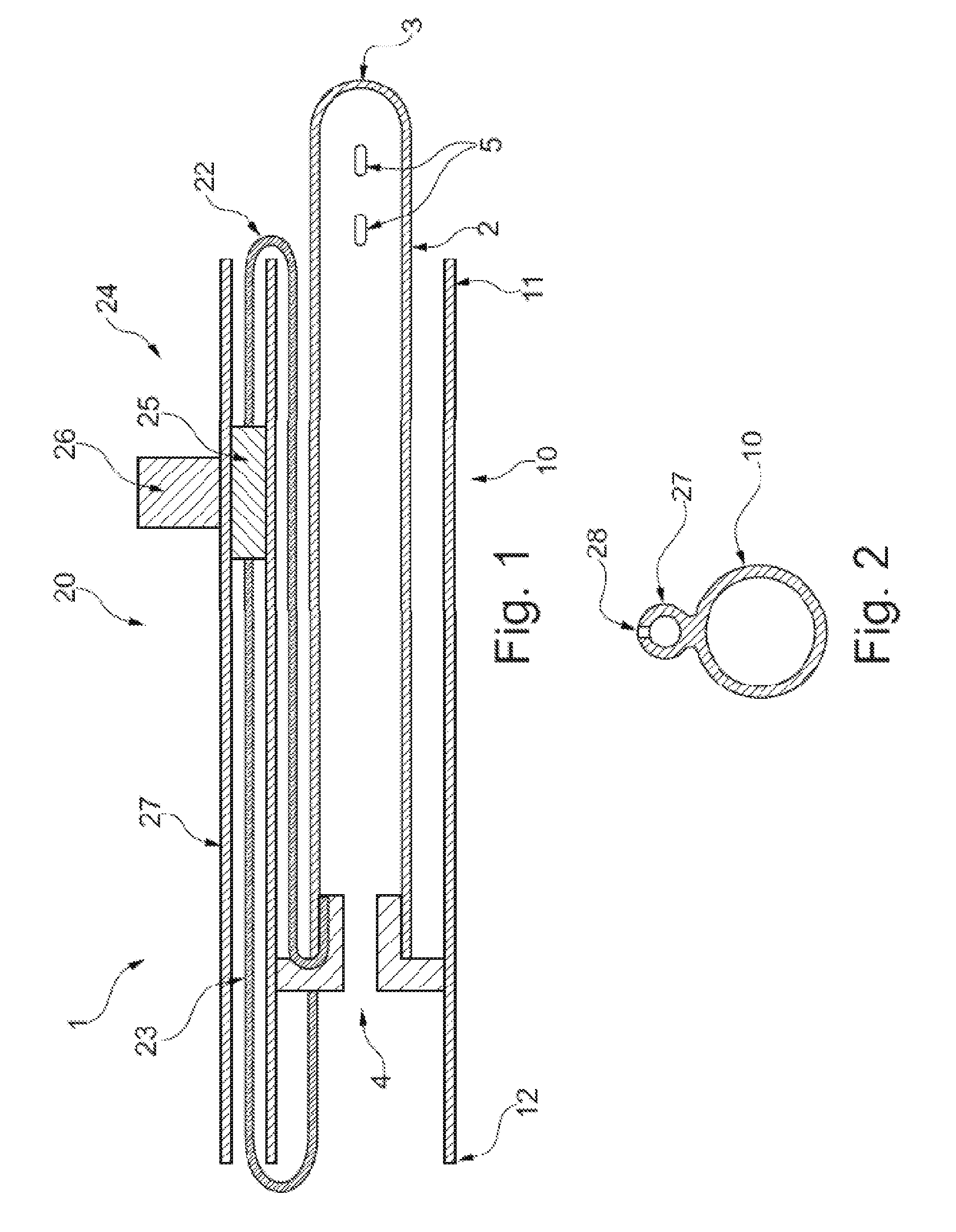
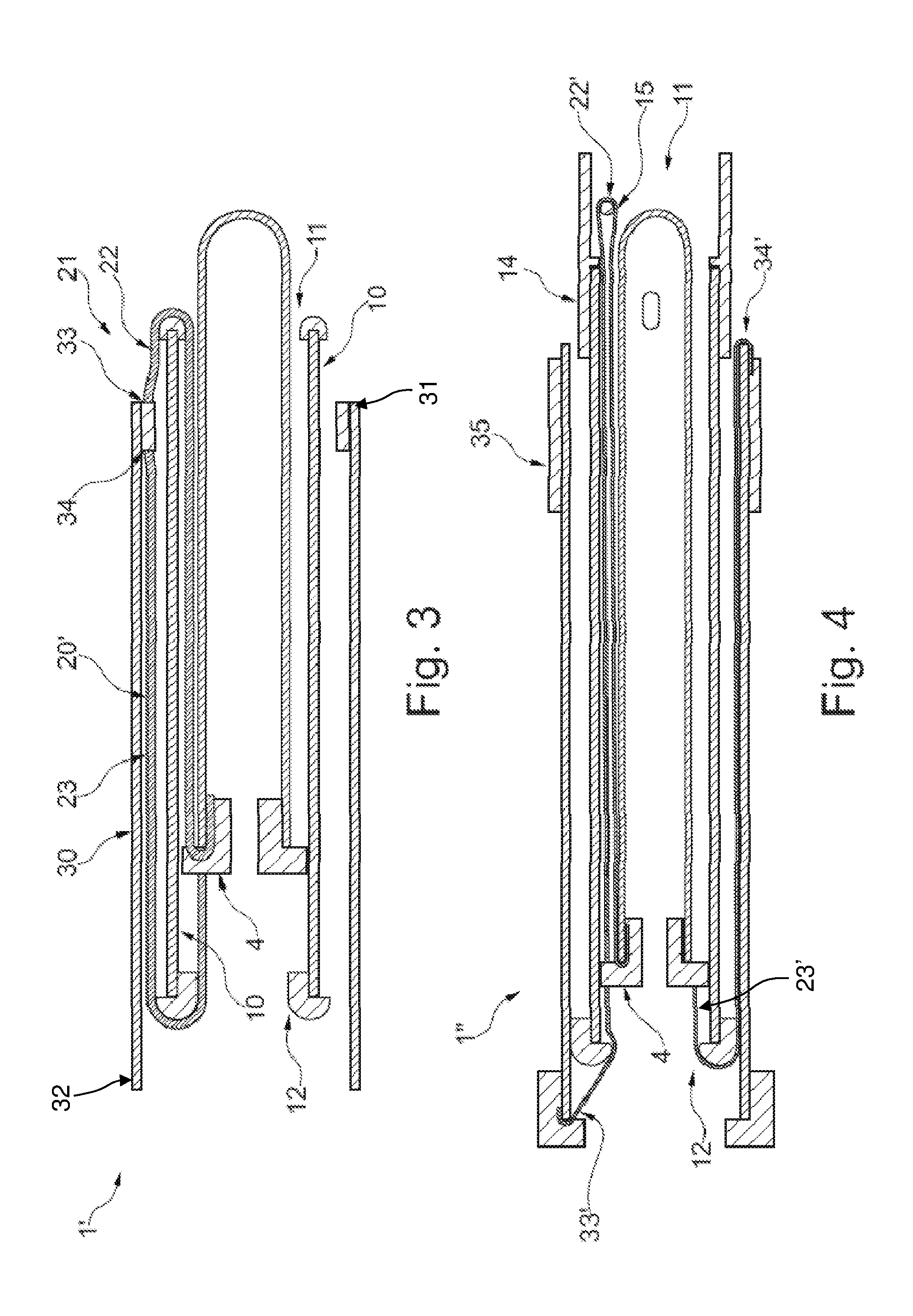
[0087]FIG. 1 illustrates a cross-sectional view of a catheter assembly 1 according to a first series of embodiments the invention. The catheter assembly 1 comprises a catheter 2 with a proximal insertion end 3 and a distal end 4. The distal end 4 is wider than the tubular part of the catheter. The catheter is further provided with eyelets 5 for leading urine from the bladder into the inner lumen of the catheter. In the figure, the catheter 2 is contained in a first tube 10, see e.g. FIG. 5 showing the embodiment in a perspective view. The widened distal end 4 provides a slight friction against the inner surface of the first tube 10 so as to prevent the ca...
PUM
| Property | Measurement | Unit |
|---|---|---|
| Force | aaaaa | aaaaa |
Abstract
Description
Claims
Application Information
 Login to View More