
Simplified cold spray nozzle and gun
- Summary
- Abstract
- Description
- Claims
- Application Information
AI Technical Summary
Benefits of technology
Problems solved by technology
Method used
Image

Examples
Embodiment Construction
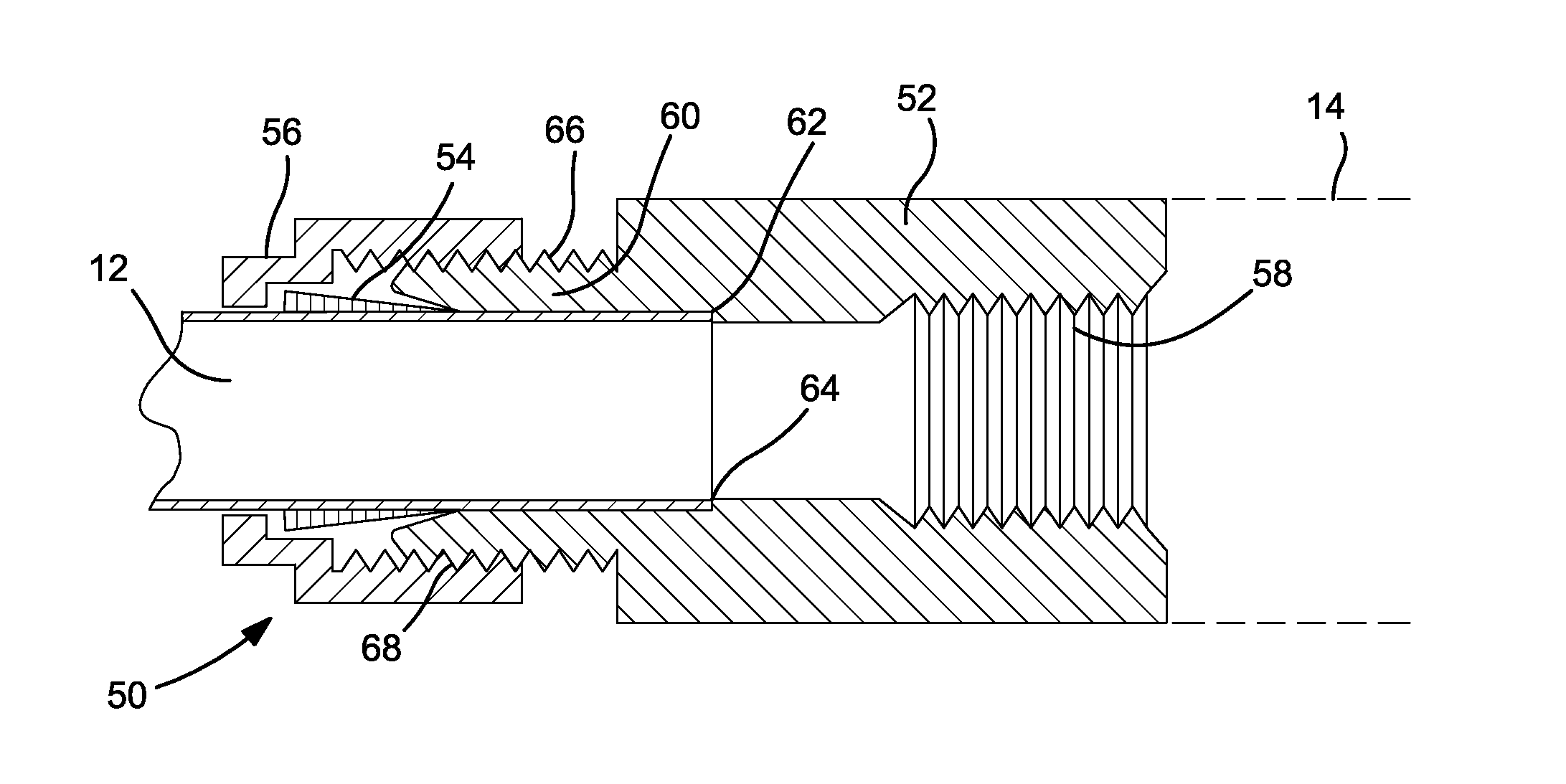
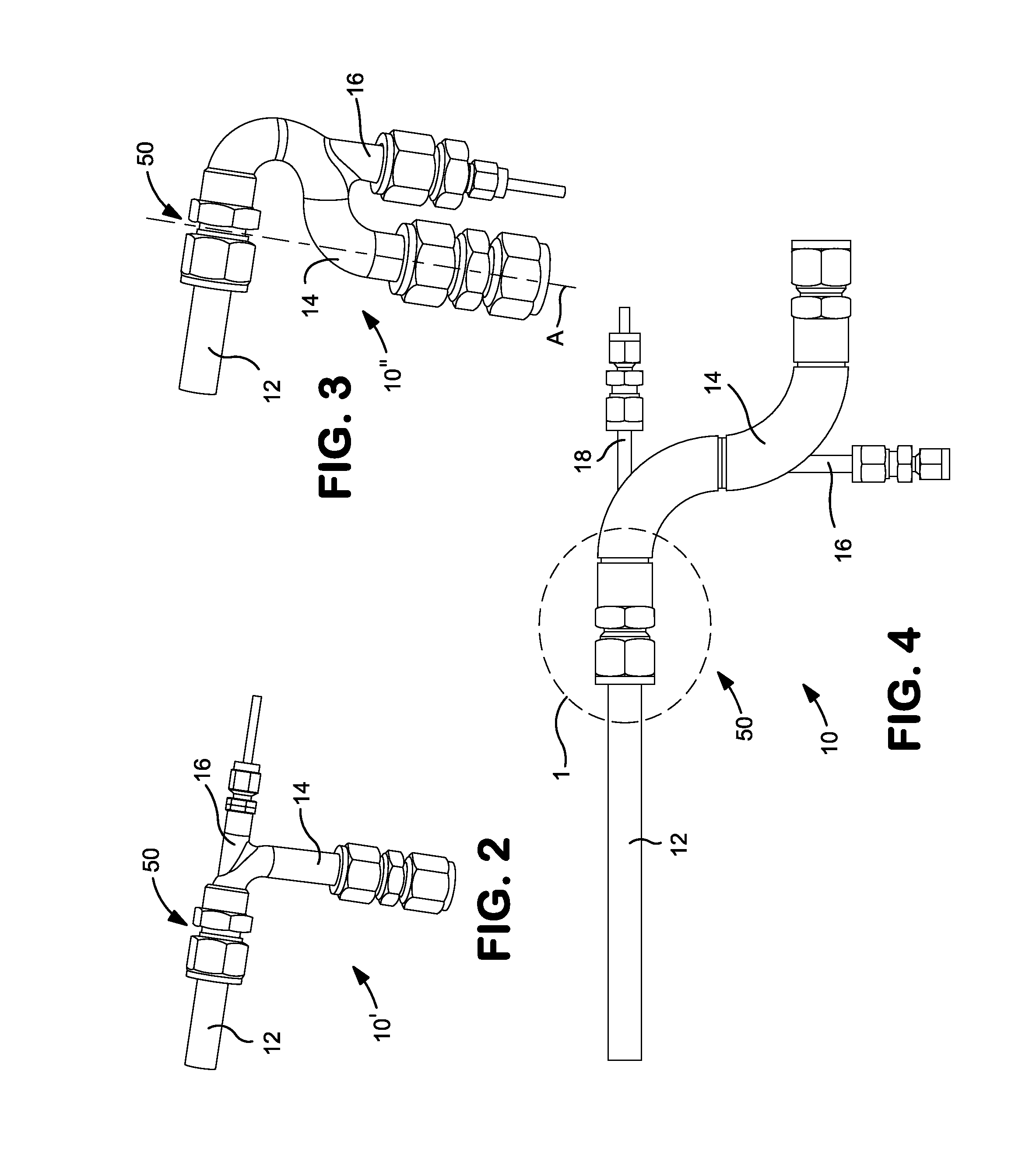
[0028]The disclosure relates to a cold spray nozzle assembly and to a cold spray gun including the nozzle assembly, wherein the assembly has more compact structure which allows for reduced cost and increased versatility in use to apply powders to substrates as desired.
[0029]Cold spray systems range in capability from high temperature, high pressure systems to lower pressure and temperature systems. Typical operating ranges for such systems are as follows: 10-50 bar operating pressures with ambient to 1200° C. gas temperatures. In all cases, it is critical to have a nozzle with the correct geometry, wherein the nozzle is capable of operating in the temperatures and pressures used in the device, and with a design capable of accelerating the gas and powdered materials to the velocities critical for consolidation. Known nozzles are designed to be connected to pressure vessels, often called the “gun”, using special flanges, tapered sleeves or threads. Further, the pressure vessels are ge...
PUM
| Property | Measurement | Unit |
|---|---|---|
| Diameter | aaaaa | aaaaa |
Abstract
Description
Claims
Application Information
 Login to View More