
Optimal dispatch of electric vehicles performing v2g regulation
a technology of electric vehicles and dispatch methods, applied in the direction of process and machine control, instruments, computer control, etc., can solve the problems of wasting excess energy, electric load for charging electric vehicles can be nearly as great as the load for a house, and the excess energy generated by wind and solar farms may go to was
Patent Information
- Authority / Receiving Office
- US · United States
- Current Assignee / Owner
- Publication Date
- 2019-11-28
Smart Images
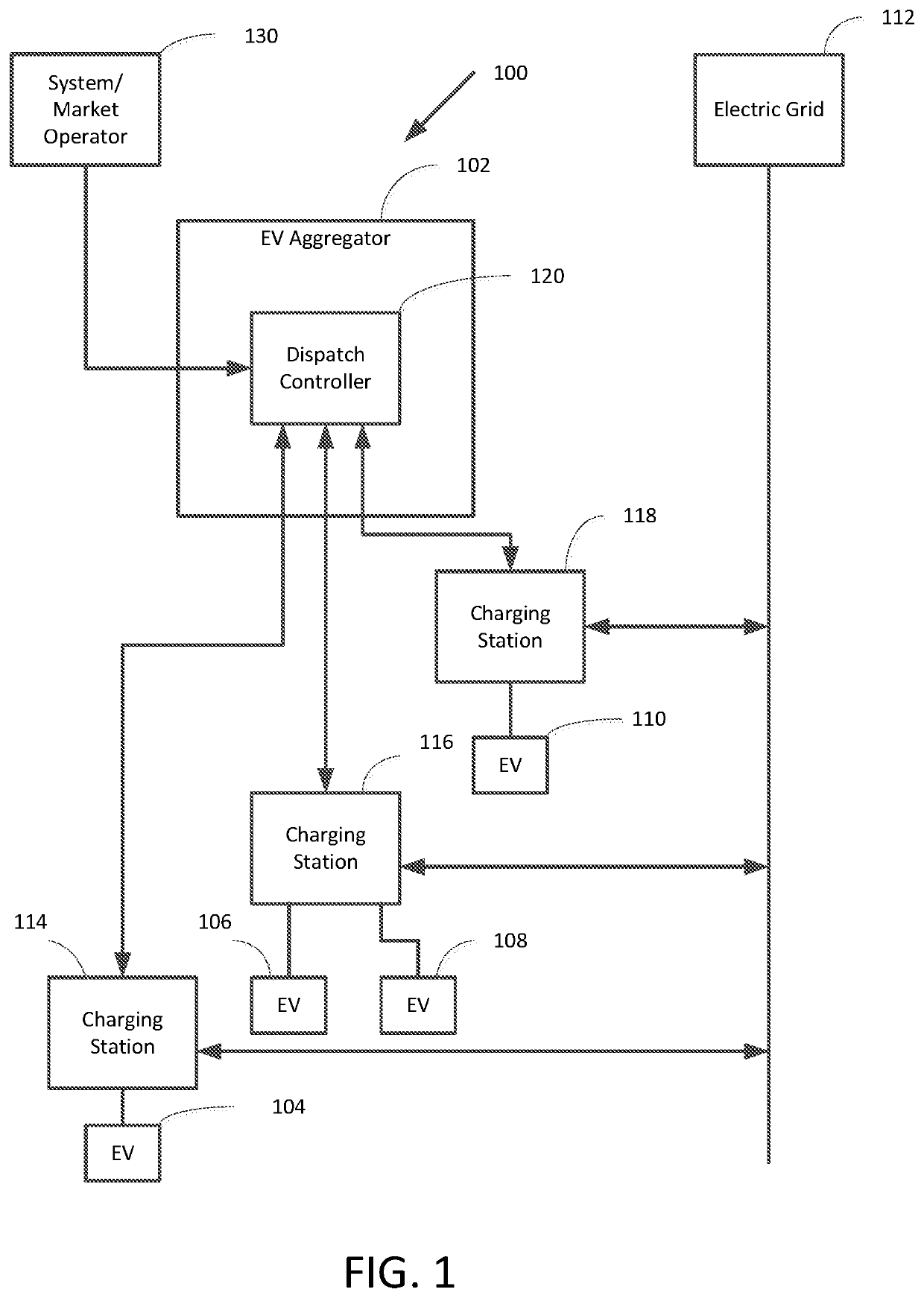
Figure 1 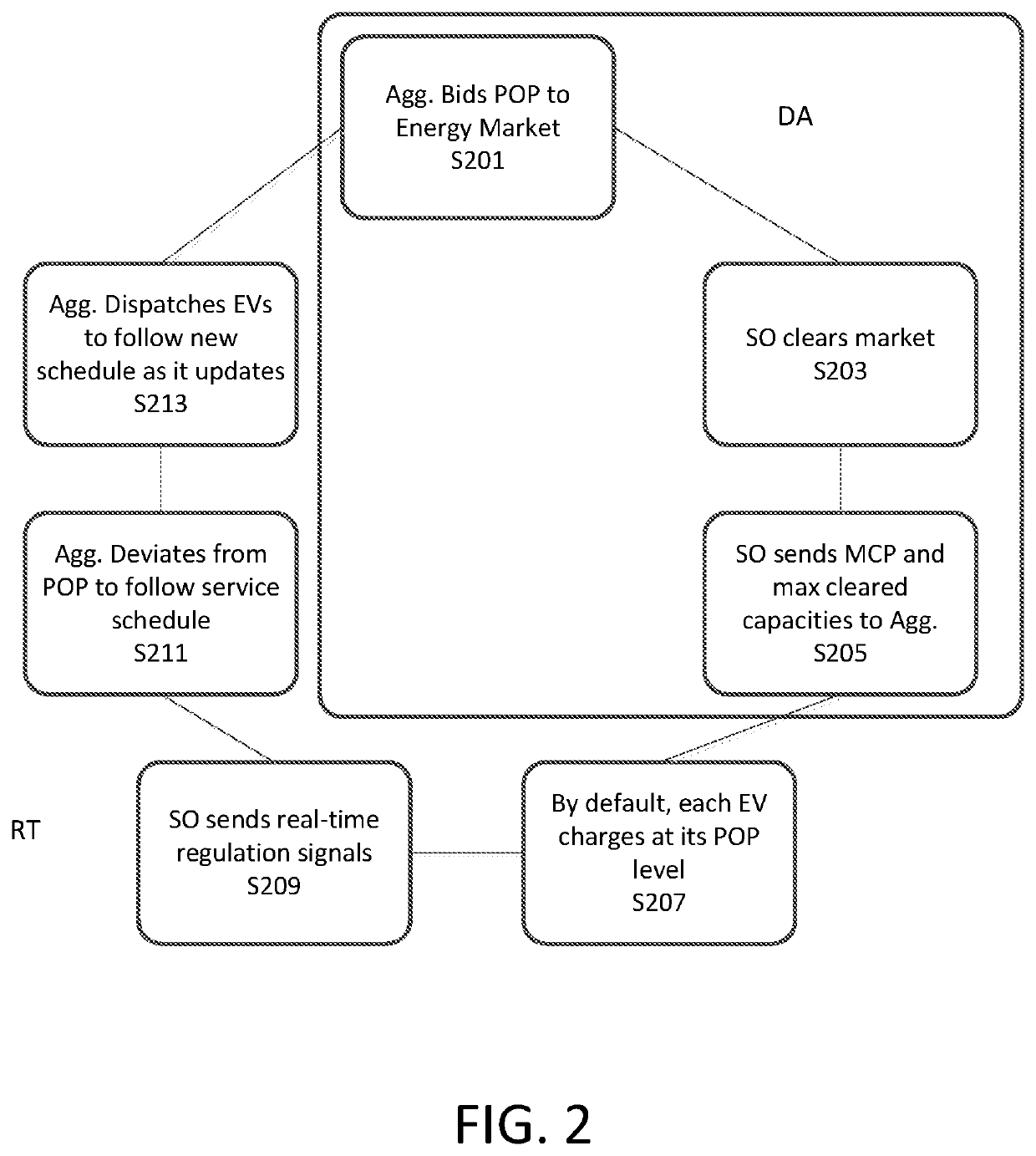
Figure 2 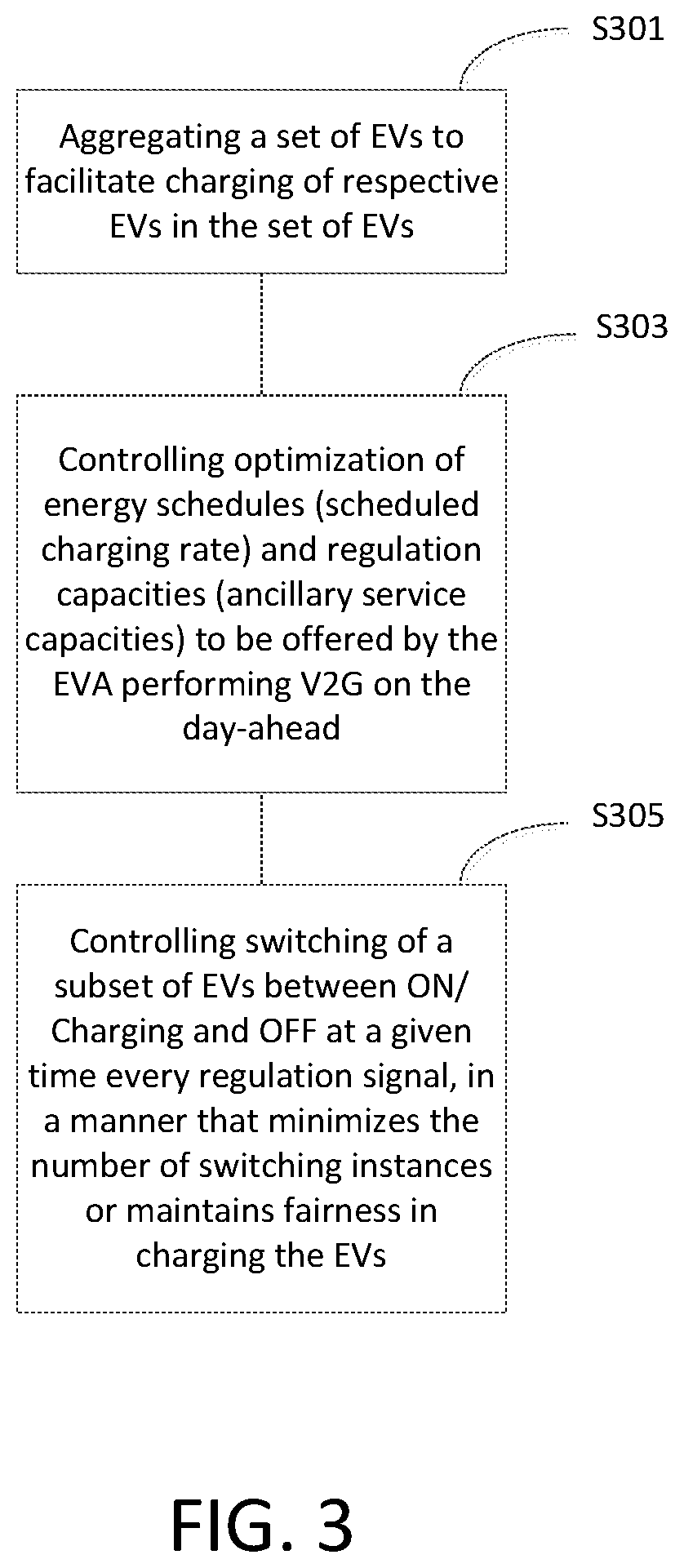
Figure 3
Abstract
Description
STATEMENT OF ACKNOWLEDGEMENT
[0001] The authors would like to acknowledge the support provided by the Deanship of Scientific Research (DSR) at King Fand University of Petroleum & Minerals (KFUPM), Dhahran, Saudi Arabia, for supporting this work under project no. RG1404-1 & -2.BACKGROUNDField of the Invention
[0002] The present disclosure relates generally to optimal dispatch method for electric vehicles performing discrete unidirectional frequency regulation.Description of the Related Art
[0003] The electric power industry supplies electric power to meet demand. Supplying electric power involves generation, transmission, and distribution of electricity. In order to support the continuous flow of electricity, additional services and functions are provided, referred to as ancillary services. Ancillary services generally include frequency regulation and peak shaving.
[0004] The public power grid is evolving. The public power grid is diversifying to integrate renewable energy resources from sou...
Examples
Embodiment Construction
[0032]As used herein any reference to “one embodiment” or “some embodiments” or “an embodiment” means that a particular element, feature, structure, or characteristic described in connection with the embodiment is included in at least one embodiment. The appearances of the phrase “in one embodiment” in various places in the specification are not necessarily all referring to the same embodiment. Conditional language used herein, such as, among others, “can,”“could,”“might,”“may,”“e.g.,” and the like, unless specifically stated otherwise, or otherwise understood within the context as used, is generally intended to convey that certain embodiments include, while other embodiments do not include, certain features, elements and / or steps. In addition, the articles “a” and “an” as used in this application and the appended claims are to be construed to mean “one or more” or “at least one” unless specified otherwise.
[0033]Referring now to the drawings, wherein like reference numerals designat...