

Tree tap and method of using same.
Inactive Publication Date: 2020-01-16
ADAM FREDEDRIC
View PDF0 Cites 0 Cited by
- Summary
- Abstract
- Description
- Claims
- Application Information
AI Technical Summary
Benefits of technology
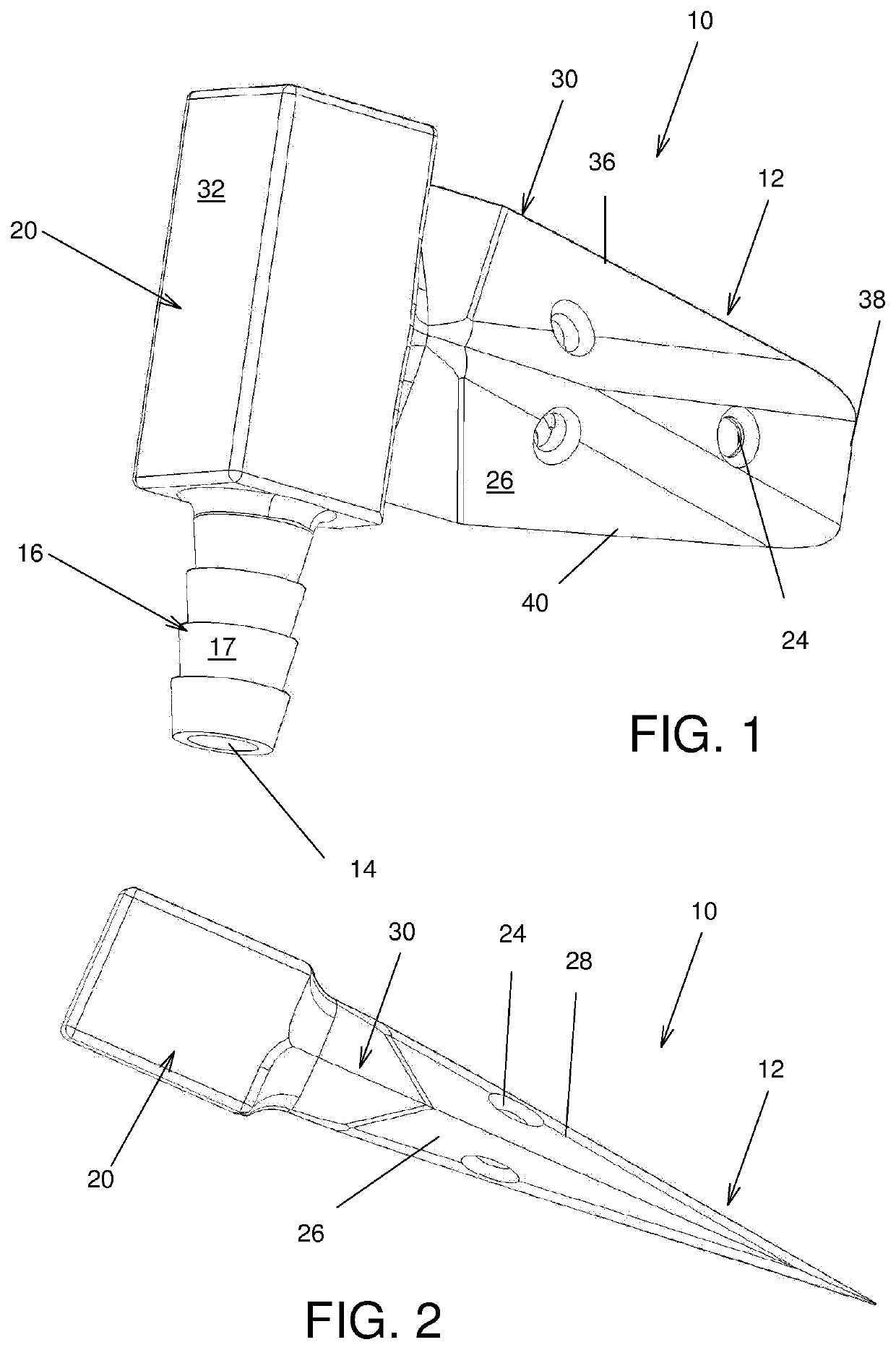
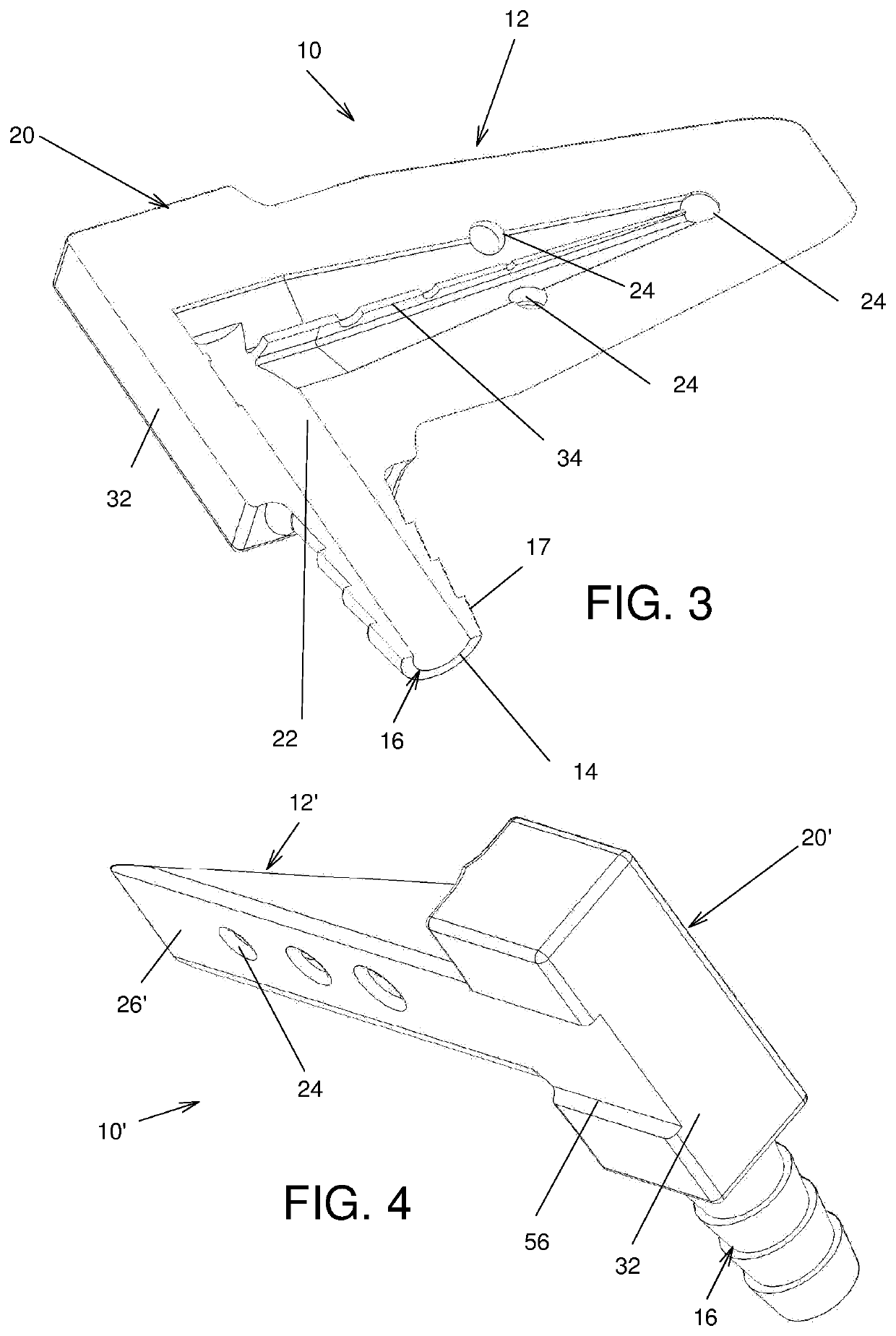
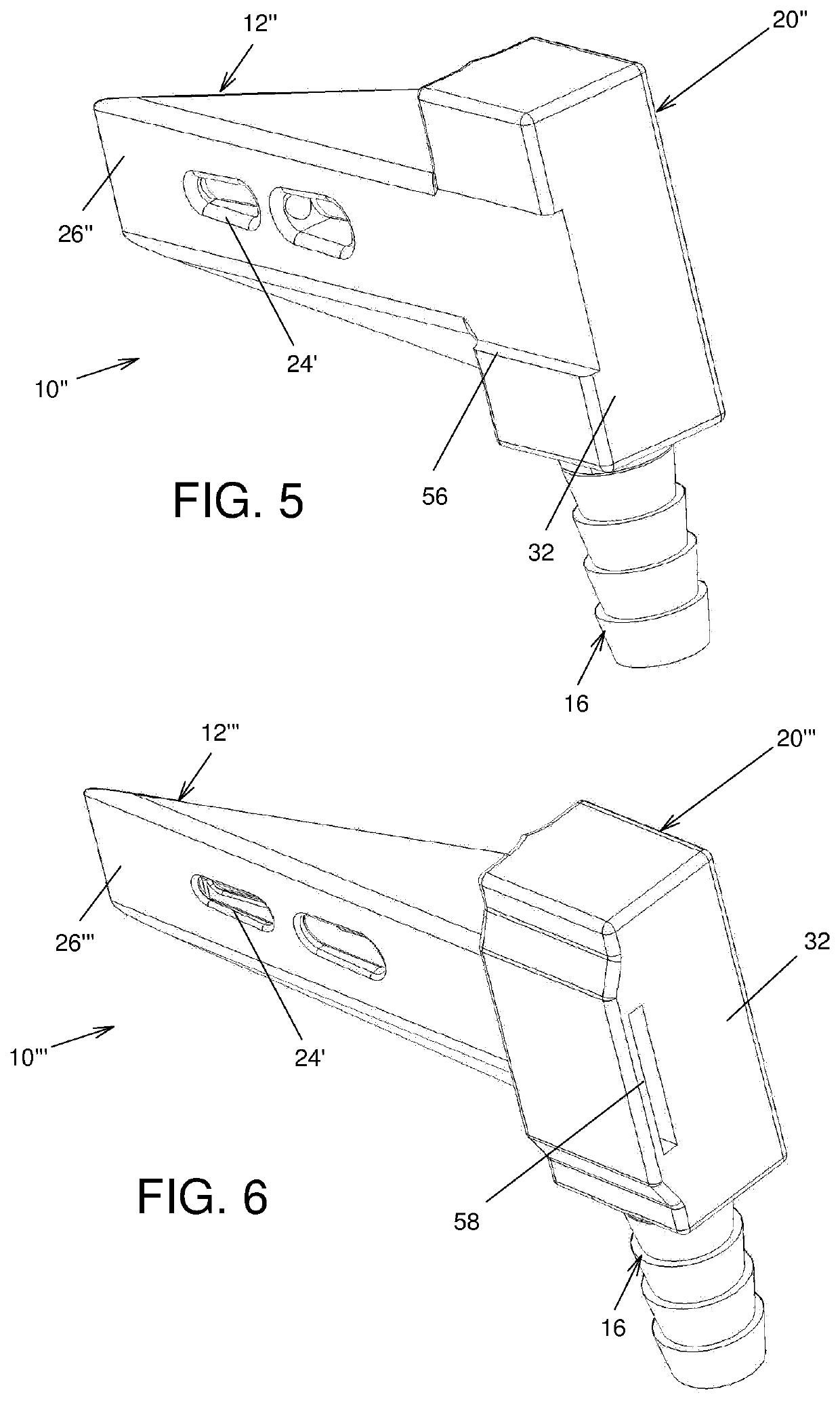
This patent is proposing a tree tap that can be driven into a tree without needing to remove any wood from the tree prior to insertion. This new tree tap is designed to spread apart and deform tree fibers, causing less damage to the tree and increasing its lifespan. This also means that more taps can be inserted into the tree, leading to greater productivity in the collection of sap.
Problems solved by technology
A major disadvantage of this tapping technique is that after the tap is removed, typically 8-12 weeks after insertion, the hole is left open.
This constitutes an injury to the tree.
It may take many years for the tree to repair the damage caused by the drilling process.
This causes stress to the tree and can facilitate further damage, such as those caused by diseases or insects.
Even if the tree heals properly, the tissue filling the hole in which the tap was inserted will be dead.
Therefore, after many sap collection seasons, the flow of sap in the tree is highly impeded and the tree can no longer be used for sap collection, and may eventually die prematurely.
Method used
the structure of the environmentally friendly knitted fabric provided by the present invention; figure 2 Flow chart of the yarn wrapping machine for environmentally friendly knitted fabrics and storage devices; image 3 Is the parameter map of the yarn covering machine
View moreImage
Smart Image Click on the blue labels to locate them in the text.
Smart ImageViewing Examples

Examples
Experimental program
Comparison scheme
Effect test
example
[0088]4 to 5 feet long maple tree trunk segments were collected in the winter and brought at room temperature upstanding with their bottom portion in water. Trunks were tapped using conventional taps and with the tree tap 10a with and without drilling the cavity 62. Sap was collected using negative pressure provided by commercial equipment with all cases. Initially, all samples provided sap at similar rates. However, then the cavity 62 was absent, a gradual reduction in the sap flow was observed in the tree taps 10a over a period of a few days. This reduction was not observed with the tree tap 10a with the cavity 62a present.
the structure of the environmentally friendly knitted fabric provided by the present invention; figure 2 Flow chart of the yarn wrapping machine for environmentally friendly knitted fabrics and storage devices; image 3 Is the parameter map of the yarn covering machine
Login to View More PUM
 Login to View More
 Abstract
Description
FIELD OF THE INVENTION[0001]The present invention relates to tree sap collection and is more particularly concerned with a tree tap and a method of using same.BACKGROUND OF THE INVENTION[0002]Tree sap, such as maple and birch sap, is collected to make edible products. For example, maple sap may be collected and then concentrated by evaporation to produce maple syrup. Conventional taps are inserted in the tree by first drilling a hole that may be for example about 7 / 16 of an inch in diameter and 2 to 2½ inches long. Then, a cylindrical tap is hammered in the aperture and tree sap can enter the tap for collection. A major disadvantage of this tapping technique is that after the tap is removed, typically 8-12 weeks after insertion, the hole is left open. This constitutes an injury to the tree.[0003]It may take many years for the tree to repair the damage caused by the drilling process. This causes stress to the tree and can facilitate further damage, such as those caused by diseases or...
Claims
the structure of the environmentally friendly knitted fabric provided by the present invention; figure 2 Flow chart of the yarn wrapping machine for environmentally friendly knitted fabrics and storage devices; image 3 Is the parameter map of the yarn covering machine
Login to View More Application Information
Patent Timeline
 Login to View More
 IPC IPC(8): A01G23/14
CPCA01G23/14
InventorADAM, FREDEDRIC
OwnerADAM FREDEDRIC