
Integrated fire and flight control system with automatic engine torque limiting
a flight control system and engine technology, applied in the field of rotary wing aircraft flight control systems, can solve problems such as damage or shorten the life of the engine, and achieve the effects of limiting the pilot's ability to demand more engine power, preventing over torque conditions, and reducing the collective access displacemen
- Summary
- Abstract
- Description
- Claims
- Application Information
AI Technical Summary
Benefits of technology
Problems solved by technology
Method used
Image

Examples
Embodiment Construction
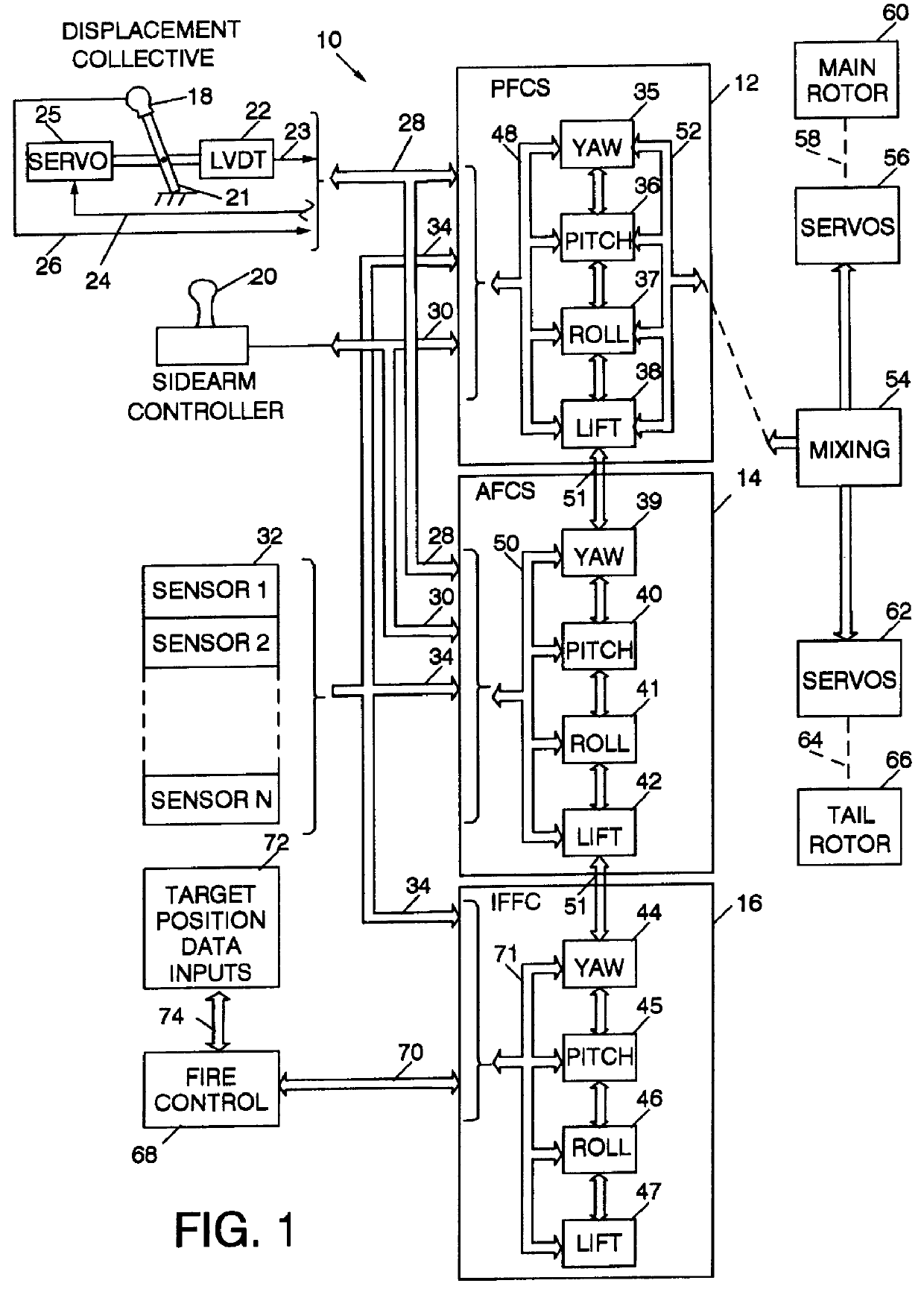
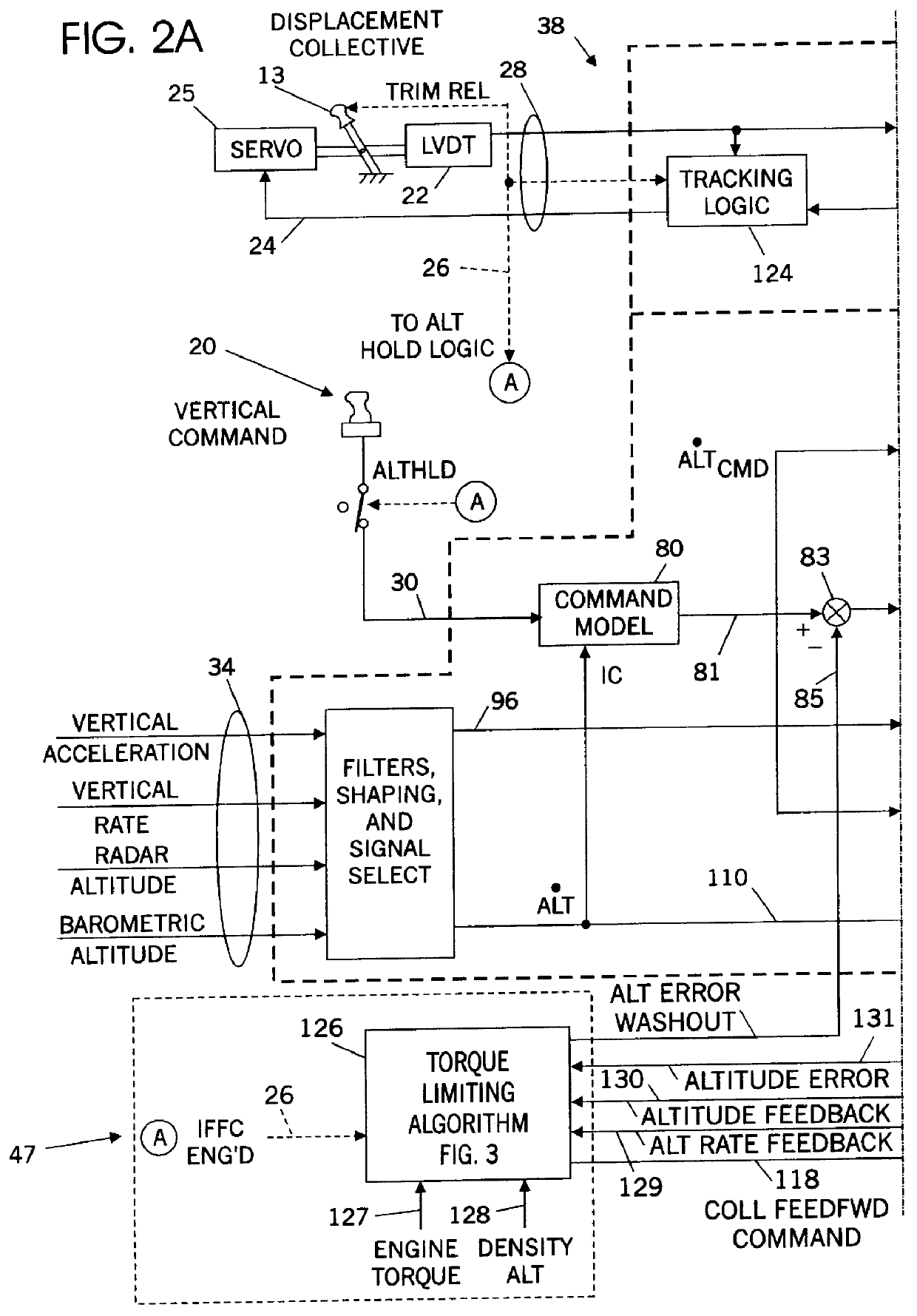
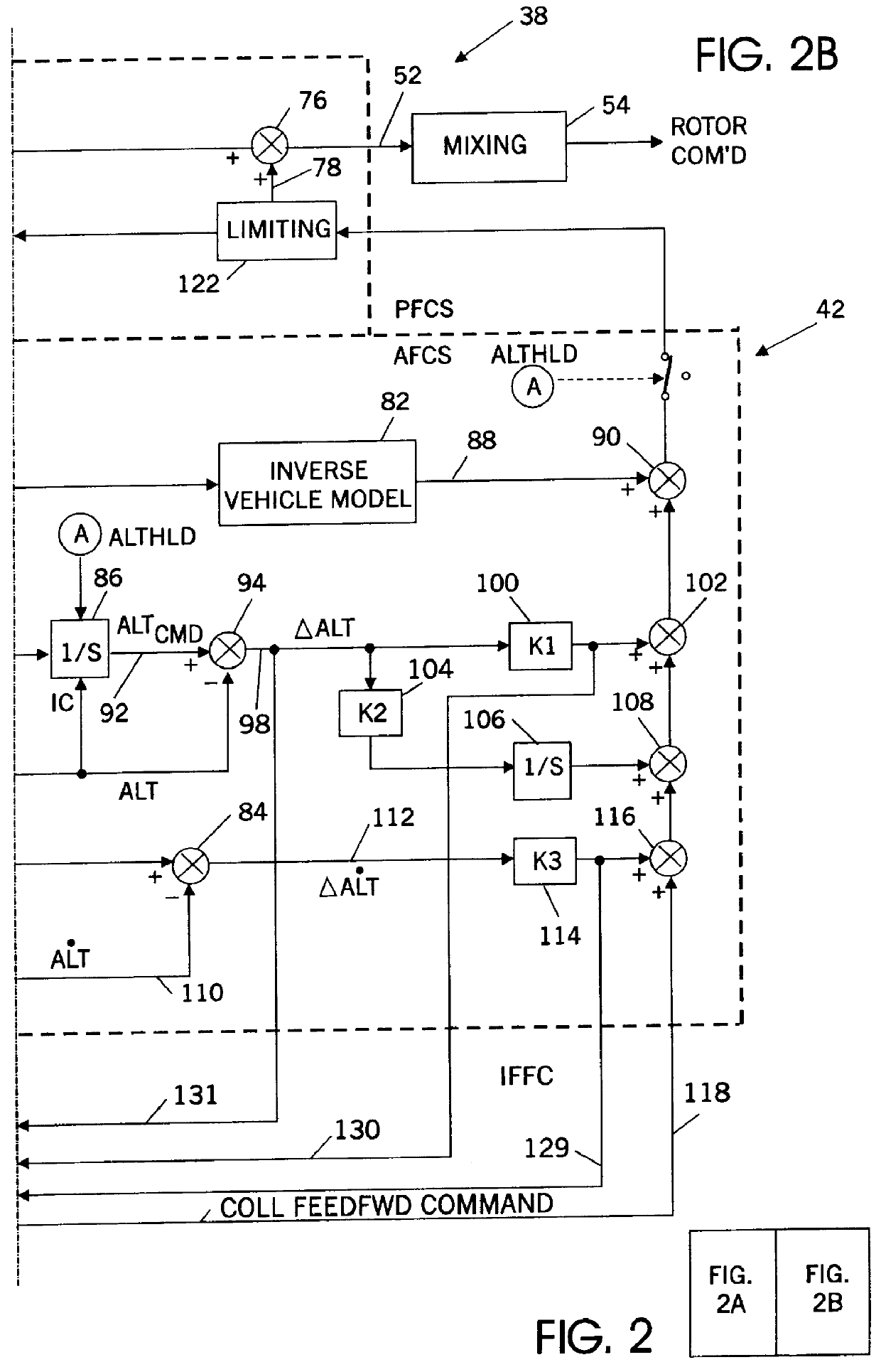
Referring to FIG. 1, the integrated fire and flight control (IFFC) system 10 of the present invention includes a primary flight control system (PFCS) 12, an automatic flight control system (AFCS) 14, and an IFFC 16. The PFCS 12 and AFCS 14 each receive displacement command signals from the pilot operated displacement collective stick 18 and force command signals from a four axis side arm controller 20. The displacement stick is typically located to the left of the pilot's seat and pivots about a point 21. The position of the displacement stick is sensed by a linear variable differential transformer (LVDT) 22 which provides an electrical signal indicative of stick position on a line 23 to the PFCS and AFCS. To give the pilot tactile feel of the collective load (which is otherwise missing in a "fly by wire" control system) the PFCS provides a drive signal on a line 24 to a servo 25, which in turn drives the displacement collective stick 18 so that it tracks the command signal on line ...
PUM
 Login to View More
 Abstract
Description
Claims
Application Information
 Login to View More