
Fuel transfer and conditioning unit for automotive vehicle
a technology for automotive vehicles and fuel systems, applied in the direction of machines/engines, separation processes, filtration separation, etc., can solve the problem of contaminating the fuel system downstream of the pump with impurities
- Summary
- Abstract
- Description
- Claims
- Application Information
AI Technical Summary
Problems solved by technology
Method used
Image

Examples
Embodiment Construction
)
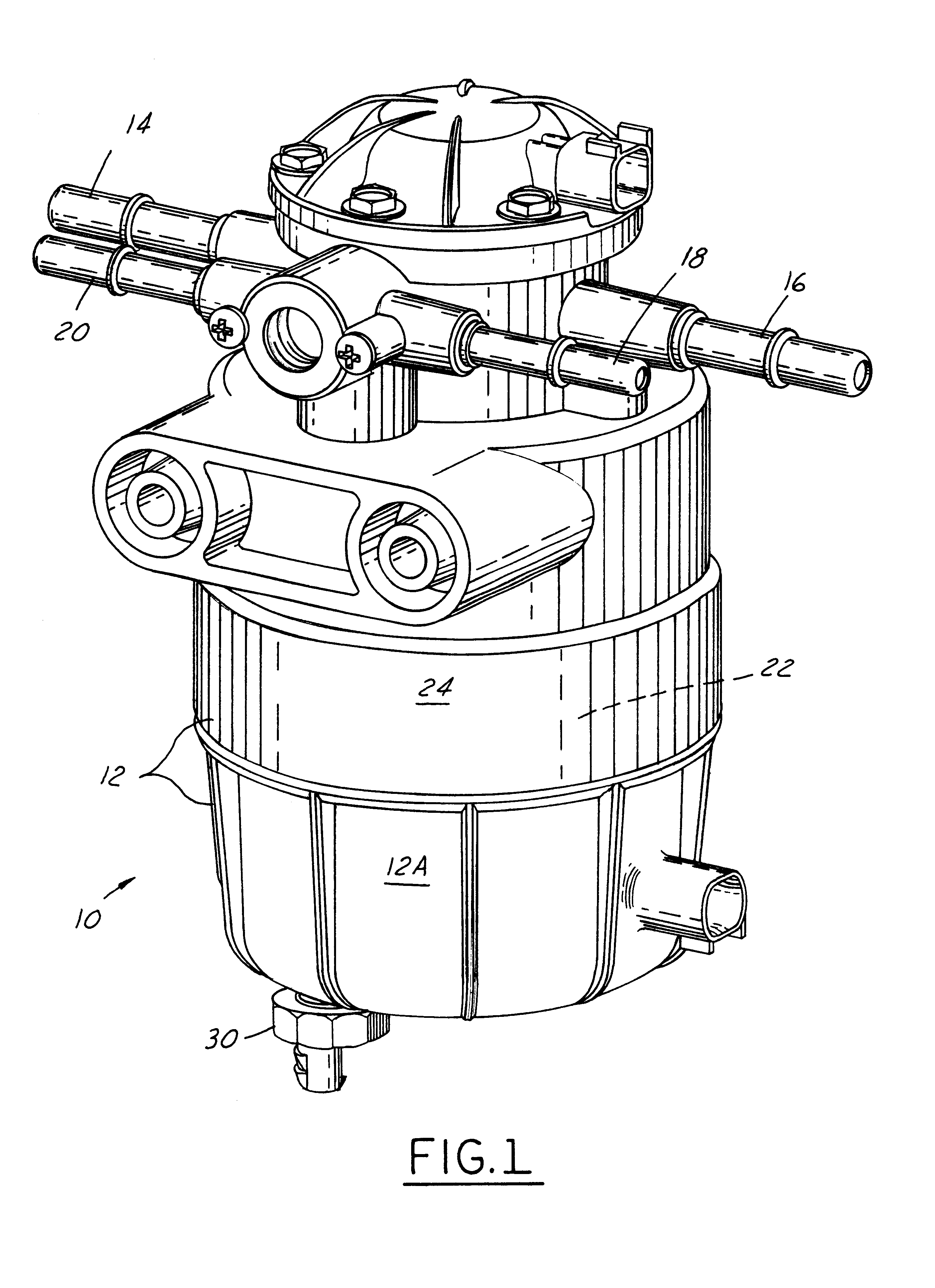
As shown in FIG. 1, fuel transfer and conditioning unit 10 has reservoir 12 consisting of a lower bowl 12A with the upper part of the reservoir being formed in housing 24. As explained above, fuel enters unit 10 through tank supply 14 and flows to the engine via engine supply port 16. Fuel returns from the engine (not shown) through engine return port 18 and flows from unit 10 via fuel tank return port 20. Drain 30 allows any water which has accumulated within reservoir 12 to be eliminated.
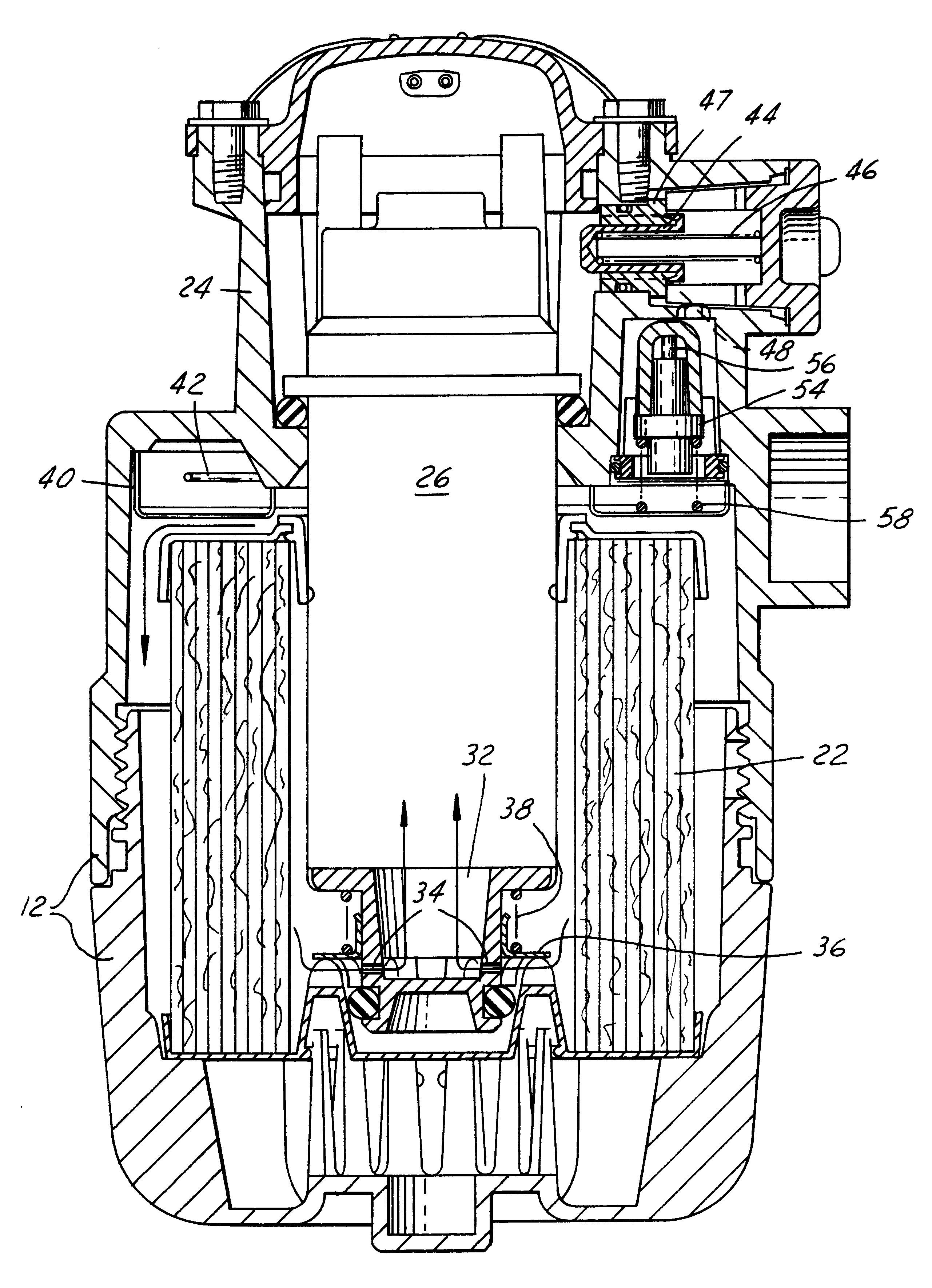
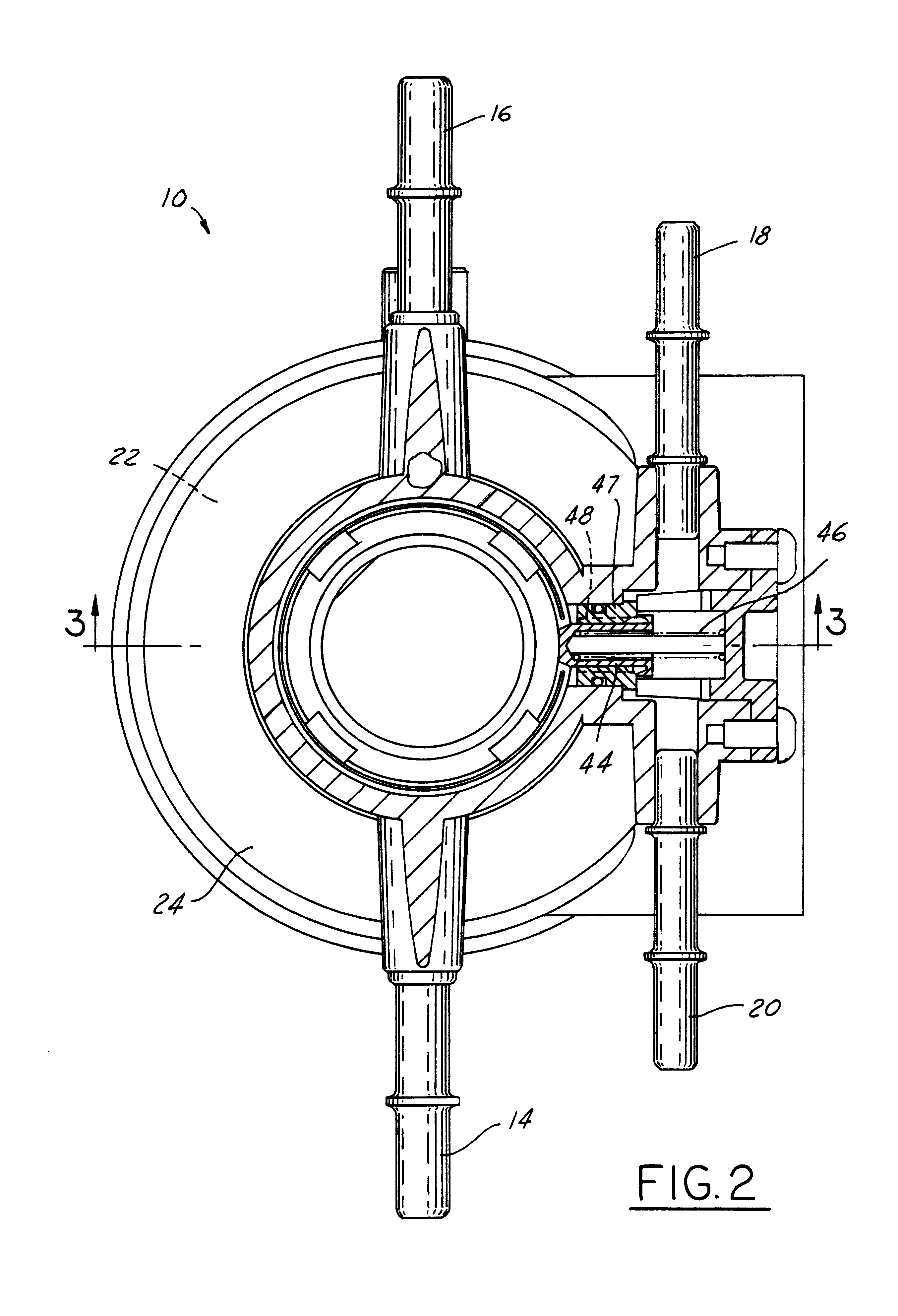
FIGS. 2 and 3 illustrate with particularity the pressure control function of the present unit. The purpose of the pressure control function is to limit the pressure of the fuel supplied to an engine. This function is achieved by means of fuel pressure control plunger 44 which is mounted within valve body 47. As shown in FIG. 3, fuel flowing through electric pump 26 or, for that matter, through the hand pump shown in FIG. 4, flows from the interior of unit 10 through a series of axial passages 48 ...
PUM
| Property | Measurement | Unit |
|---|---|---|
| Temperature | aaaaa | aaaaa |
| Pressure | aaaaa | aaaaa |
Abstract
Description
Claims
Application Information
 Login to View More