
Electricity-inducing immobilization cartridge attachment
a cartridge and immobilization technology, applied in the field of contact mechanisms, can solve the problems of reducing the chance and reducing the chance of lethal injury to the target. the effect of ensuring the penetration of the target, reducing the chance of injury to the target person or animal, and spreading the for
- Summary
- Abstract
- Description
- Claims
- Application Information
AI Technical Summary
Benefits of technology
Problems solved by technology
Method used
Image

Examples
Embodiment Construction
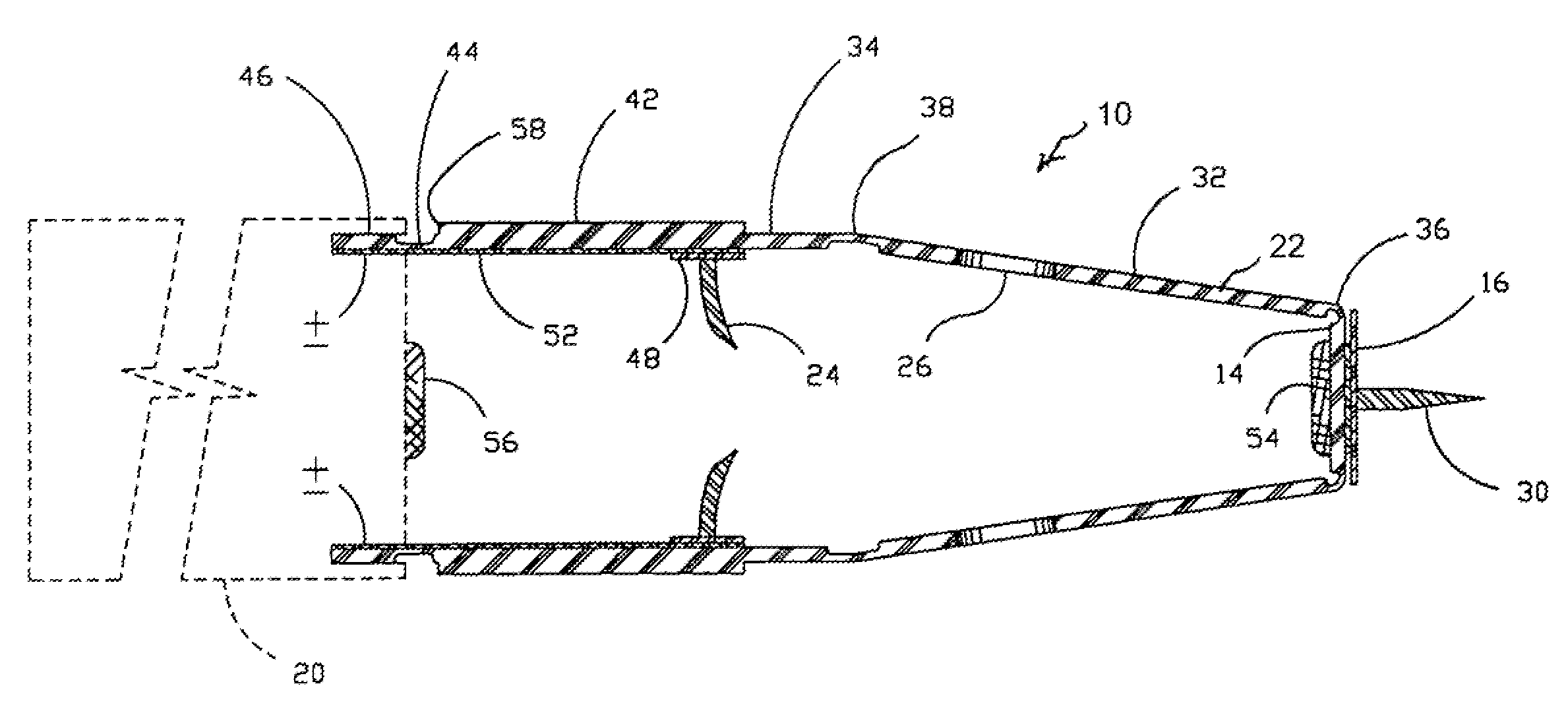
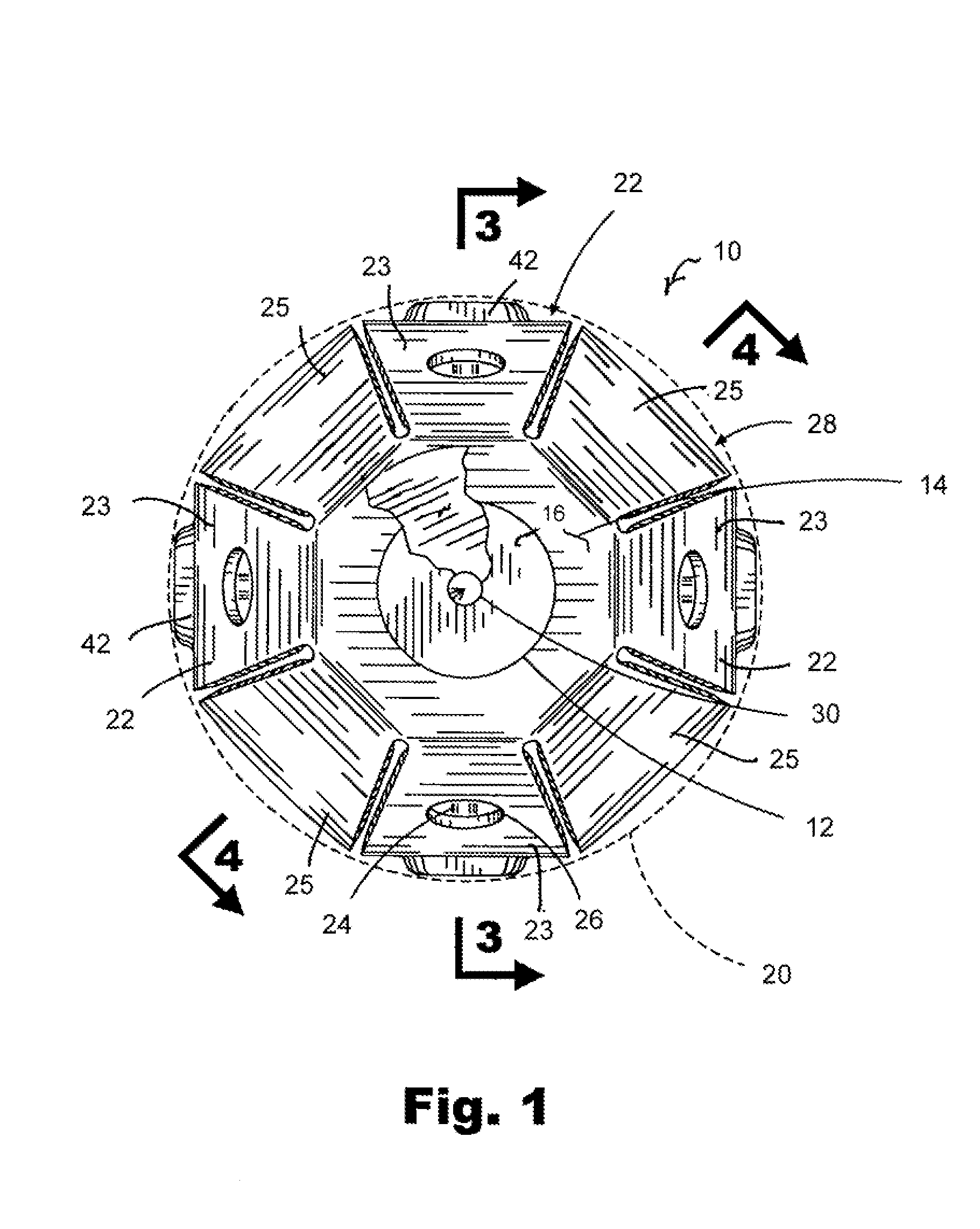
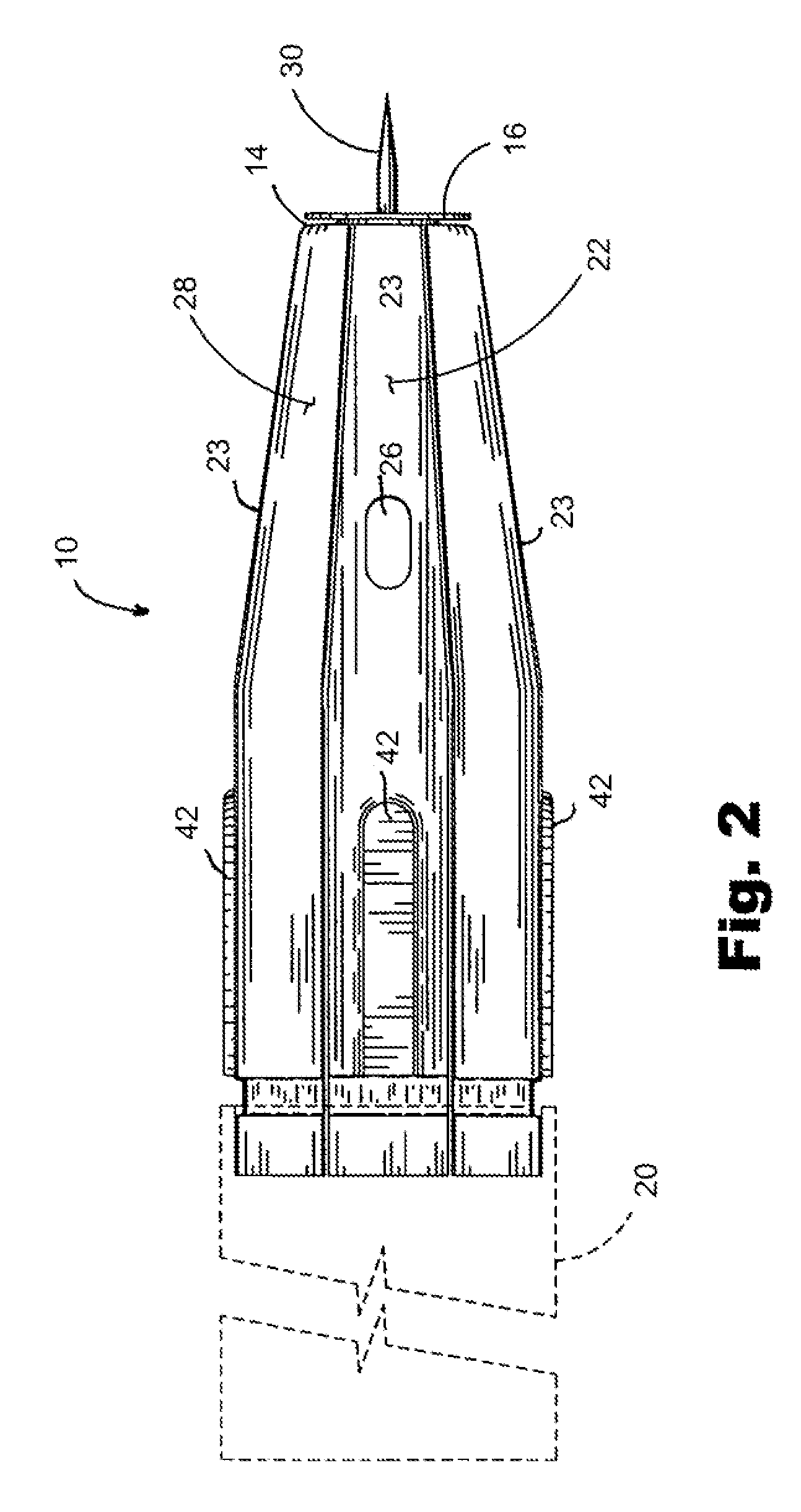
[0037]Referring to FIG. 1, there is shown the attachment 10 of the present invention that can be secured to an electricity-inducing immobilization cartridge. The illustration of FIG. 1 shows the device 10 in its configuration from the target's point of view. In FIG. 1, it can be seen that the attachment 10 includes eight sections 22. These sections 22 alternate between sections 23 which support the barb and sections 25 which support the hook-and-loop material. Sections 23 and 25 alternate around the periphery of the attachment 10. The sections 23 have a barb 24 (partially illustrated) and a hole 26. A reinforcement 42 is illustrated on sections 23.
[0038]In FIG. 1, it can be seen that there is a spike 30 supported on a mounting base 12. The spike 30, along with the mounting base 12 are adhered to a strike plate 14. A teflon washer 16 slides over the spike 30 and rests against the mounting base 12. This teflon washer 16 has a tight running fit on the spike 30. In other words, the wash...
PUM
 Login to View More
 Abstract
Description
Claims
Application Information
 Login to View More