MIDI file steganography

US7402744B1Active Publication Date: 2008-07-22THE UNITED STATES OF AMERICA AS REPRESETNED BY THE SEC OF THE AIR FORCE
1 Cites 4 Cited by

Patent Information

Authority / Receiving Office
US · United States
Current Assignee / Owner
Publication Date
2008-07-22

Smart Images

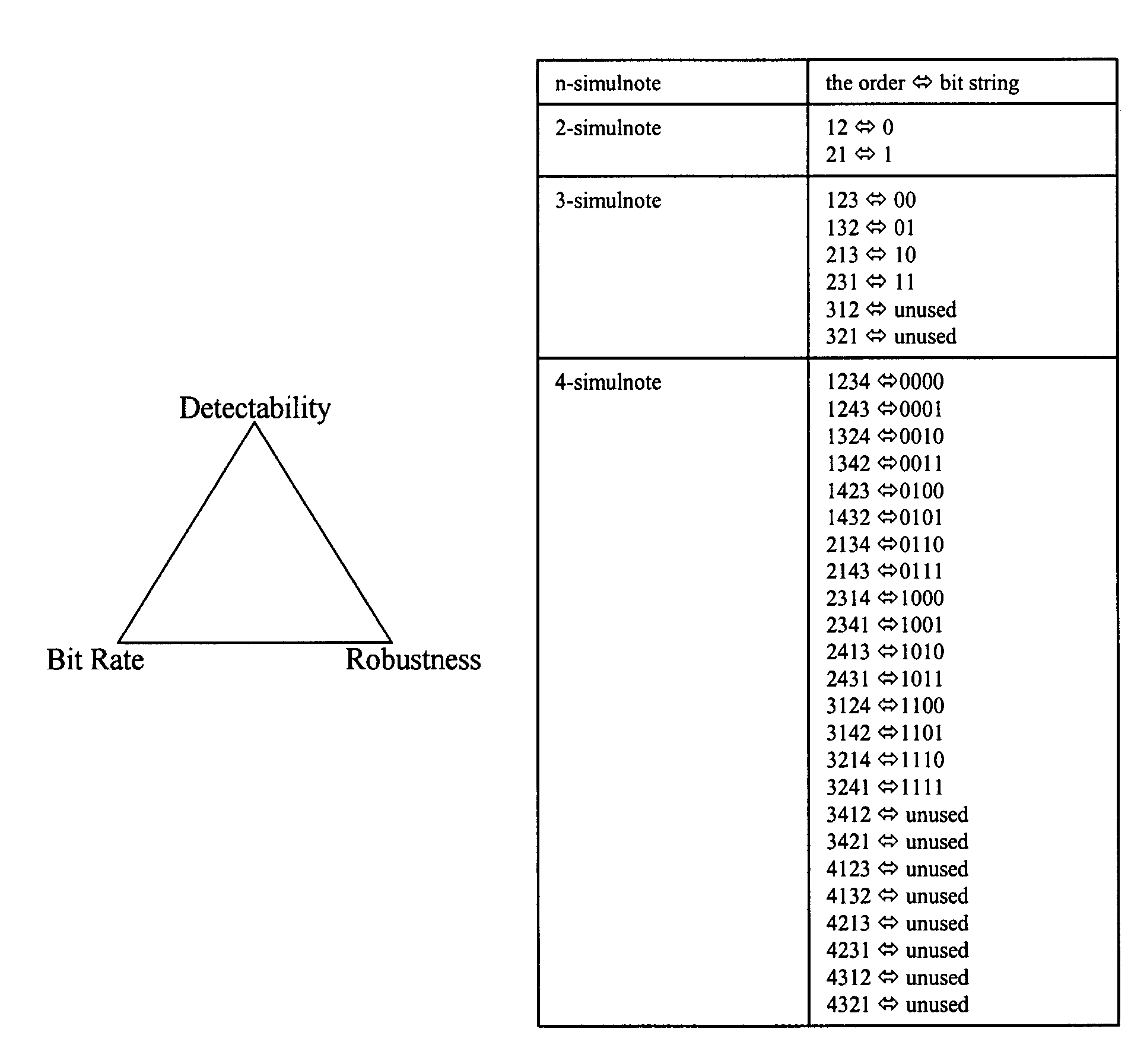
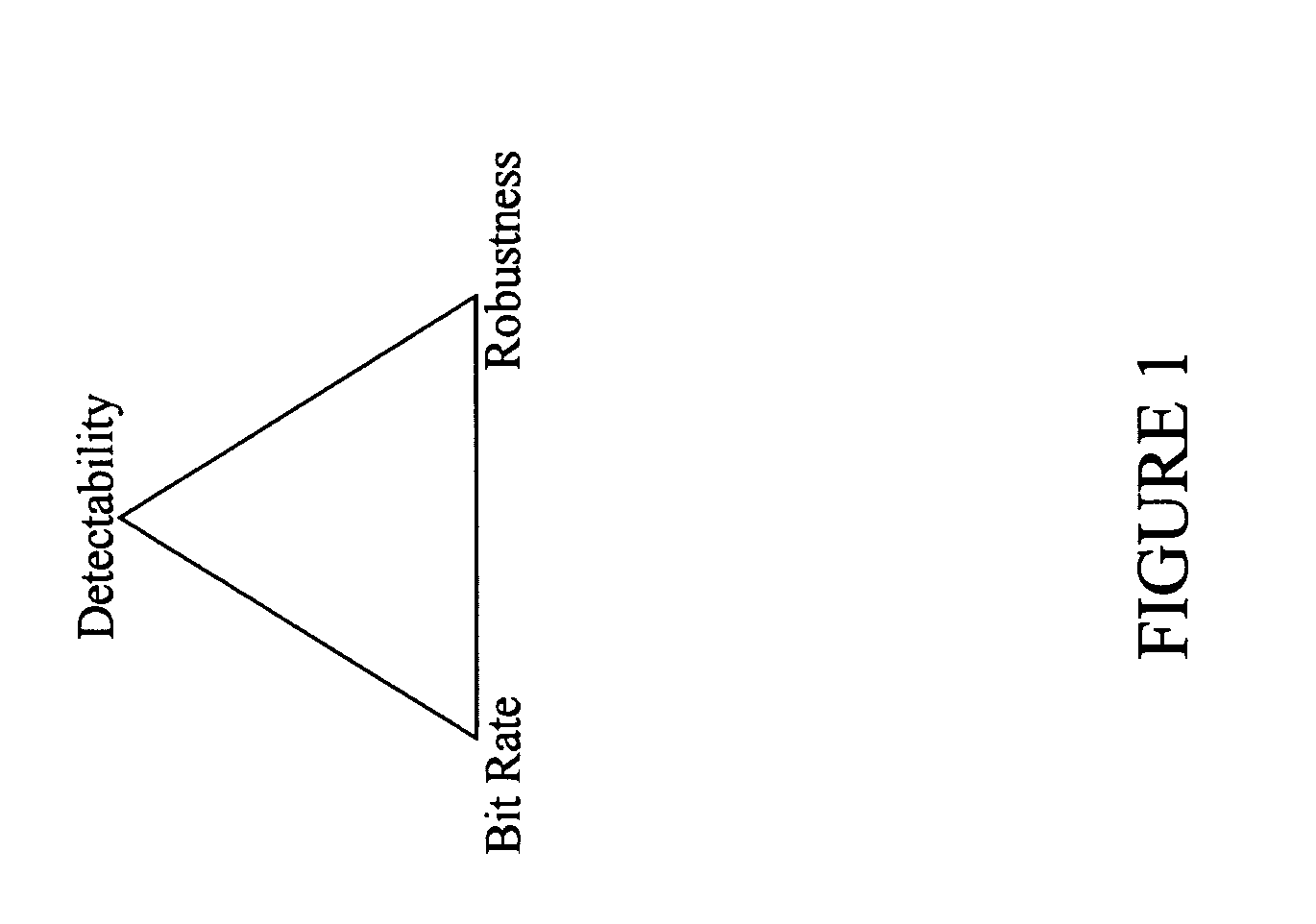
  • Figure 1
    Figure 1
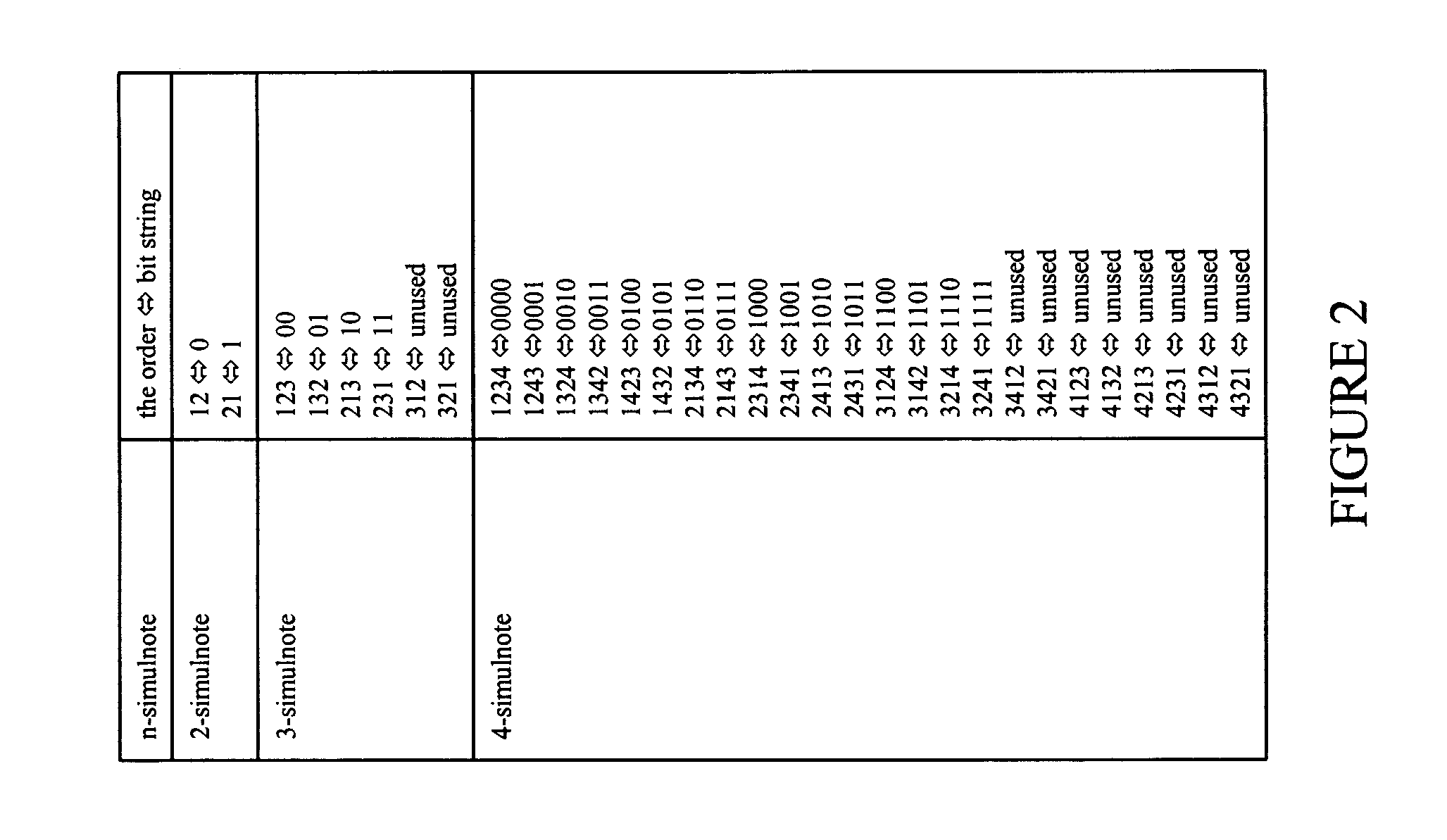
  • Figure 2
    Figure 2
  • Figure 3
    Figure 3
Patent Text Reader

Abstract

Method for providing steganography in MIDI files. Present invention provides list steganography algorithms and methods for their application to MIDI files. Present invention further provides a 300% increase in average encoding rate and better implementation of stego-keys is achieved over previous MIDI steganography methods.
Need to check novelty before this filing date? Find Prior Art

Description

PRIORITY CLAIM UNDER 35 U.S.C. §119(e)

[0001] This patent application claims the priority benefit of the filing date of a provisional application Ser. No. 60 / 579,478 filed in the United States Patent and Trademark Office on Jun. 14, 2004.STATEMENT OF GOVERNMENT INTEREST

[0002] The invention described herein may be manufactured and used by or for the Government of the United States for governmental purposes without the payment of any royalty thereon.BACKGROUND OF THE INVENTION

[0003] Steganography is the art of hiding information. The term literally means “covered writing” and its history and origins pay homage to this definition. Acrostics, invisible inks, semagrams, and microdots (extremely tiny photographs used by the Germans in WW-II) are just a few examples of steganography. Nowadays, steganography is better known for its use in the digital realm. An abundance of computer file formats (used to store such items as text, pictures, sounds, movies, etc.) provides a rich selection of cover...

Examples

Embodiment Construction

[0100]The present invention relates to a method for MIDI file implementation of list steganography. The present invention improves upon the prior art [1] by addressing many of its shortcomings, specifically focusing on maximizing steganographic capacity and implementing more manageable stego-keys.

[0101]Two major actions can help with maximize encoding rates: changing file type and increasing event use. The header for all MIDI files defines the file's “type,” ranging from 0 to 2 [3]. Nearly all MIDI files are type-0 or type-1, since the type-2 format never gained popularity. In a type-1 file, the file is divided up into multiple simultaneous tracks, each of which usually only contains events for one instrument; this yields small lists and therefore small capacities. Type-0 files, on the other hand, have only one track that contains all events; these files have large lists and therefore larger steganographic capacities. By converting type-1 files to type-0 files, the maximum embeddabl...