Since the spatial bias generally results in environmental bias, the difference between occurrence collection and background sampling may lead to inaccurate models.
Accurate information about spatial bias is usually lacking, so explicit sampling of background sites may not be possible.
However, for most areas of the world and most species, resources are too limited to gather large sets of data including both presences and absences, and furthermore, many species have been extirpated from much of their original range.
These occurrence data often exhibit strong spatial bias in survey effort, meaning simply that some sites are more likely to be surveyed than others; such bias is typically spatially autocorrelated, but this paper allows for arbitrary spatial bias.
This bias, referred to as sample
selection bias or survey bias, can severely
impact model quality; however, the effect of such bias has received little attention in the SDM literature.
Potentially, the latter can be spatially biased, i.e., there may be sample
selection bias Most SDMs are fitted in
environmental space without consideration of
geographic space, so the importance of spatial bias is that it often causes environmental bias in the data.
However, this is usually not the case.
Background samples are commonly chosen uniformly at random from the study region; this characterizes the range of environments in the region well, but fails to indicate sample selection bias.
However, such manipulations are hampered by incomplete information about the distribution of survey effort.
In addition, the paucity of presence records for many species of interest makes discarding records unpalatable, and resources may not be available to conduct new surveys.
The data may also be biased in a way that cannot be “fixed” by collecting new data: if many forested areas have been cleared, new surveys will not provide presence records of forest-dependent species in cleared areas.
Whilst some studies explore this idea, the ecological literature lacks a coherent theoretical exploration, and the proposed solutions seem to represent different and probably incompatible reasoning.
It can be difficult to create background data with the same bias as presence data since we seldom know the sample selection distribution exactly.
We used 10000 samples as this is large enough to accurately represent the range of environmental conditions in the study region; more background samples do not improve model performance.
Therefore, observations that are spatially unbiased are also environmentally unbiased, though the converse is not always true.
This sampling model suffers from two complications.
First, the set of background samples typically includes both sites with y=1 and sites with y=0, a problem referred to as contaminated controls.
However, this approach is controversial in the
habitat-selection literature Keating and Cherry.
Whilst this approach has strong theoretical justification, it requires knowledge of P(y=1), and the implementation is not yet widely available, so we do not use it here.



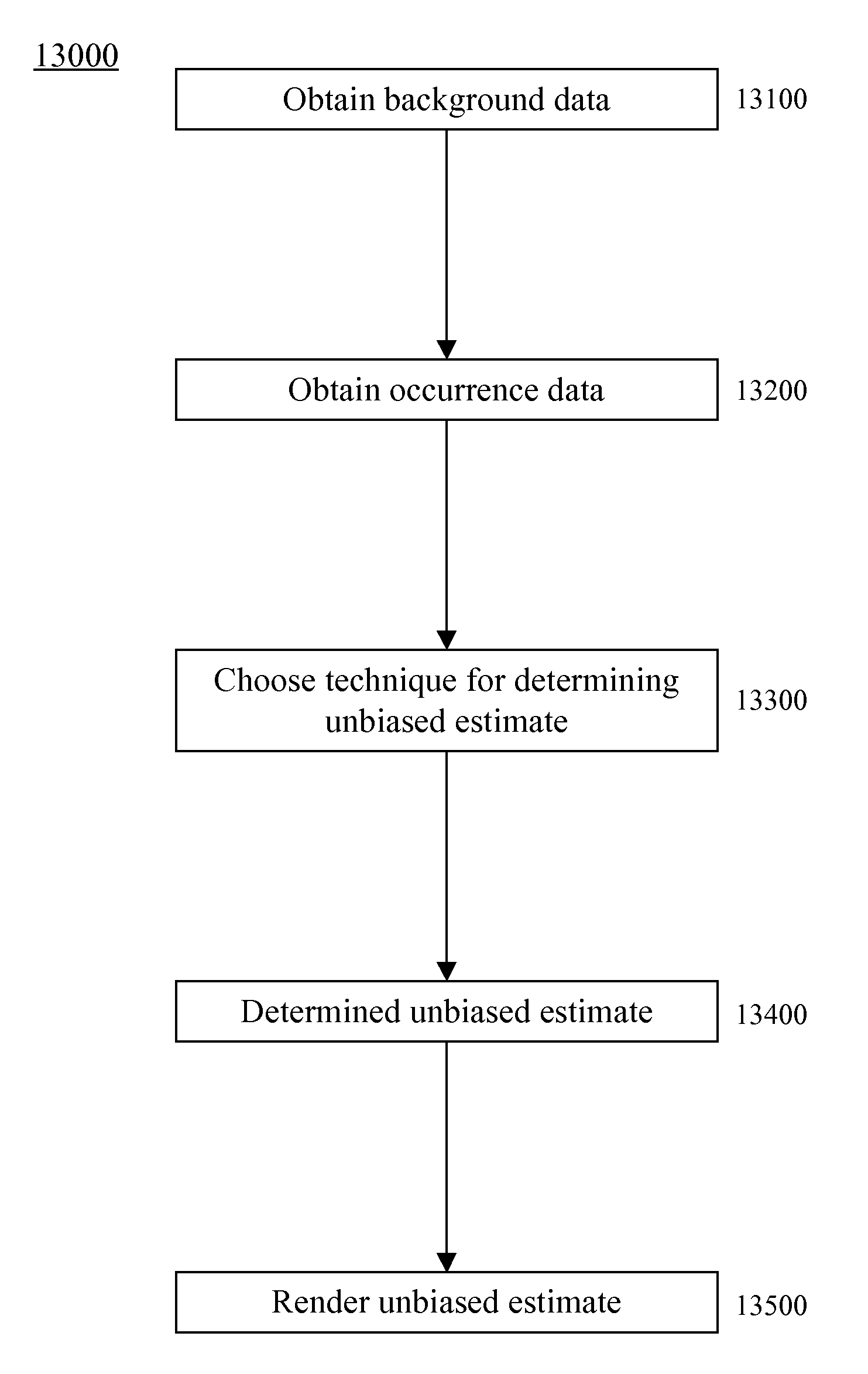
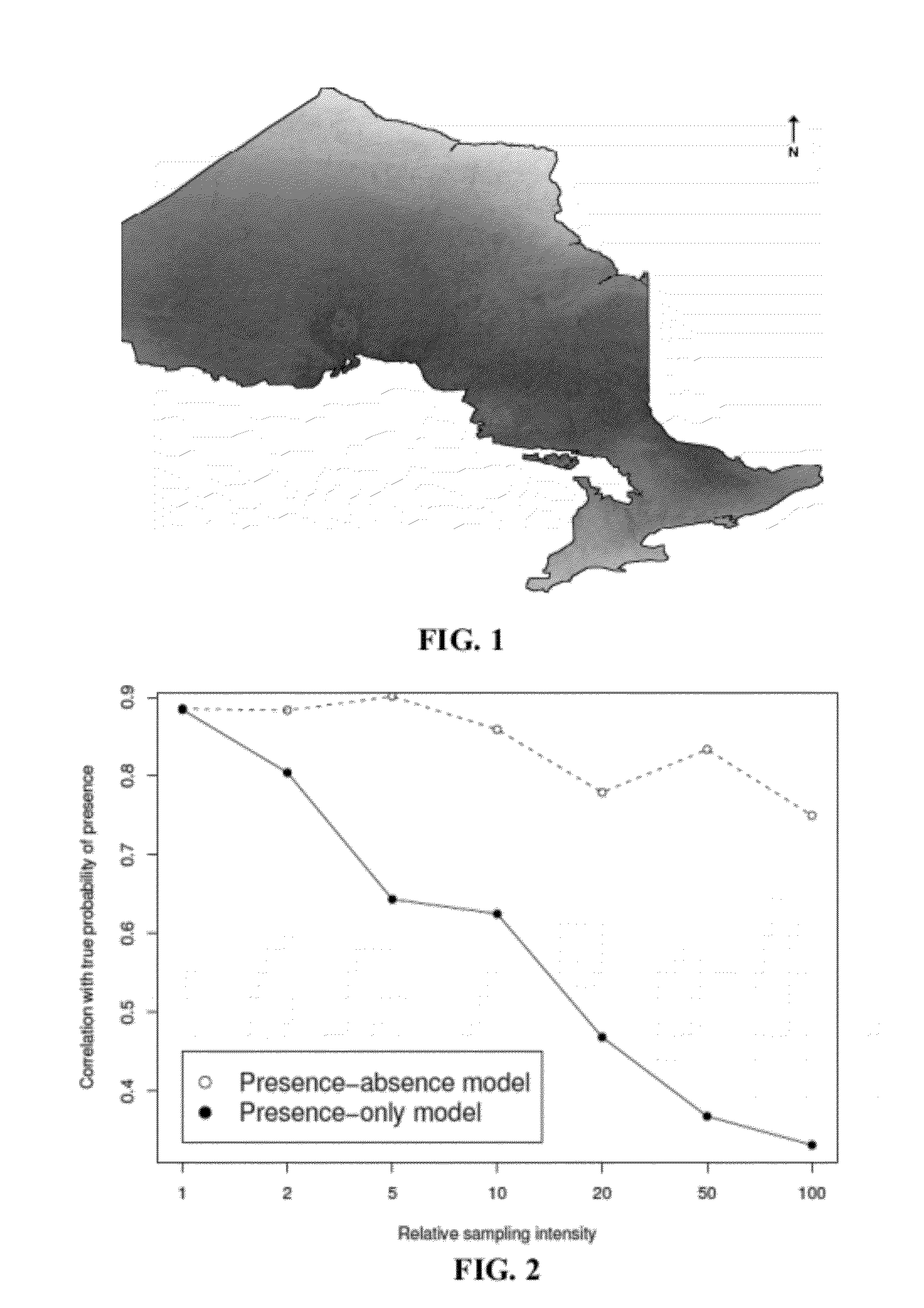
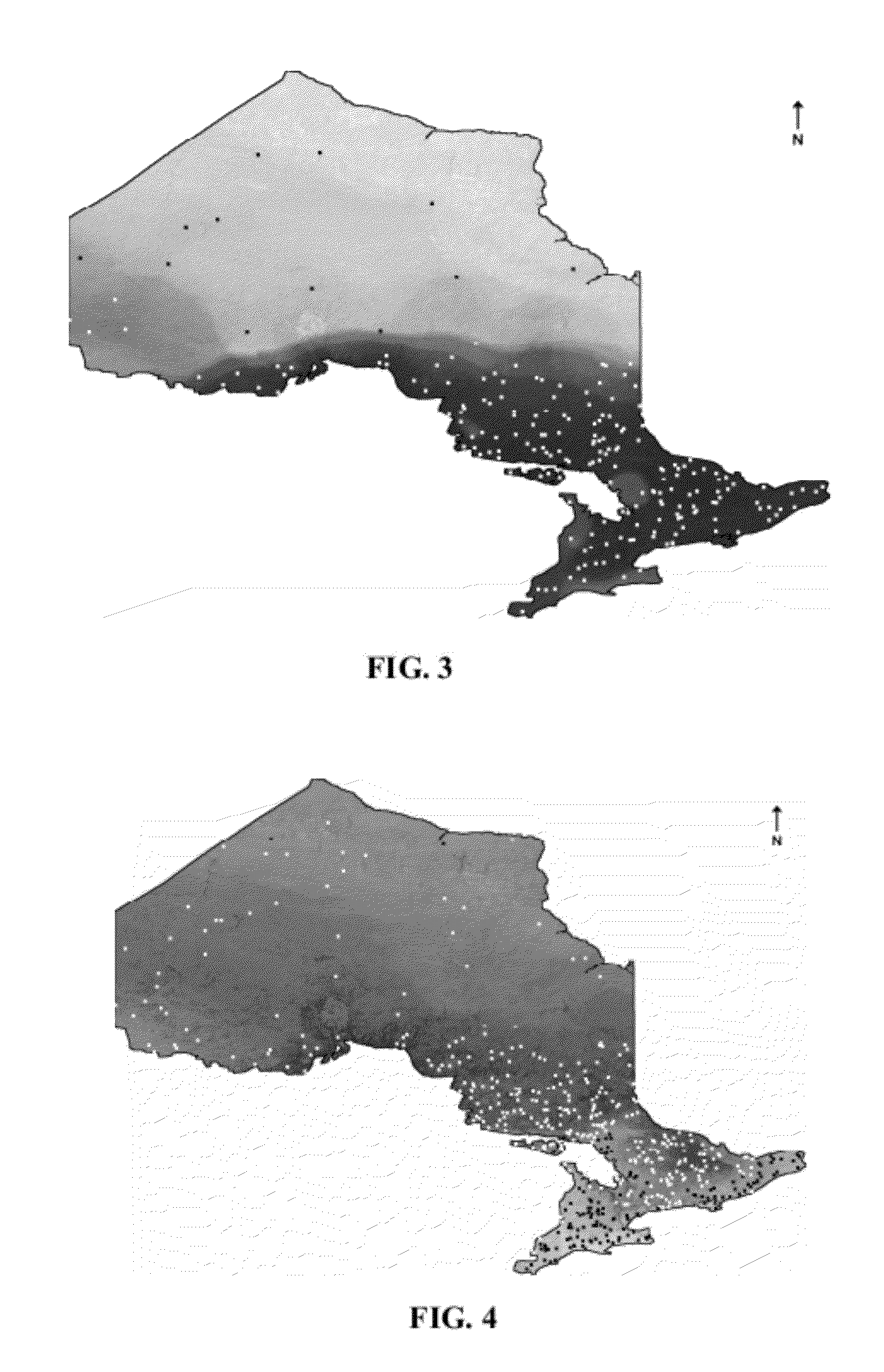
 Login to View More
  Login to View More