
In-situ load system for calibrating and validating aerodynamic properties of scaled aircraft in ground-based aerospace testing applications
a technology for aerodynamic properties and aircraft, applied in the field of in-situ load systems for calibrating and validating aerodynamic properties of scaled aircraft, can solve the problems of difficult set-up, in-situ performance of balances cannot be fully integrated in the wtms, and prohibited robust system-level, so as to achieve the effect of minimizing measurement uncertainties
- Summary
- Abstract
- Description
- Claims
- Application Information
AI Technical Summary
Benefits of technology
Problems solved by technology
Method used
Image

Examples
Embodiment Construction
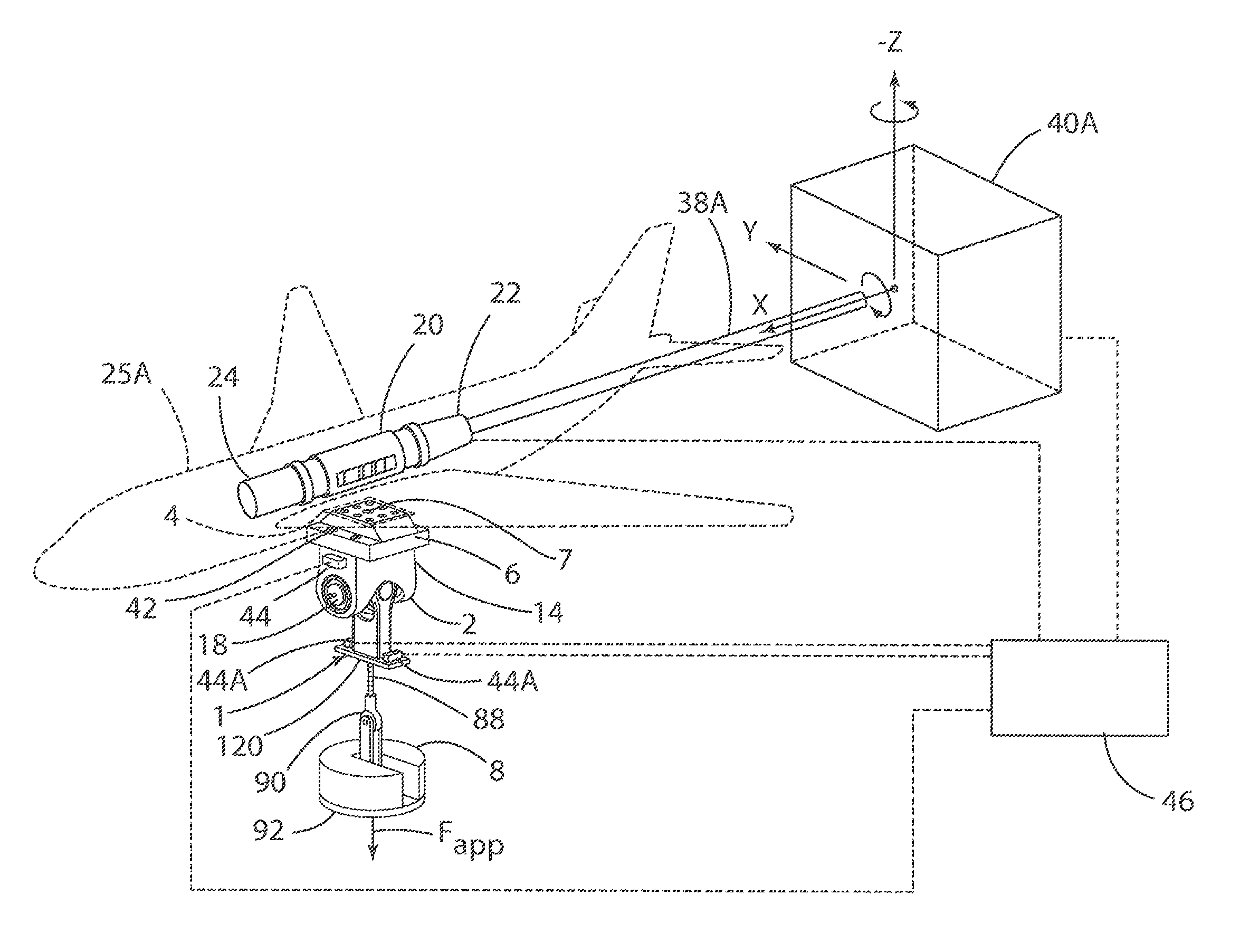
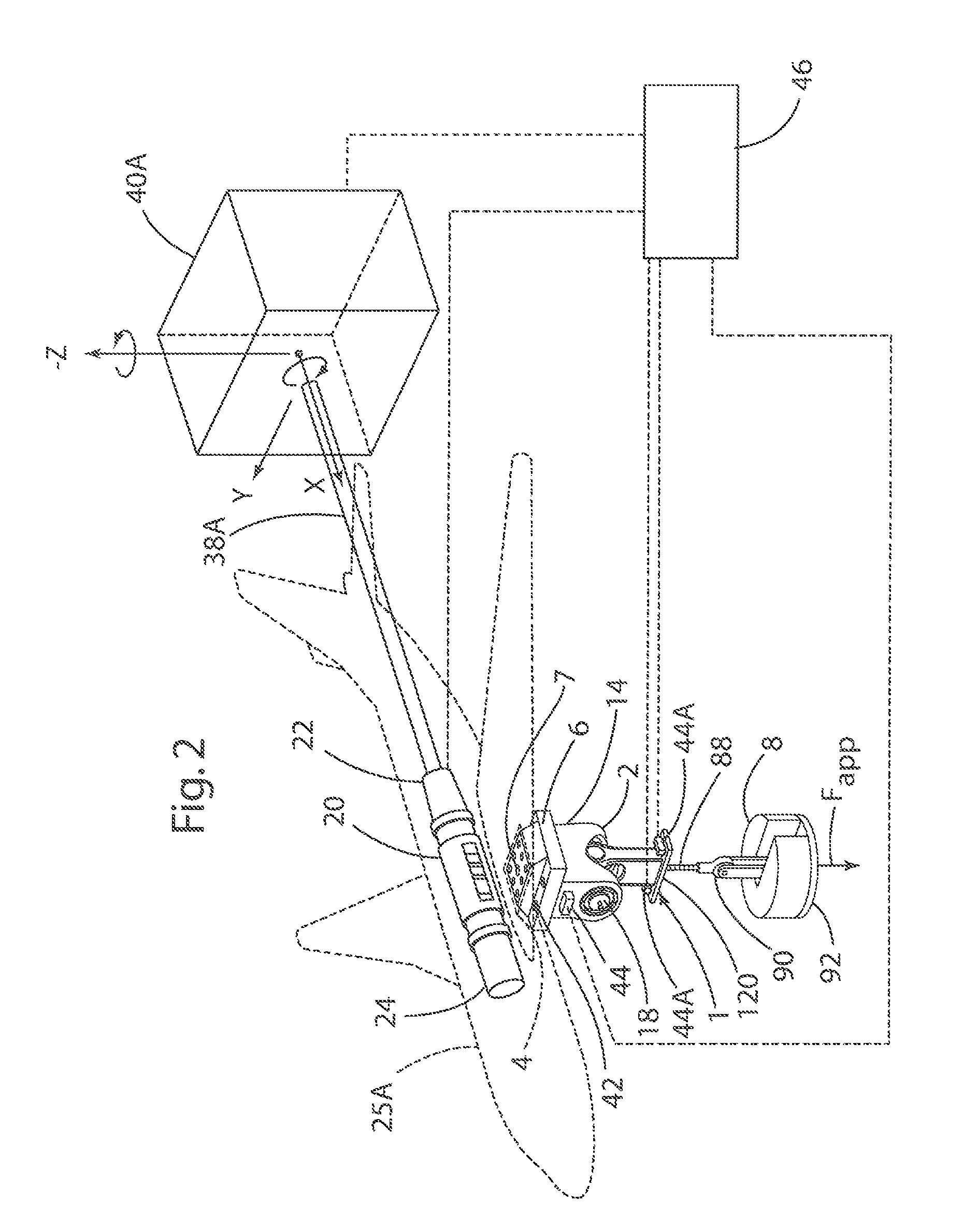
[0025]For purposes of description herein, the terms “upper,”“lower,”“right,”“left,”“rear,”“front,”“vertical,”“horizontal,” and derivatives thereof shall relate to the invention as oriented in FIG. 2. However, it is to be understood that the invention may assume various alternative orientations and step sequences, except where expressly specified to the contrary. It is also to be understood that the specific devices and processes illustrated in the attached drawings, and described in the following specification, are simply exemplary embodiments of the inventive concepts defined in the appended claims. Hence, specific dimensions and other physical characteristics relating to the embodiments disclosed herein are not to be considered as limiting, unless the claims expressly state otherwise.
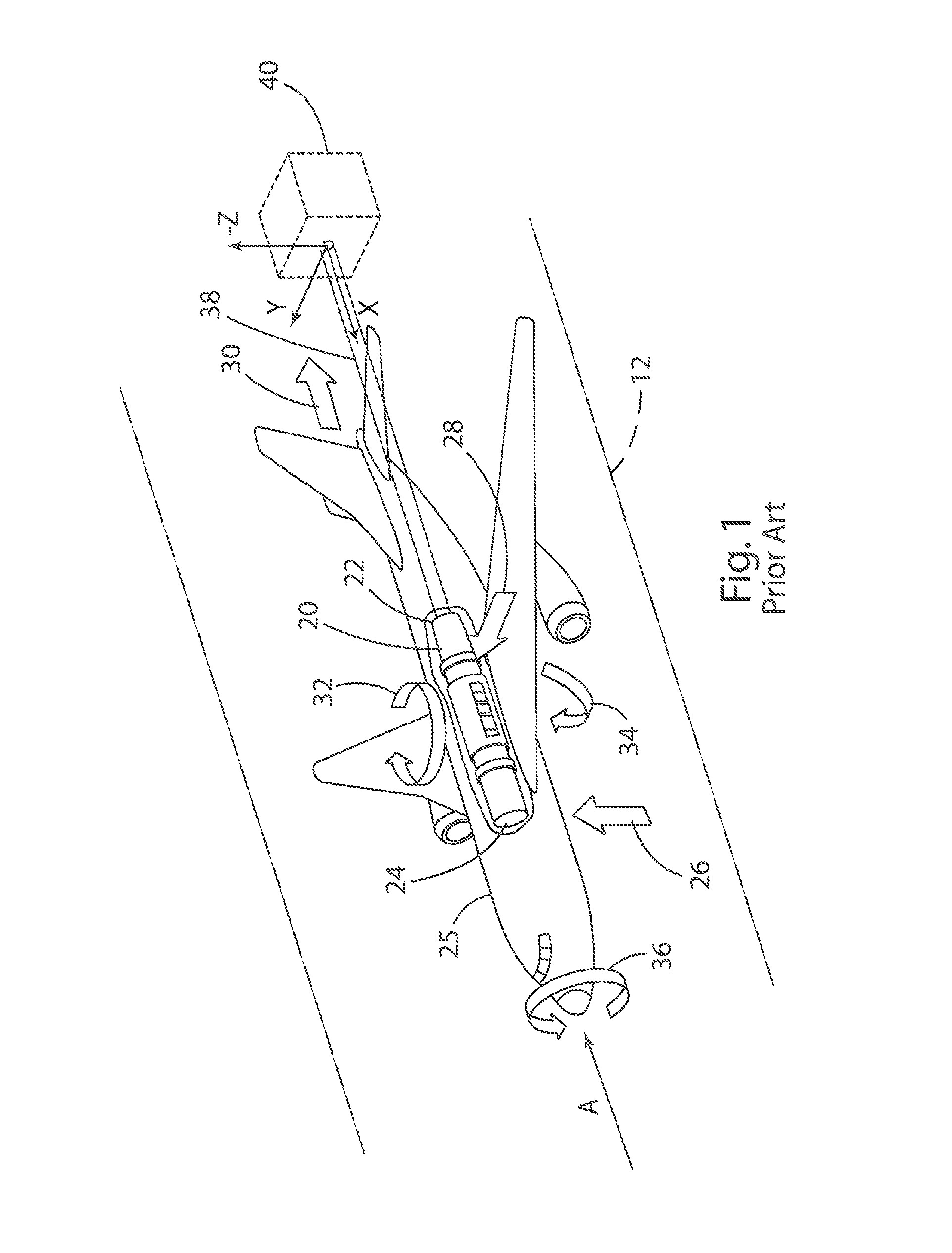
[0026]Referring again to FIG. 1, in a typical known wind tunnel test, wind tunnel aerodynamic loads acting on model 25 include a normal (lift) force 26, a side force 28, and an axial (drag) force 30. ...
PUM
| Property | Measurement | Unit |
|---|---|---|
| length | aaaaa | aaaaa |
| length | aaaaa | aaaaa |
| degrees of freedom | aaaaa | aaaaa |
Abstract
Description
Claims
Application Information
 Login to View More