
Environment adjusted speaker identification
a speaker identification and environment-adjustable technology, applied in the field of environment-adjustable speaker identification, can solve the problems of requiring considerable user time investment and time-consuming training of each system, and achieve the effect of facilitating the formulation of an expected audio model
- Summary
- Abstract
- Description
- Claims
- Application Information
AI Technical Summary
Benefits of technology
Problems solved by technology
Method used
Image

Examples
Embodiment Construction
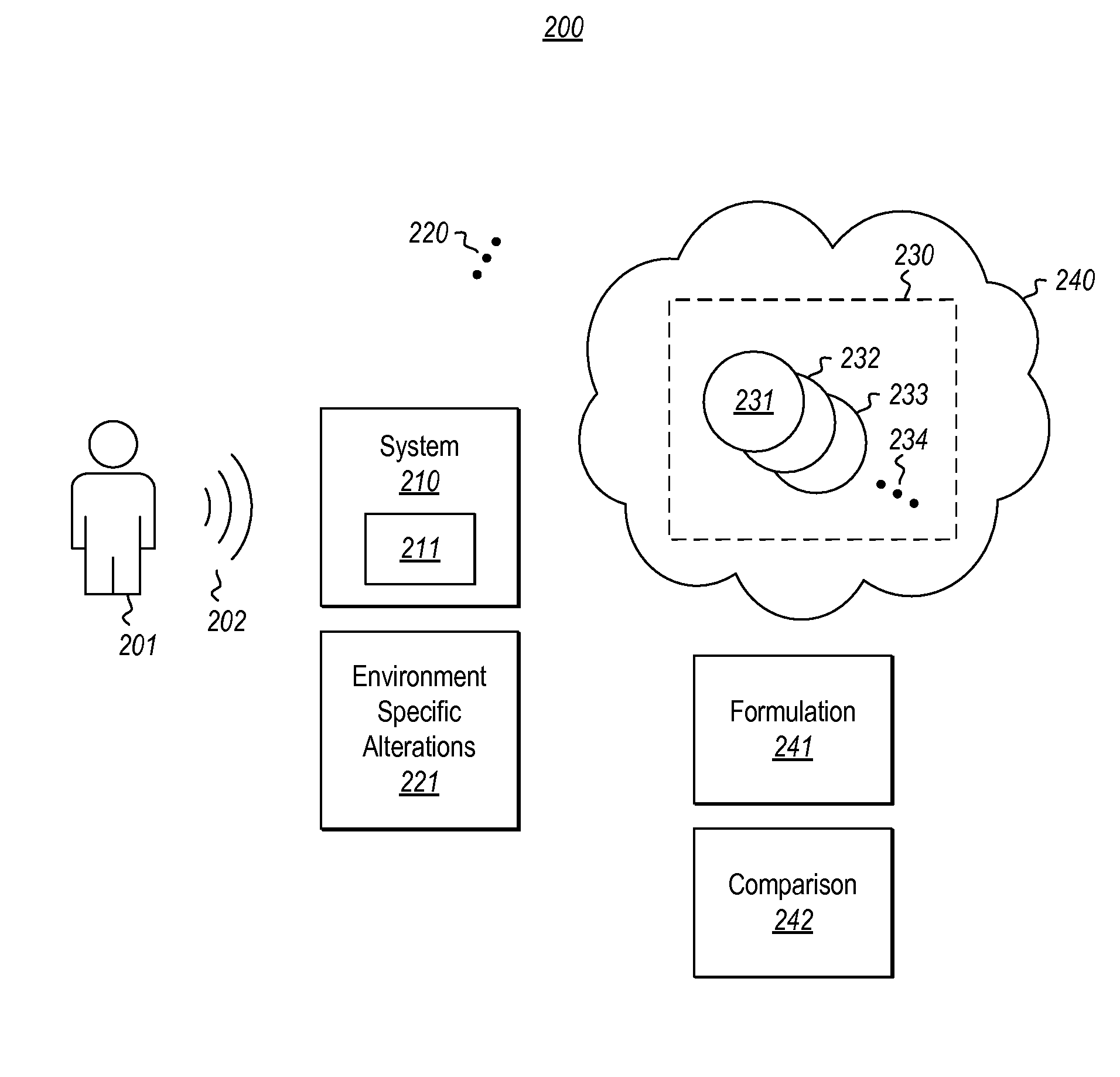
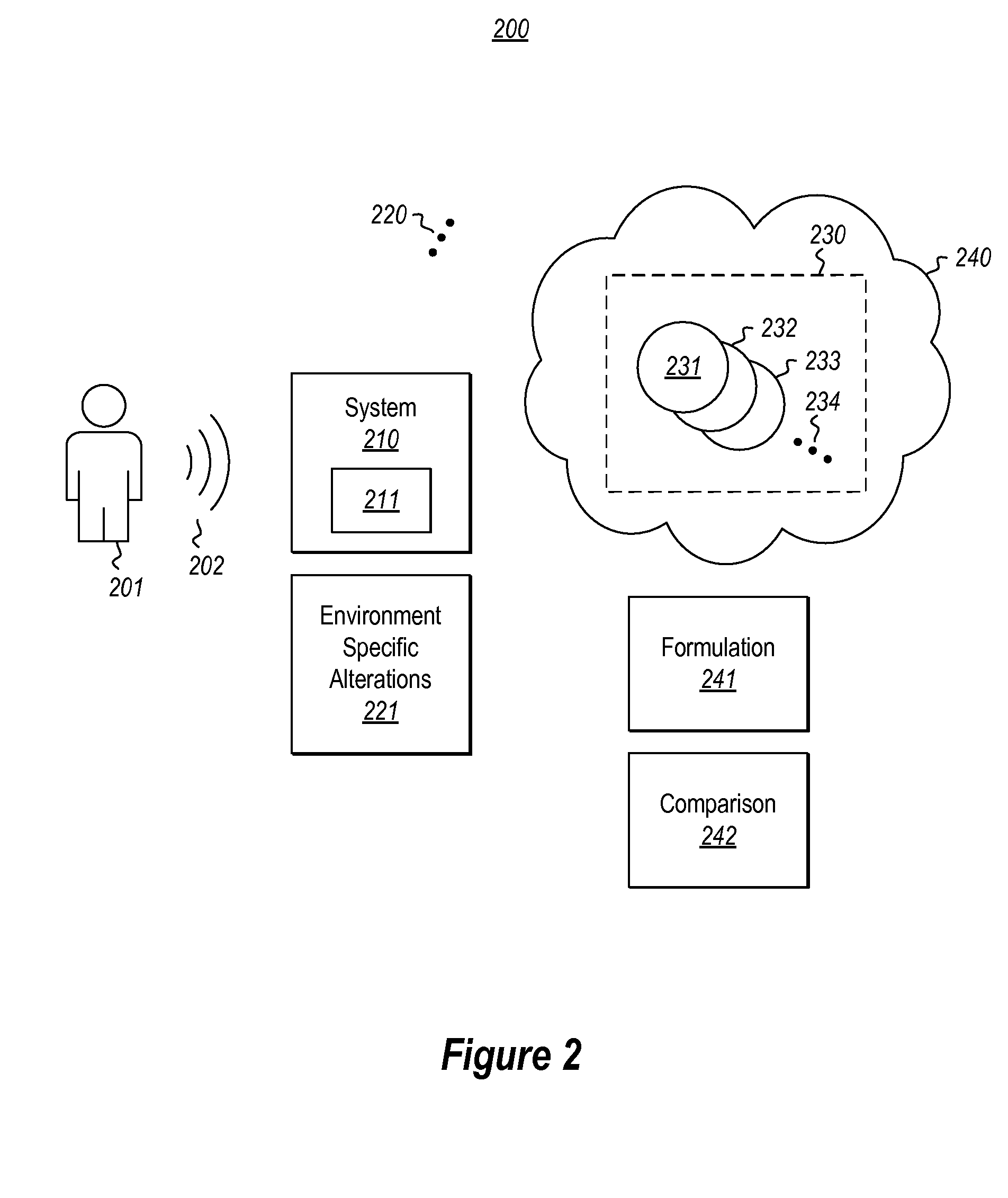
[0015]At least some embodiments described herein relate to computerized estimation of an identity of a user of a computing system. The system estimates environment-specific alterations of a received user sound that is received at the computing system. For instance, the system might expect certain acoustic echoes or filtering that is a result of the room or environment in which the computing system is placed, or that is the result of a predicted positional relationship between the user and the computing system.
[0016]The system estimates whether the received user sounds is from a particular user by use of a corresponding user-dependent audio model. The user-dependent audio model may be stored in a multi-system store accessible such that the method may be performed for a given user across multiple systems and on a system that the user has never before trained to recognize the user. This is accomplished despite each system experiencing perhaps different environmental adjustments (e.g., ...
PUM
 Login to View More
 Abstract
Description
Claims
Application Information
 Login to View More