
Nitrogen-containing heterocyclic compound and organic electronic device using same
a technology of organic electronic devices and heterocyclic compounds, which is applied in the direction of luminescent compositions, organic chemistry, chemistry apparatus and processes, etc., can solve the problems of insufficient development of stable and efficient organic material layer materials for organic light emitting devices, reducing device efficiency, and color purity, etc., to achieve excellent efficiency, excellent thermal stability, and good light emission
- Summary
- Abstract
- Description
- Claims
- Application Information
AI Technical Summary
Benefits of technology
Problems solved by technology
Method used
Image

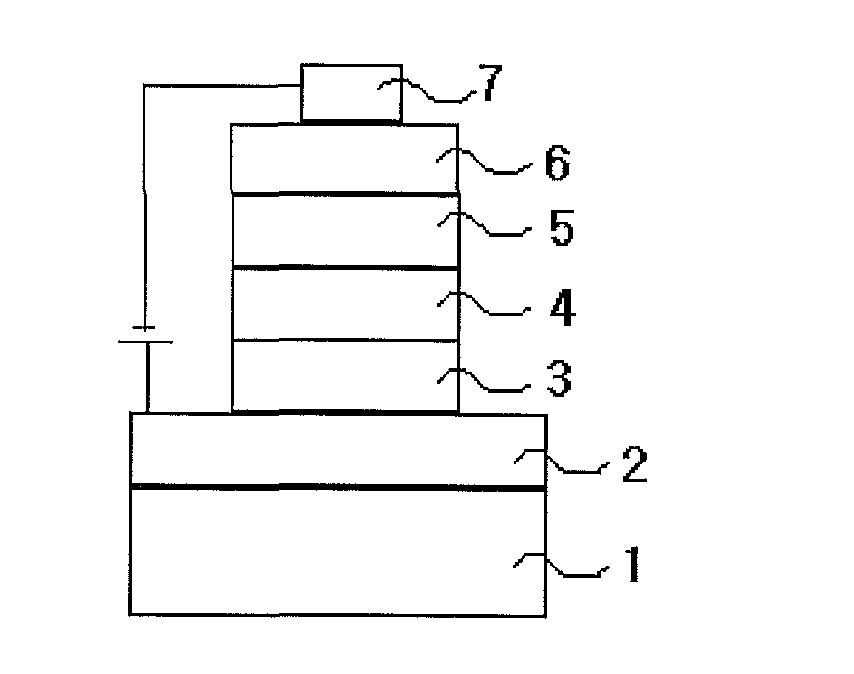
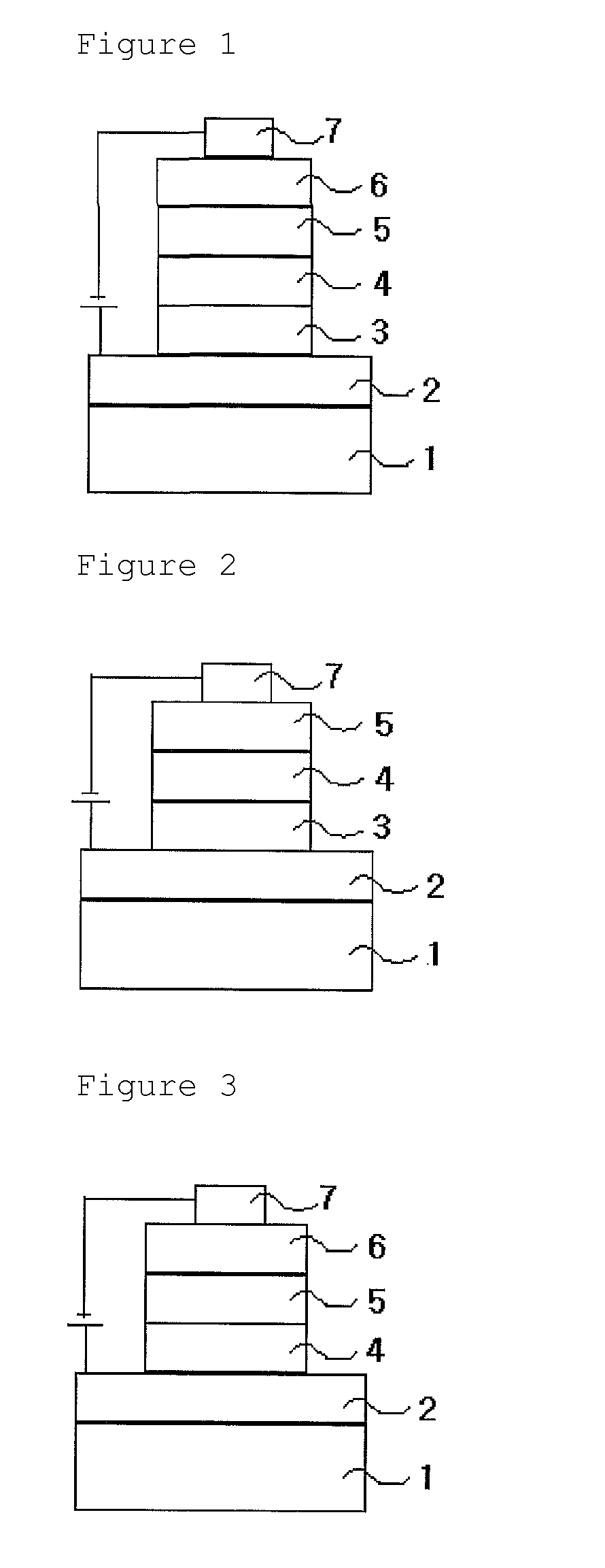
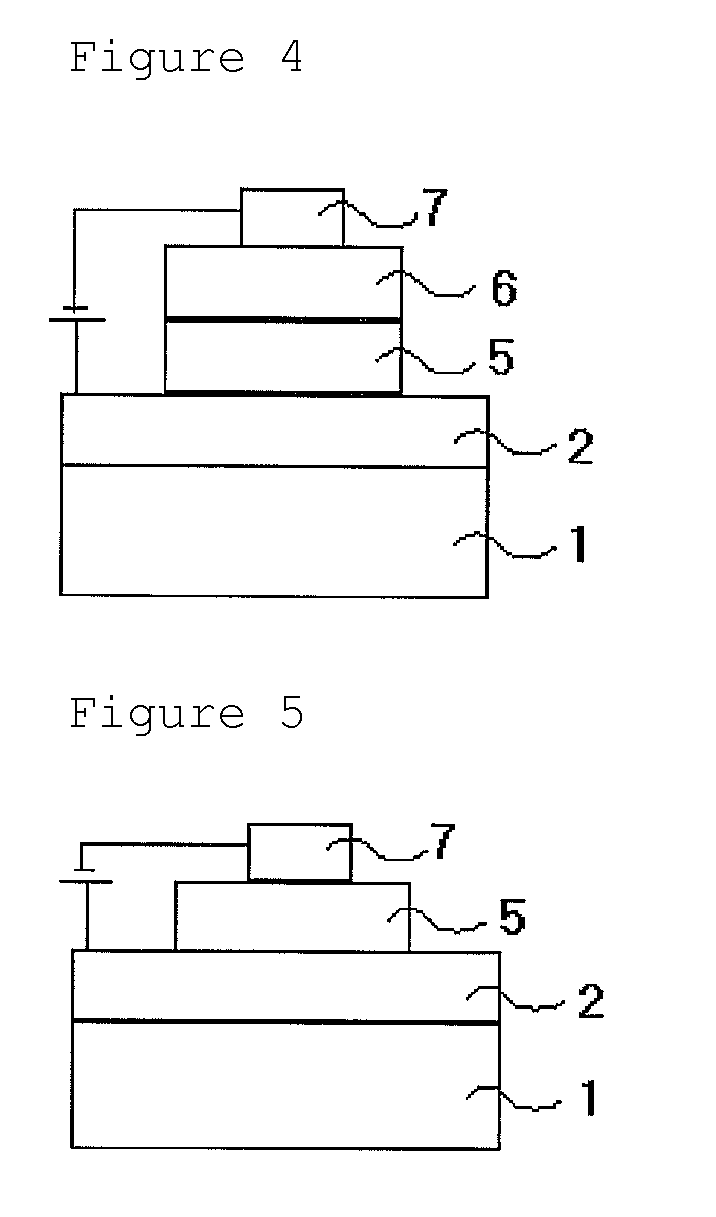
Examples
example
[0118]Hereinafter, the present invention will be described in more detail through Preparation Examples and Experimental Examples, but the scope of the present application is not limited by the following Preparation Examples and Experimental Examples.
preparation example
Preparation of the Following Compounds A-1 and A-2
[0119]
(Preparation Example 1-1) Preparation of Compound A-1
[0120]N-methyl-1,2-benzenediamine dihydrochloride (19.5 g, 99.95 mmol) and 4-bromobenzaldehyde (18.5 g, 99.98 mmol) were suspended in 1,4-dioxane (200 mL) and acetic acid (AcOH) (20 mL). The obtained mixture was stirred under reflux for about 6 hours, and cooled to normal temperature. The mixture was diluted with water (100 mL), and then the produced solid was filtered, and washed with water and hexane to prepare Compound A-1 (20.7 g, 72%). MS: [M+H]+=288
(Preparation Example 1-2) Preparation of Compound A-2
[0121]In Compound A-3 (11.7 g, 40.7 mmol) prepared in Preparation Example 1-1, bis(pinacolato)diboron (11.4 g, 44.9 mmol) and potassium acetate (KOAc) (12.0 g, 122 mmol) were suspended in dioxane (250 mL). Pd(dba)2 (0.70 g, 3 mol %) and PCy3 (0.69 g, 6 mol %) were added to the suspension. The mixture was stirred under reflux for about 8 hours, and cooled to normal temperat...
experimental example
Experimental Example 1-1-1
[0162]A glass substrate on which a thin film of indium tin oxide (ITO) was coated to a thickness of 500 Å was placed into distilled water in which a detergent was dissolved, and washed using ultrasonic waves. At this time, a product manufactured by Fischer Co. was used as the detergent, and distilled water, which had been twice filtered by a filter manufactured by Millipore Co., was used as the distilled water. After the ITO was washed for 30 minutes, ultrasonic washing was repeated twice by using distilled water for 10 minutes. After the washing using distilled water was completed, ultrasonic washing was conducted using a solvent of isopropyl alcohol, acetone, and methanol, and the resultant product was dried and then transported to a plasma washing machine. In addition, the substrate was washed by using an oxygen plasma for 5 minutes, and then was transported to a vacuum deposition machine.
[0163]Hexanitrile hexaazatriphenylene (HAT) of the following Formu...
PUM
| Property | Measurement | Unit |
|---|---|---|
| weight ratio | aaaaa | aaaaa |
| charge | aaaaa | aaaaa |
| electric charges | aaaaa | aaaaa |
Abstract
Description
Claims
Application Information
 Login to View More