
Screening method for clostridium butyricum producing efficient antibacterial peptide butyrisin
A technology of Clostridium butyricum and antimicrobial peptides, applied in the field of screening of Clostridium butyricum
Patent Information
- Authority / Receiving Office
- CN · China
- Current Assignee / Owner
- Publication Date
- 2015-05-13
- Estimated Expiration
- Not applicable · inactive patent
Smart Images
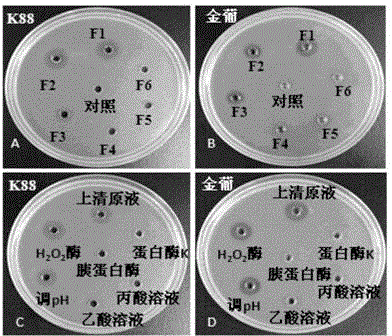
Figure 1 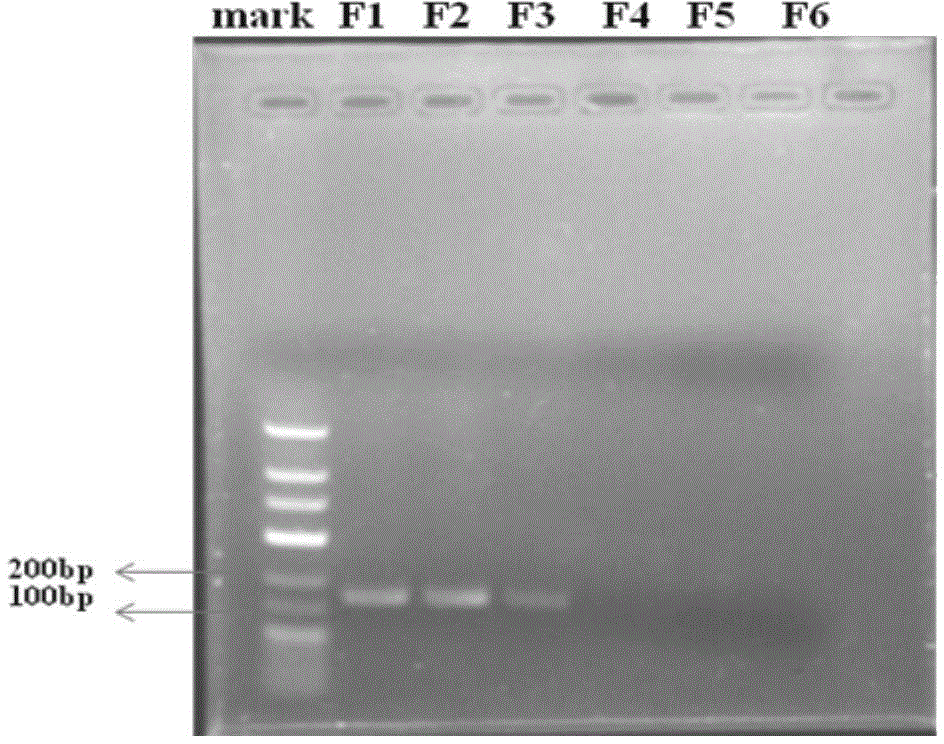
Figure 2 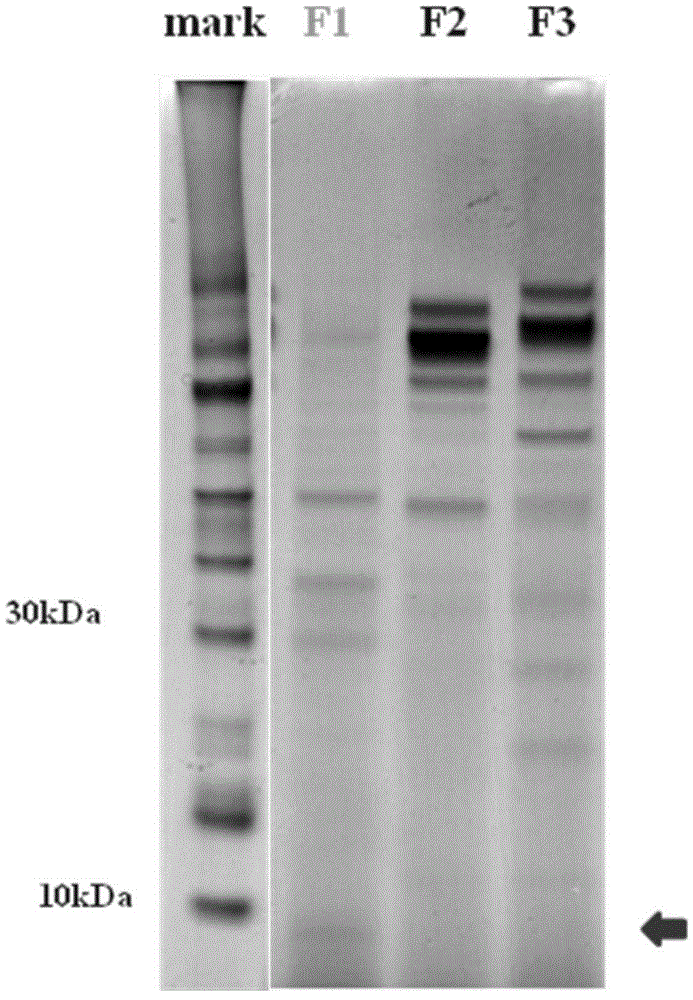
Figure 3
Abstract
Description
technical field
[0001] The invention relates to the field of feed additives-microbial preparations, in particular to a screening method for Clostridium butyricum producing high-efficiency antibacterial peptide butyrisin. Background technique
[0002] Feed antibiotics are widely used as animal growth-promoting agents in feed, and its disadvantages are becoming increasingly prominent, such as causing animal gastrointestinal flora imbalance, drug resistance and drug residues, etc., which have potential impact on human health and safety. risks of. Finding efficient, green, safe feed additives that are not prone to drug resistance has become one of the hot spots in the industry.
[0003] As a new type of safe biological agent, antimicrobial peptides have highlighted their potential utilization value. Antimicrobial peptides are small molecules with biologically active substances induced in organisms. These active peptides have strong alkalinity, thermal stability and spectral An...
Examples
Embodiment 1
[0060] Embodiment 1, produce the clostridium butyricum primary screening of bacteriostatic substance
[0061] The Clostridium butyricum strains (6 strains) to be screened were fermented and cultured, and the common pathogenic bacteria (E. Substance Clostridium butyricum.
[0062] Carry out the following steps successively for each Clostridium butyricum strain to be screened:
[0063] (1) The strain activation inoculation (1% inoculum size) was cultured in a liquid medium (RCM liquid medium) in an anaerobic incubator (37°C, 200rpm) for 24h, centrifuged (3000g 5min) to get the supernatant, and detected The pH value of the serum;
[0064] Use the supernatant to set up the following groups ①~⑦ respectively:
[0065] ① supernatant (that is, supernatant stock solution);
[0066] ②Adjust the supernatant to pH 5.5 with NaOH;
[0067] ③ Adjust the supernatant to pH 7.2 first, then add catalase to a concentration of 1 mg / mL (that is, add 1 mg of catalase to 1 ml of supernatant) and...
Embodiment 2
[0082] Example 2 PCR verification of gene expression of antimicrobial peptide butyrisin
[0083] Bacterial DNA was extracted with UNIQ-10 Column Bacterial Genomic DNA Extraction Kit. The amino acid sequence of the antibacterial peptide produced by Clostridium bibutyricum was searched on GeneBank, the conserved sequence of the amino acid sequence was analyzed, and primers were designed according to the conserved amino acid sequence. The primers are shown in Table 2.
[0084] The PCR system is: Forward primer (10uM / μL): 1μl;
[0085] Reverse primer (10uM / μL): 1μl;
[0086] MgCl 2 (25mM): 3μl;
[0087] 10×PCR Buffer: 5μl;
[0088] dNTPs (2.5mM each): 1μl;
[0089] BSA (10mM): 2.5μl;
[0090] TaKaRa Ex taq enzyme (5U / μL): 0.5μl;
[0091] wxya 2 O: 35 μl;
[0092] Genomic DNA (50ng / μl): 1ul:
[0093] Total 50 μl.
[0094] The PCR reaction program is: 94°C for 5mins;
[0095]
[0096] 72℃ 15mins
[0097] 4°C forever.
[0098] Perform agarose electrophoresis after PC...
Embodiment 3
[0103] Example 3, protein electrophoresis to verify the expression of the antimicrobial peptide butyrisin
[0104] The strains F1, F2, and F3 expressing the butyrisin protein gene were inoculated into RCM liquid medium respectively, sealed with liquid paraffin, cultured and fermented at a constant temperature of 37°C for 24 hours, and the bacterial liquid was centrifuged at 3000rpm for 5 minutes, and the supernatant was taken, and anion exchange column and molecular sieve layer were used The antimicrobial peptide secreted by Clostridium butyricum was purified by analytical method, and verified by electrophoresis using SDS-PAGE (refer to the published invention patent: an antimicrobial peptide secreted by Clostridium butyricum and its preparation method and application, application number: 2014100306483 method to operate). The result is as image 3 shown. according to image 3 , we learned that the antimicrobial peptide butyrisin was contained in the supernatant of strain F1...