
Method and apparatus for correcting audio signal
An audio signal and signal technology, which is applied in voice analysis, electrical components, instruments, etc., can solve problems such as discontinuous sound channels, inability to completely eliminate boundary effects, boundary effects, etc.
- Summary
- Abstract
- Description
- Claims
- Application Information
AI Technical Summary
Problems solved by technology
Method used
Image

Examples
Embodiment 1
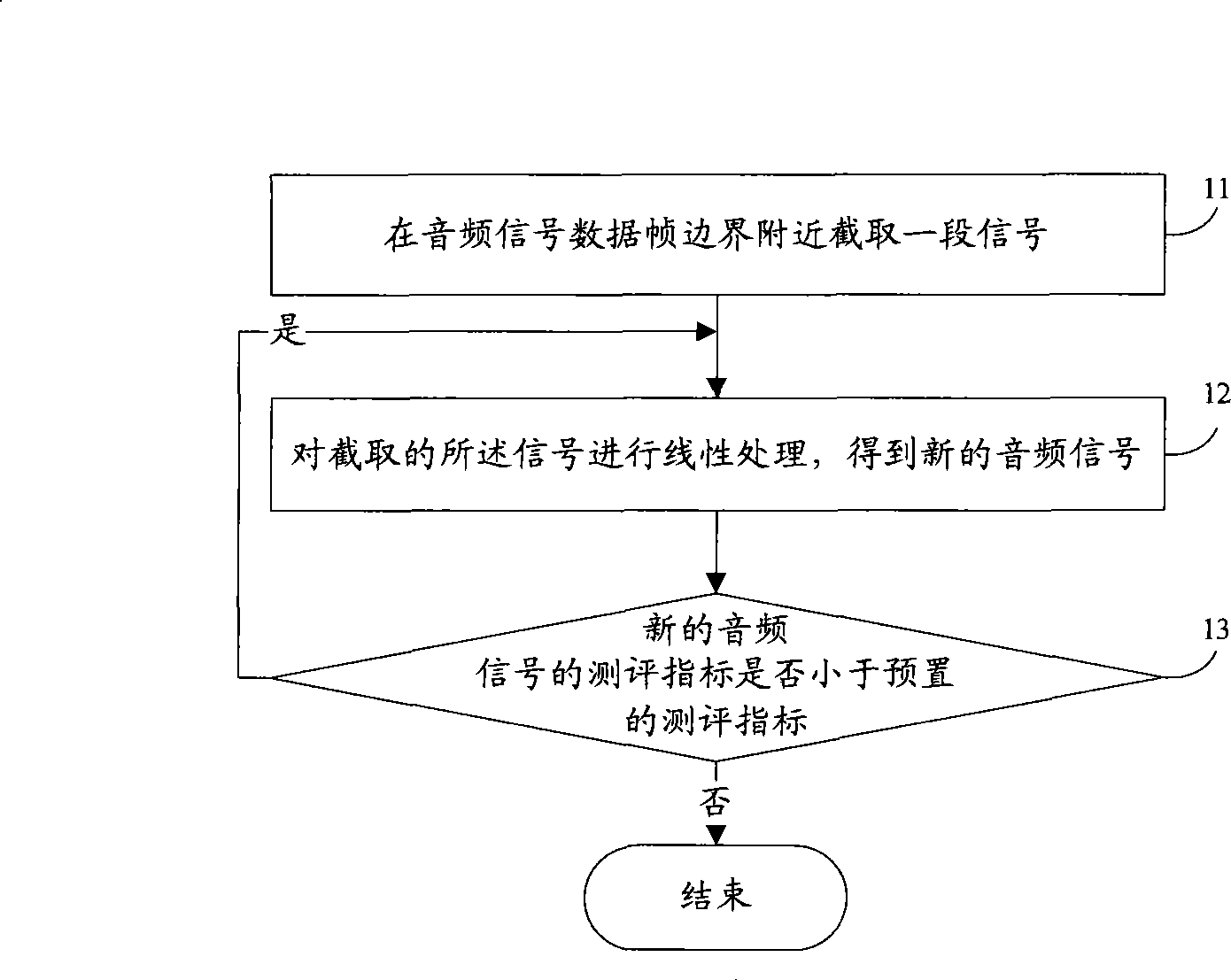
[0043] 101: Intercept a section of signal near the boundary of the audio signal data frame; for example, point X is the boundary point of signal 1, since the frame length of the general spectrogram is 256 points, start from point X to intercept 128 points forward and backward Intercept 128 points, and the intercepted 256 points form a frame signal;
[0044] 102: Perform LP (Linear Prediction, linear prediction) analysis on the intercepted signal to obtain the prediction coefficient, and then use the formula s ′ ( n ) = Σ i = 0 p a i s ( n - i ) Carry out linear prediction, and the obtained predicted value replaces the jump value near the data frame boundary to obtain a new audio signal;...
Embodiment 2
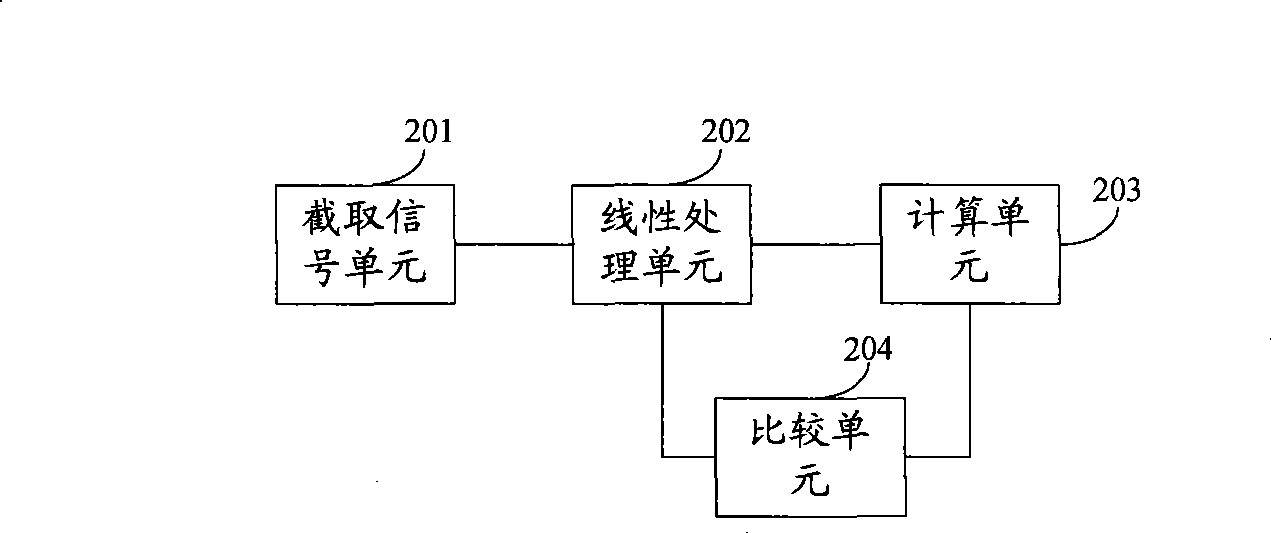
[0050]201: Intercept a section of signal near the boundary of the audio signal data frame; for example, point X is the boundary point of signal 1, since the frame length of the general spectrogram is 256 points, start from point X to intercept 128 points forward and backward Intercept 128 points, and the intercepted 256 points form a frame signal;
[0051] 202: Perform LP (Linear Prediction, linear prediction) analysis on the intercepted signal to obtain the prediction coefficient, and then use the formula s ′ ( n ) = Σ i = 0 p a i s ( n - i ) Carry out linear prediction, and the obtained predicted value replaces the jump value near the data frame boundary to obtain a new audio signal; ...
Embodiment 4
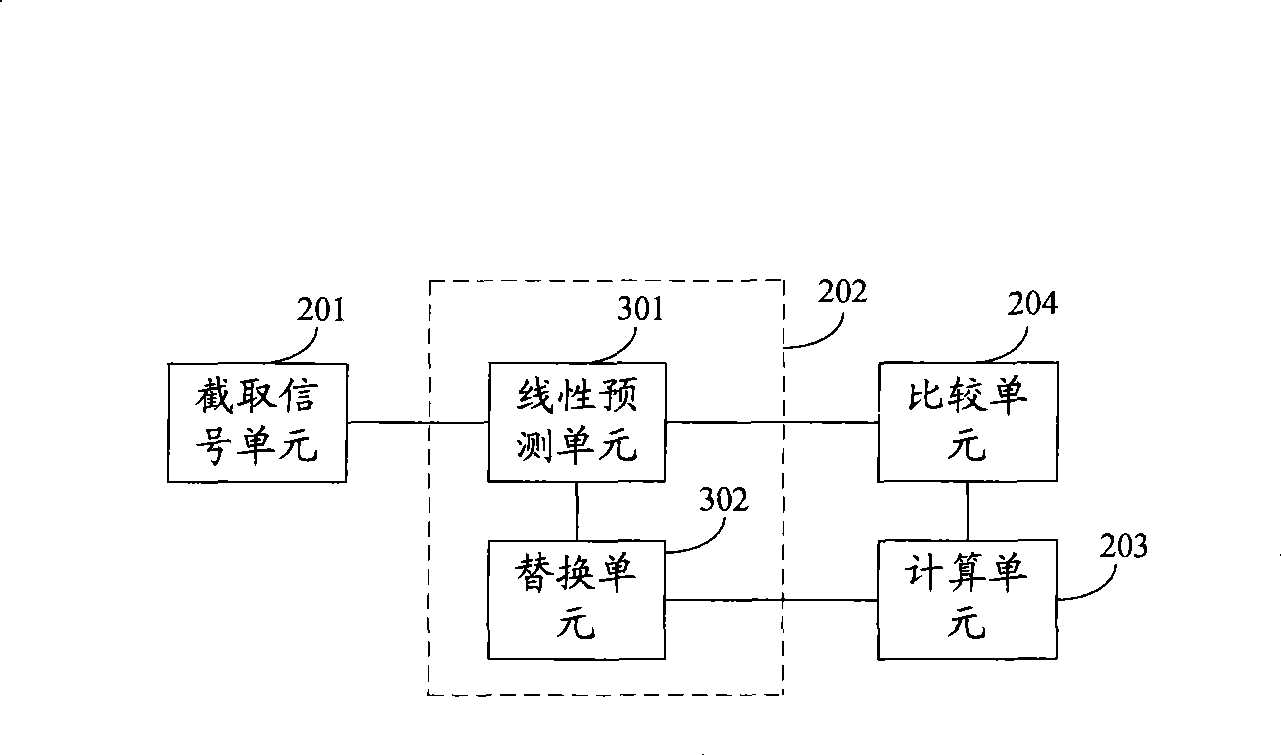
[0066] 401: Intercept a section of signal near the boundary of the audio signal data frame; for example, point X is the boundary point of signal 1, since the frame length of the general spectrogram is 256 points, start from point X to intercept 128 points forward and backward Intercept 128 points, and the intercepted 256 points form a frame signal;
[0067] 402: Perform LP (Linear Prediction, linear prediction) analysis on the intercepted signal to obtain the prediction coefficient, and then use the formula s ′ ( n ) = Σ i = 0 p a i s ( n - i ) Carry out linear prediction, and the obtained predicted value replaces the jump value near the data frame boundary to obtain a new audio signal;...
PUM
 Login to View More
 Abstract
Description
Claims
Application Information
 Login to View More