
Organotin-oxygen cluster containing ferrocene pyrazole and application of cluster
A ferrocene pyrazolyl and organotin technology, which is applied in the fields of tin organic compounds, organic chemistry, metallocene, etc., can solve the problems that small molecular weight organotin compounds are not suitable for anticancer agents, damage the immune system of animals, etc., and achieve cost Low, low toxicity, environmentally friendly effect
- Summary
- Abstract
- Description
- Claims
- Application Information
AI Technical Summary
Problems solved by technology
Method used
Image

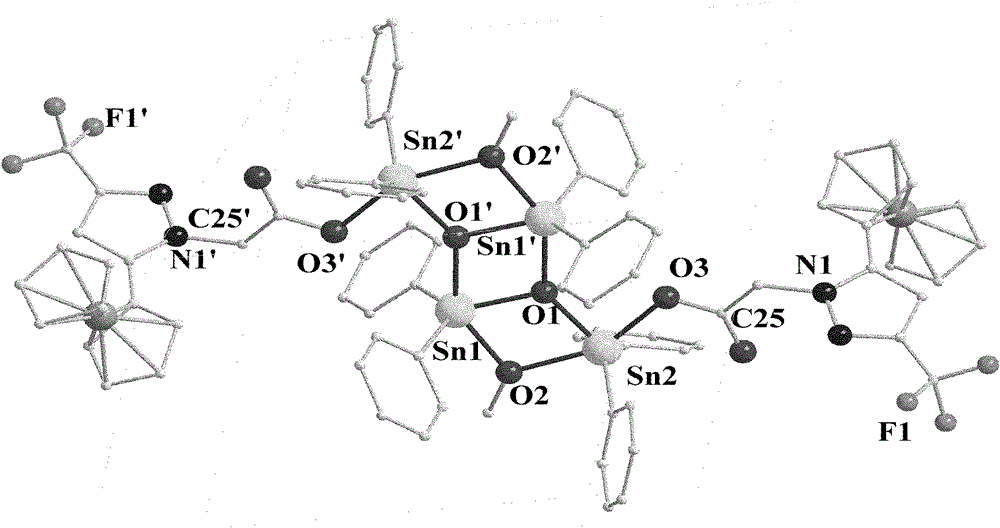
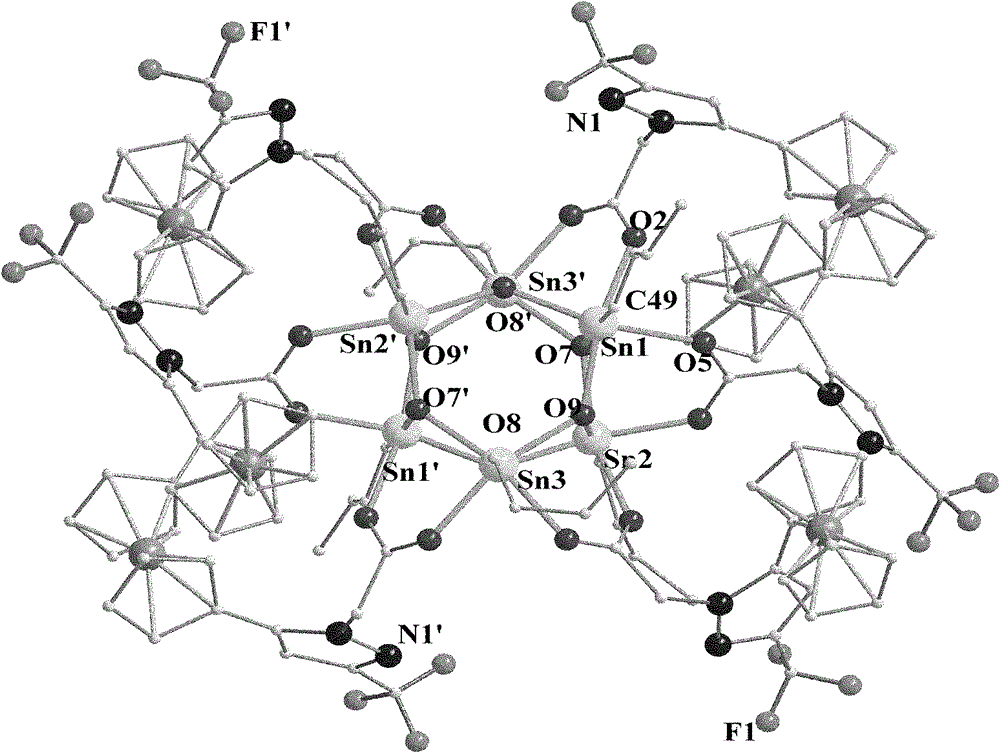
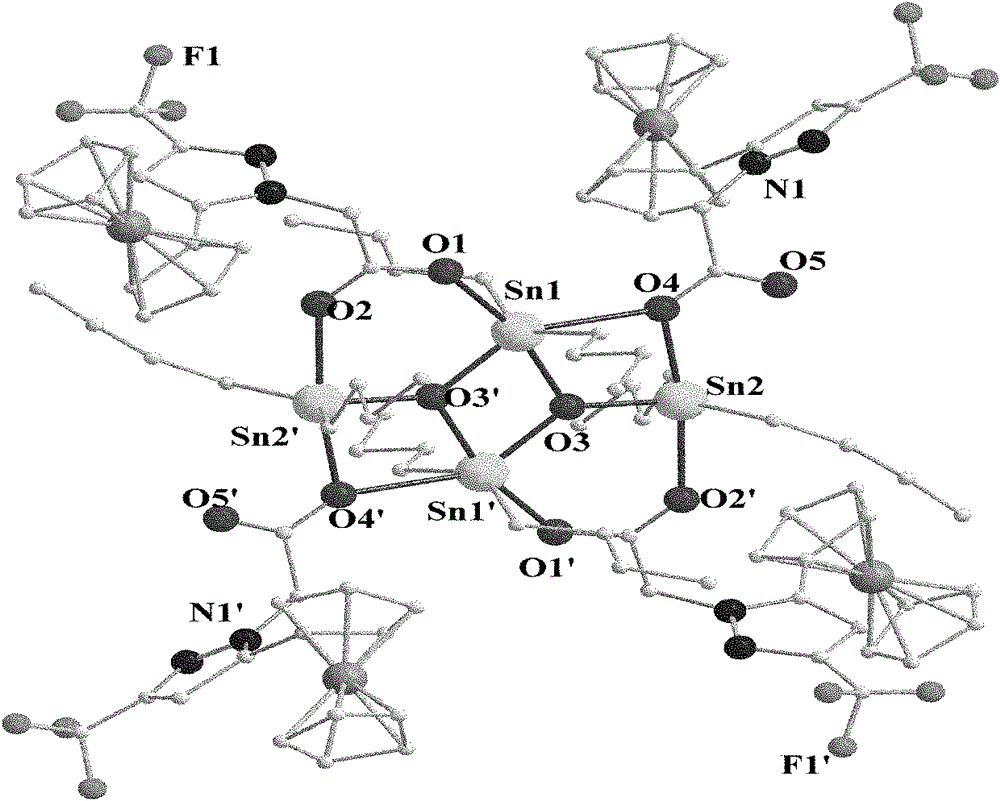
Examples
Embodiment Construction
[0037] The present invention is further described in detail by the following examples, but it should be noted that the scope of the present invention is not limited by these examples.
[0038] 1. Synthesis of ligand [3-trifluoromethyl-5-ferrocene pyrazole acetic acid (LCOOH)]:
[0039] Weigh 5-ferrocenyl-3-trifluoromethylpyrazole S (6.40g, 0.02mol) and dissolve it in acetonitrile, then weigh t-BuOK (3.36g, 0.03mol) and add it to the above solution, 60 After heating at ℃ for 2h, the BrCH 2 COOC 2 h 5 (6.68g, 0.04mol) was dropped into the flask drop by drop, and the reaction was carried out for 4-5 hours after the drop, and the reaction was basically completed by TLC detection. Evaporate acetonitrile under reduced pressure, add water to raise the temperature and reflux to hydrolyze the product, stop the reaction after 1.5h, take out the mixture, add dilute HCl (1M) dropwise to the above mixture under ice bath to adjust the pH of the solution to weak acidity (pH=5~6) . Repea...
PUM
 Login to View More
 Abstract
Description
Claims
Application Information
 Login to View More