
An electric machine
A technology for rotating electrical machines and electric power, applied in the field of permanent magnet motors, which can solve problems such as low efficiency
- Summary
- Abstract
- Description
- Claims
- Application Information
AI Technical Summary
Problems solved by technology
Method used
Image

Examples
Embodiment Construction
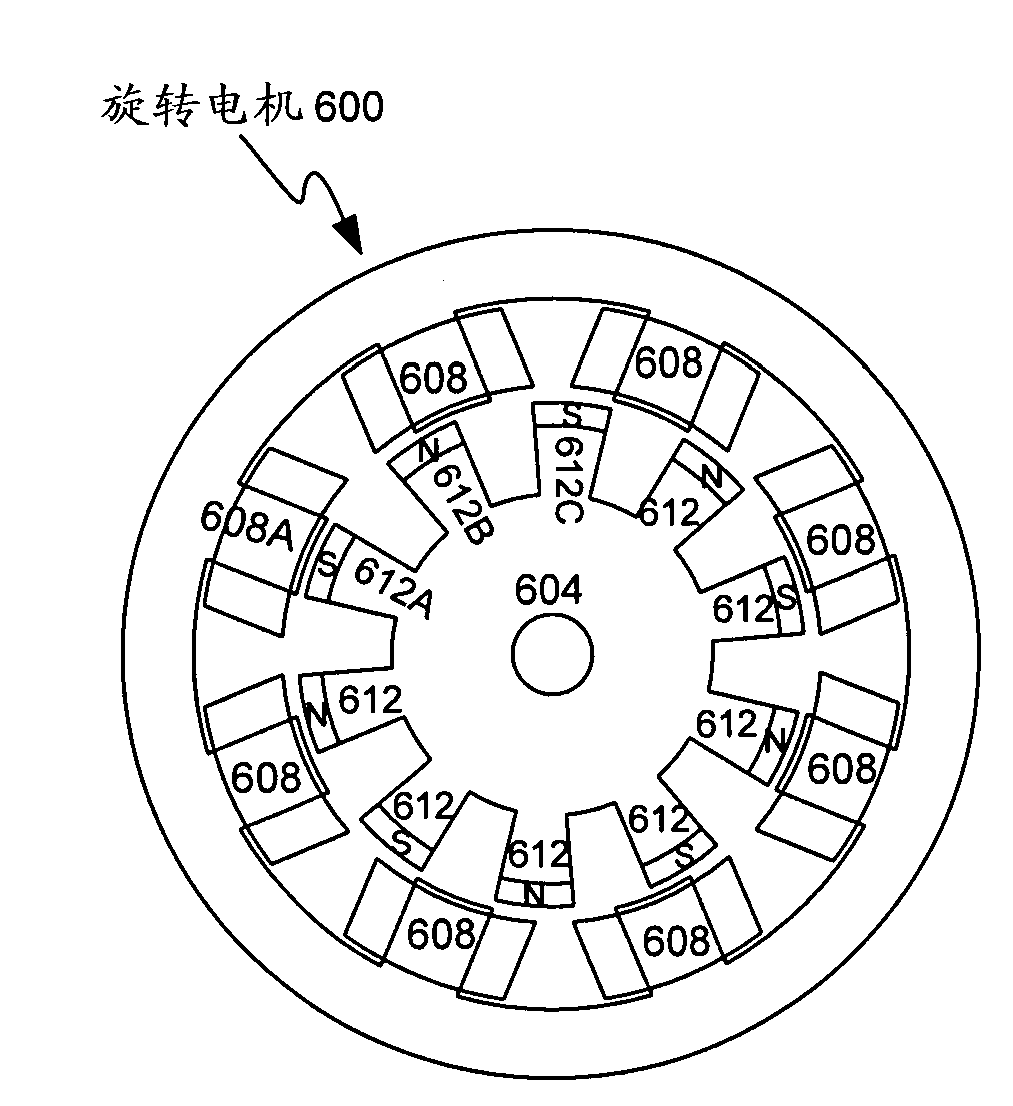
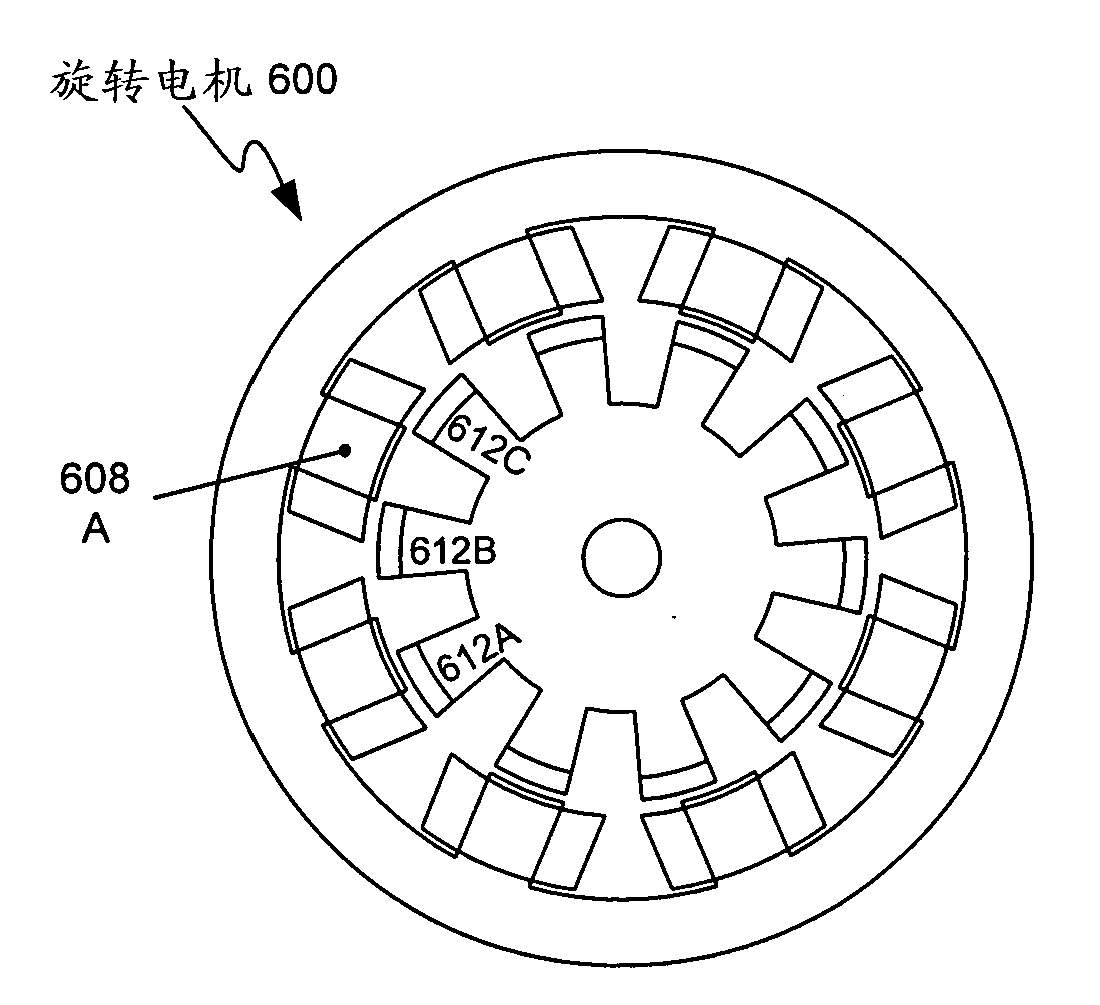
[0052] Described herein are electric machines (such as rotary motors, rotary generators, linear motors or linear generators) having two components arranged to convert between electrical energy and mechanical energy through magnetic interaction. The two components are, for example, a stator and a rotor (in a rotary electric machine) or a stator and a mover (in a linear electric machine). Each part consists of an integer number of sections of equal length (angular for rotary motors, or linear for linear motors).
[0053] motor configuration
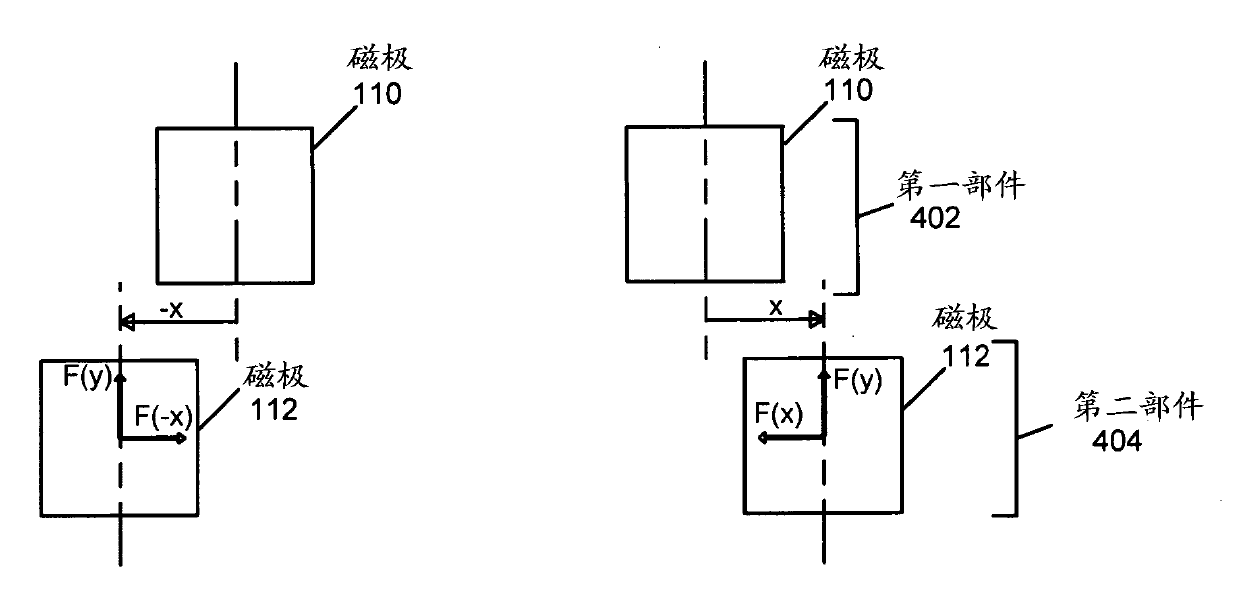
[0054] Such as figure 1 As shown, portions such as first portion 102 and second portion 104 each include a body 106 , 108 and one or more magnetic poles 110 , 112 . In operation, the two parts 102 , 104 move relative to each other in a direction of motion 114 aligned with the aligned poles 110 , 112 . The two parts 102 , 104 interact magnetically due to the magnetic fields generated by the magnets included in the poles 110 , 112 . The...
PUM
 Login to View More
 Abstract
Description
Claims
Application Information
 Login to View More