Often the dominant
noise is man-made interference, either intentional or accidental.
In a specific application the communication environment may include many potential reflectors, giving rise to severe multi-path interference.
Such multi-path interference typically insinuates deep nulls in the form of frequency selective
fading.
Furthermore, any received narrow-band interference is spread by the code-replica modulation, and this greatly reduces the interference
power level in the data band.
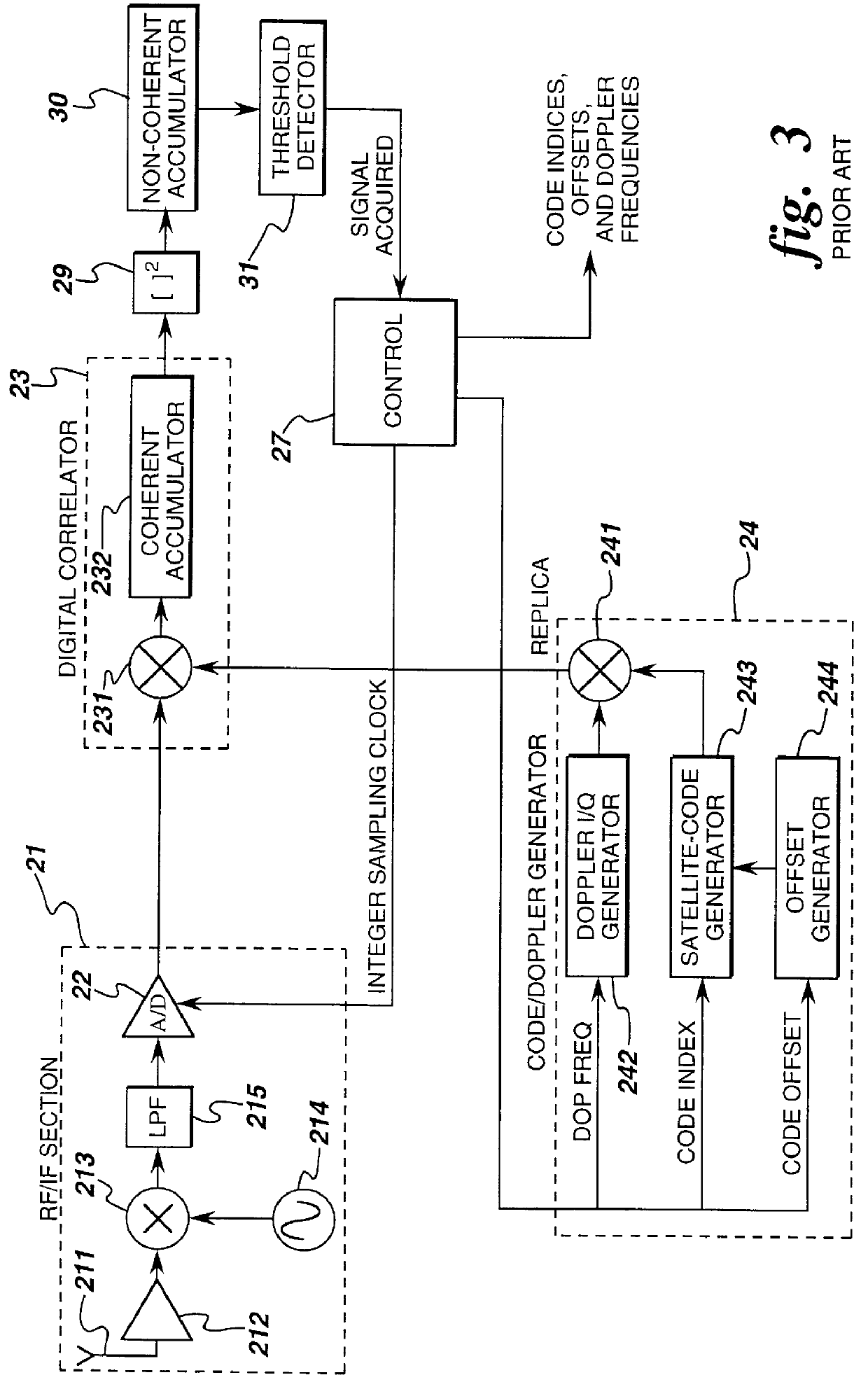
An often difficult task associated with DSSS signal reception is that of generating the carrier replica with both proper carrier frequency and phase and generating the P / N code replica at the proper rate and with
proper time alignment (offset).
In many DSSS applications, the DSSS signal levels are well below the
background noise and / or interference levels and are not detectable until properly de-spread and low-pass filtered.
When many different codes, code offsets and carrier frequencies must be examined and the SNR is low, the acquisition task can be both time and energy consuming.
Unfortunately, the receiver location is not known a priori, and there is often substantial
local oscillator error with inexpensive receivers.
There is, however, a
clock-bias (slowly changing error) due the fact that GPS receivers typically use inexpensive
crystal clocks, whereas the satellites are equipped with atomic clocks.
In this application, the GPS receivers are usually battery powered since an independent source of power is generally not available.
In a typical spread spectrum receiver, the
receiver front end (i.e., RF and IF
electronics) consumes a large amount of power while it is turned on.
With a sequential search the
energy consumption is high because substantial time is elapsed before the SCD bin associated with each GPS signal is identified.
Alternatively, multiple SCD bins can be searched in parallel to reduce the elapsed time, but the
energy consumption is still high because the existing
processing methods are not very low power methods.
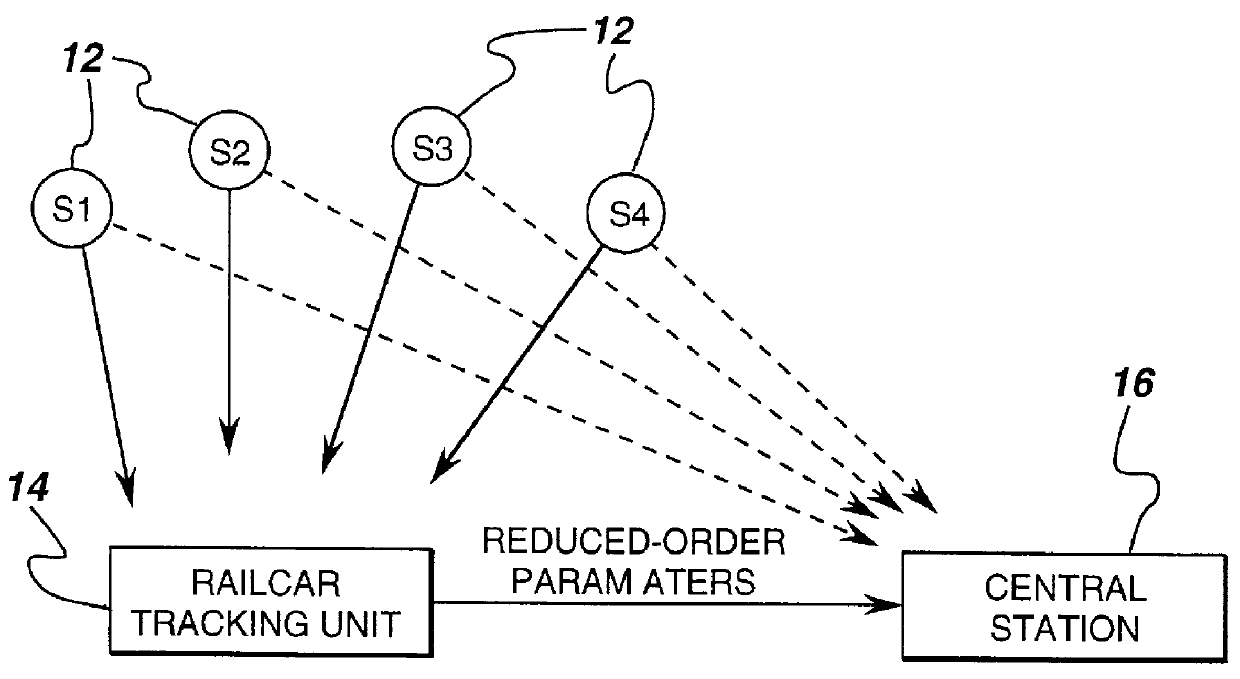
Each tracked object carries a
GPS receiver that processes data from several of the visible
GPS satellites; however, an accurate position determination is not made at the receiver.
However, the receiver is not turned off immediately after signal storage, and low-power
signal acquisition is not used.
This
system does not substantially reduce the energy consumed by the
GPS receiver at the asset and does not substantially extend asset battery life or reduce time between service to replace batteries.
Furthermore, low-power parallel correlation is not used.
The use of a parallel correlator allows the
local oscillator to be inaccurate because many frequencies are readily searched during the acquisition process using low power.
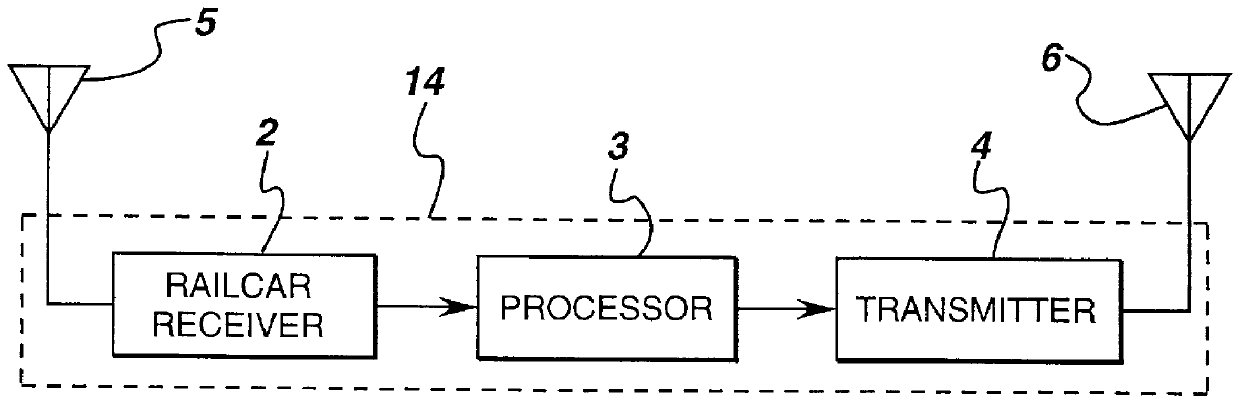
Since the navigation solution is not needed at the tracking units, only limited
processing consuming very low power is needed, the navigation solution being generated at a central
station.


 Login to View More
  Login to View More