
Method and reactor for removing organic matters by enzyme electrode coupled electroflocculation
A technology of electroflocculation and organic matter, which is applied in chemical instruments and methods, electrochemical biocombination treatment, biological water/sewage treatment, etc. Cathode is not fully utilized and other problems, to achieve the effect of good treatment effect, low enzyme addition and cost reduction
- Summary
- Abstract
- Description
- Claims
- Application Information
AI Technical Summary
Problems solved by technology
Method used
Image

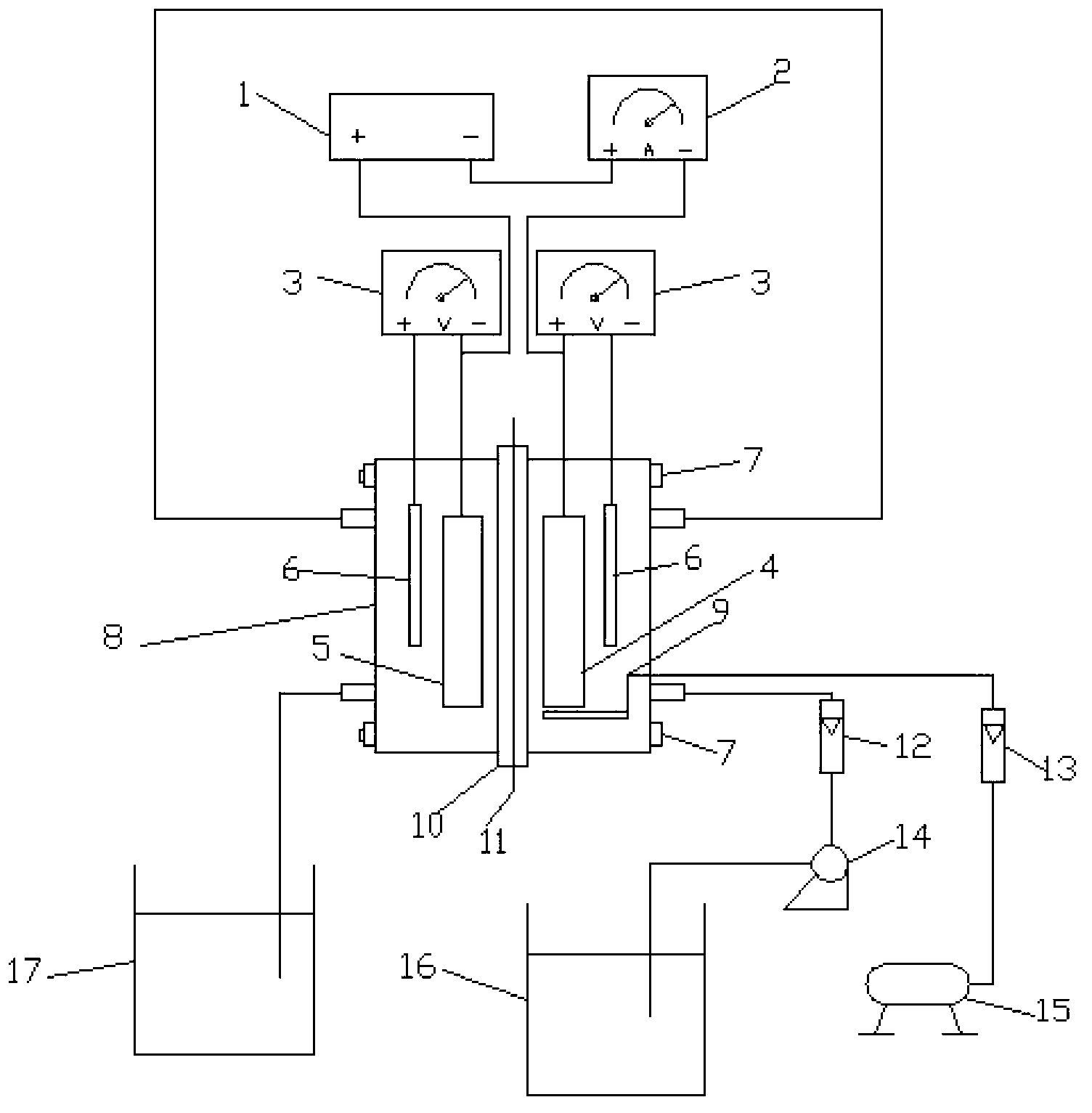
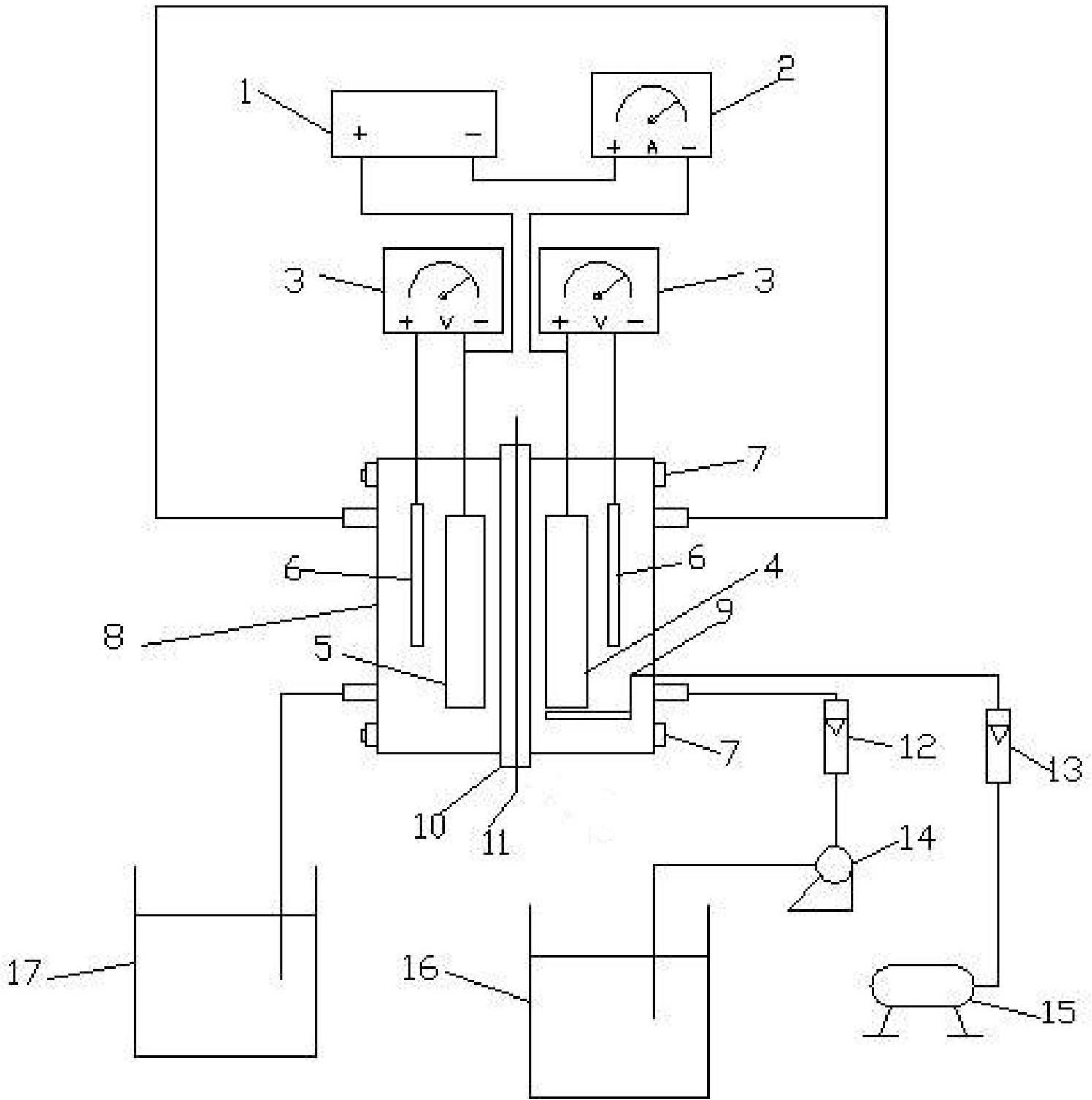
Examples
Embodiment 1
[0036] The effective volume of the cathode and anode chambers of the reactor is 40mL. A self-made enzyme-modified electrode was used as the cathode, horseradish peroxidase was used as the enzyme, and the amount of enzyme added was 10U / cm 2 , the substrate electrode is graphite, the air flow rate of the aeration device is 0.1L / min, the anode is an aluminum plate, the distance between the cathode and the anode is 1mm, the saturated calomel electrode is used as the reference electrode, and the DC stabilized current power supply controls the cathode potential as -0.2V. The bisphenol A solution (concentration 100mg / L) enters the enzyme electrode coupled electrocoagulation reactor from the water inlet, and the residence time is 5 minutes. The removal rate of bisphenol A in the effluent treated by the system is 90%. Under the same conditions, the removal rate of bisphenol A was only 25% using the graphite electrode without enzyme immobilization. It shows that the synergistic effect...
Embodiment 2
[0038] The effective volume of the cathode and anode compartments of the reactor is 4L. A self-made enzyme-modified electrode is used as the cathode, the enzyme is lignin peroxidase, and the amount of enzyme added is 1000U / cm 2 , the matrix electrode is activated carbon, the air flow rate of the aeration device is 100L / min, the anode is an aluminum plate, the distance between the cathode and the anode is 90mm, the saturated calomel electrode is used as the reference electrode, and the DC stabilized current power supply controls the cathode potential to - 1.2V. The bisphenol A solution (100 mg / L concentration) enters the enzyme-electrode coupled electrocoagulation reactor from the water inlet, and the residence time is 5 hours. The removal rate of phenol in the effluent treated by the system is 99%. Under the same conditions, the removal rate of bisphenol A was only 35% using the activated carbon electrode without enzyme immobilization. It shows that the synergistic effect of...
Embodiment 3
[0040] The effective volume of the cathode and anode chambers of the reactor is 40mL. A self-made enzyme-modified electrode was used as the cathode, and polyphenol oxidase was selected as the enzyme, and the amount of enzyme added was 10U / cm 2 , the substrate electrode is graphite felt, the air flow rate of the aeration device is 0.1L / min, the anode is an iron plate, the distance between the cathode and the anode is 1mm, the saturated calomel electrode is used as the reference electrode, and the DC stabilized current power supply controls the anode The potential is 0.2V. The humic acid solution (TOC is 100mg / L) enters the enzyme electrode coupled electrocoagulation reactor from the water inlet, the residence time is 1h, and the TOC removal rate of the system treated effluent is 80%. Under the same conditions, the removal rate of TOC was only 15% using graphite felt electrodes without enzyme immobilization; under the same conditions, the removal rate of TOC was 50% only throug...
PUM
| Property | Measurement | Unit |
|---|---|---|
| electric potential / voltage | aaaaa | aaaaa |
| electric potential / voltage | aaaaa | aaaaa |
| current density | aaaaa | aaaaa |
Abstract
Description
Claims
Application Information
 Login to View More