
Artificial cultivation method of dioscorea zingiberensis
A technology of Dioscorea serrata and planting method, applied in the directions of botanical equipment and method, fertilization method, seed immunity, etc., can solve the problems of low yield, non-standard planting technology, low saponin content and the like
- Summary
- Abstract
- Description
- Claims
- Application Information
AI Technical Summary
Problems solved by technology
Method used
Image

Examples
Embodiment 1
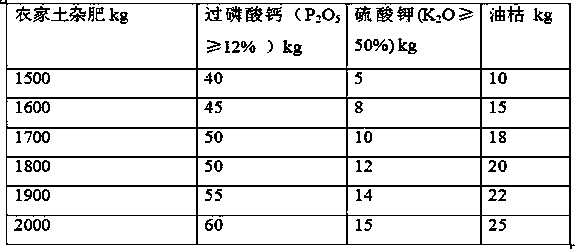
[0019] The following table is the planting points of embodiment one, see Table 1:
[0020] Table 1 The amount of base fertilizer per mu
[0021]
[0022] One set of data in the above-mentioned embodiment is selected as an example:
[0023] 1. Soil preparation: Select areas with an altitude of 400-900m that are sunny, warm, relatively high in air humidity, convenient for drainage and irrigation, and free from air, soil, water quality, and industrial pollution. Choose loose, fertile, sandy loam or soil with a pH value of 5-7. For planting in oil sand soil, dig or plow the selected land, level it, remove weeds and stones, and wait for sowing.
[0024] 2. Seed selection: select the rhizomes with strong, uniform, strong vitality, bright and shiny skin color, no pests and diseases, at least two bud eyes at the front end and middle end of the rhizome, about 6cm long, and fresh stems weighing more than 20g. kind. Note: Storing wilted seeds has a certain impact on emergence and...
Embodiment 2
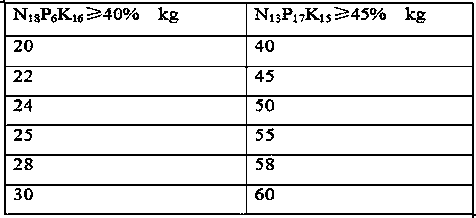
[0039] The following table is the planting points of embodiment one, see Table 2:
[0040] Table 2 application amount per mu
[0041]
[0042] One set of data in the above-mentioned embodiment is selected as an example:
[0043] 1. Soil preparation: Select areas with an altitude of 400-900m that are sunny, warm, relatively high in air humidity, convenient for drainage and irrigation, and free from air, soil, water quality, and industrial pollution. Choose loose, fertile, sandy loam or soil with a pH value of 5-7. For planting in oil sand soil, dig or plow the selected land, level it, remove weeds and stones, and wait for sowing.
[0044] 2. Seed selection: select the rhizomes with strong, uniform, strong vitality, bright and shiny skin color, no pests and diseases, at least two bud eyes at the front end and middle end of the rhizome, about 6cm long, and fresh stems weighing more than 20g. kind. Note: Storing wilted seeds has a certain impact on emergence and harvest; t...
PUM
| Property | Measurement | Unit |
|---|---|---|
| Diameter | aaaaa | aaaaa |
Abstract
Description
Claims
Application Information
 Login to View More