

Priority registration for in-vehicle emergency call service
An emergency call and priority technology, applied in emergency/dangerous communication services, road vehicle traffic control systems, connection management, etc., can solve problems such as operational delays
- Summary
- Abstract
- Description
- Claims
- Application Information
AI Technical Summary
Problems solved by technology
Method used
Image

Examples
Embodiment Construction
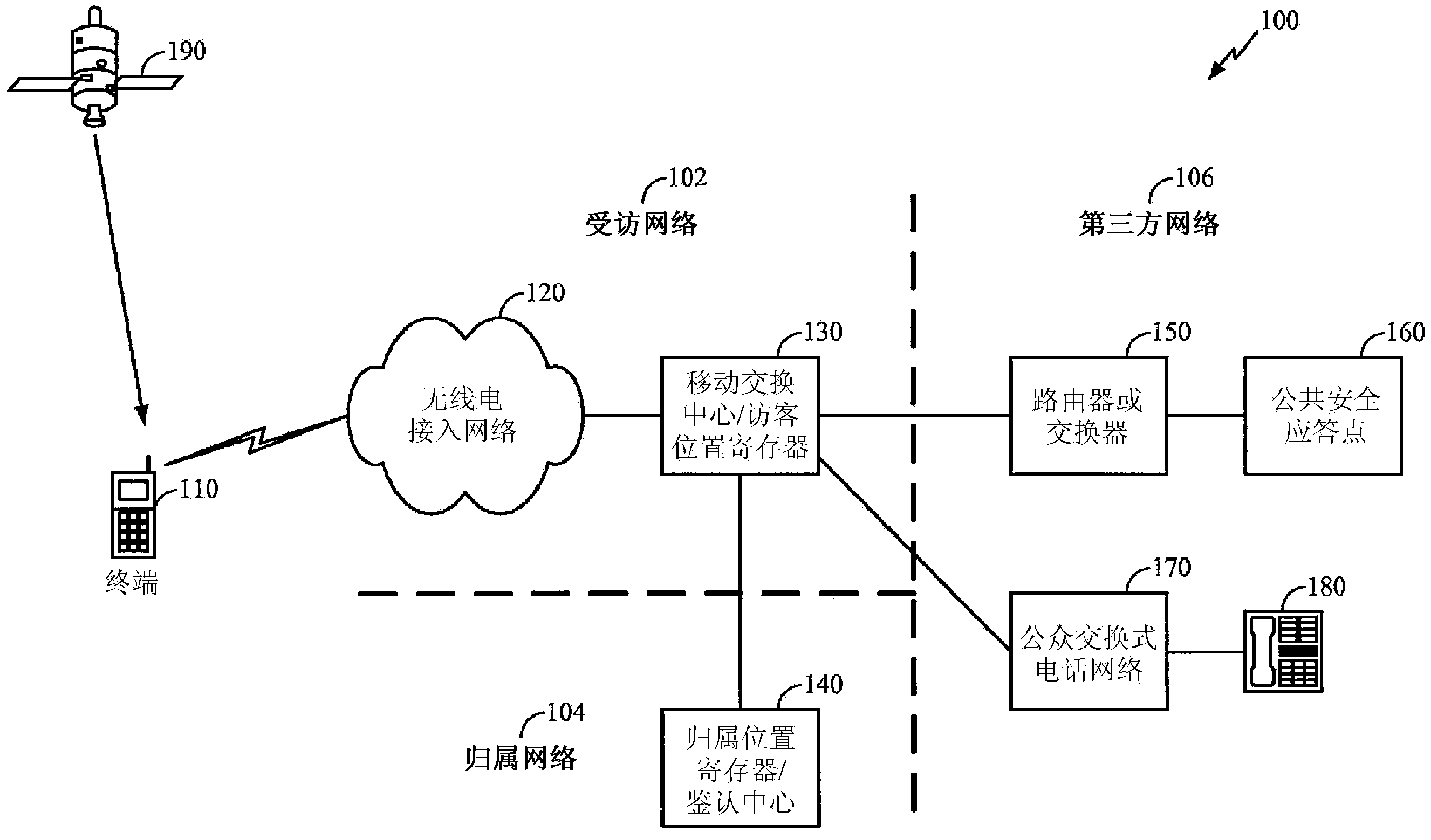
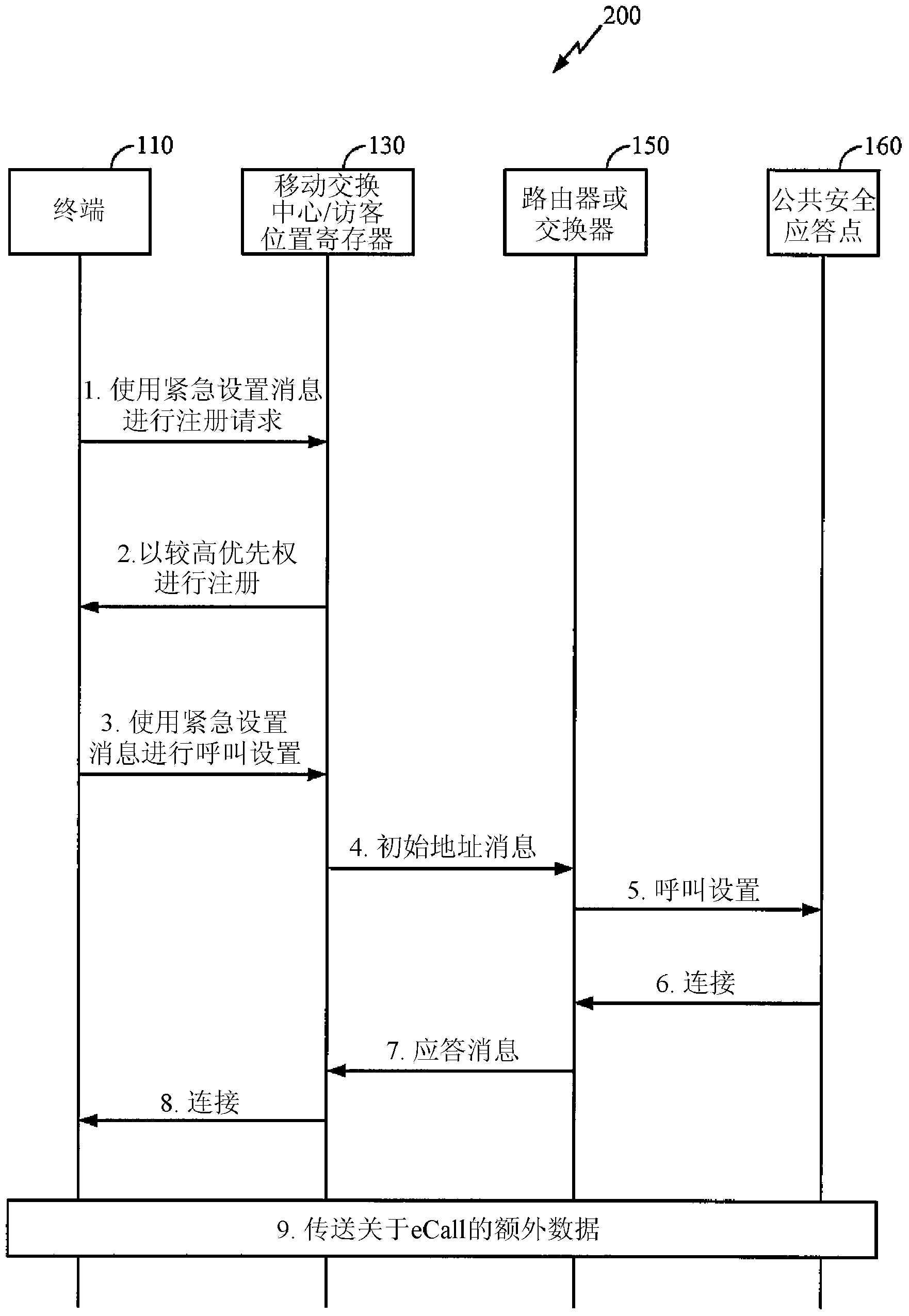
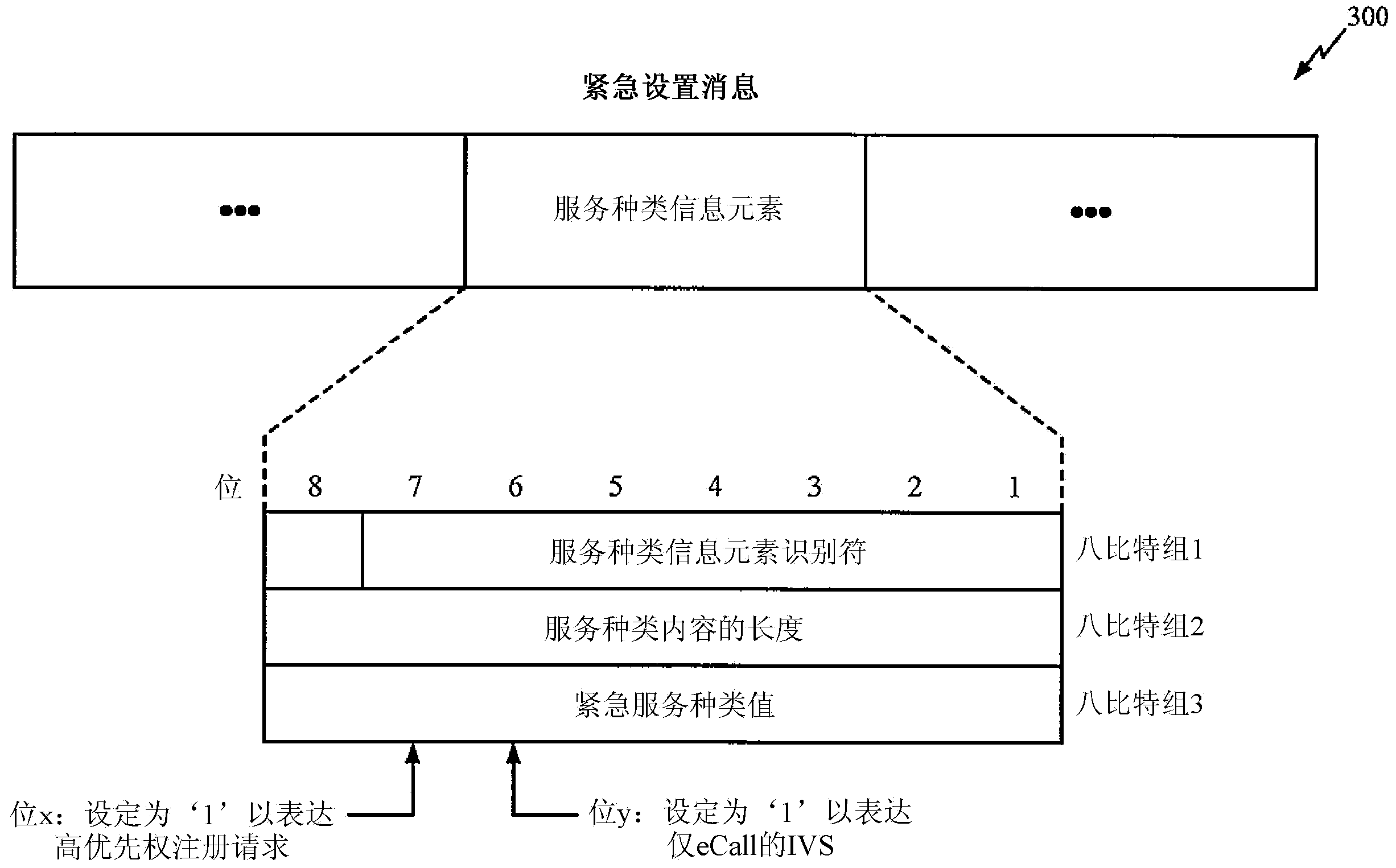
[0024] Techniques for supporting eCall are described herein. An eCall is an emergency call in which: (i) the emergency call may be initiated automatically by the wireless terminal or manually by the user due to a triggering event (e.g., the vehicle being involved in an accident); and (ii) The emergency call contains additional data that is automatically sent by the terminal to a receiving entity (eg, a Public Safety Answering Point (PSAP)). The additional data may include VIN, vehicle location, triggering events, etc., and may be sent in-band along the voice path, or out-of-band via separate signaling or data / text transfers. data. A terminal supporting eCall may be a terminal as follows: (i) a conventional wireless terminal, which subscribes to conventional services such as voice calls, packet data, text messages, video, etc.; or (ii) an eCall-only terminal, which is called a eCall terminal. An eCall consists of: an emergency call (similar to one initiated by a user dialing...
PUM
 Login to View More
 Abstract
Description
Claims
Application Information
 Login to View More