Method for simultaneously detecting frequency detector in direct wind finding laser radar system in high altitude and low altitude

A technology of wind-measuring lidar and its implementation method, which is applied in the field of photoelectric detection to achieve the effect of improving the utilization rate

CN104076344AActive Publication Date: 2014-10-01UNIV OF SCI & TECH OF CHINA
5 Cites 2 Cited by

Patent Information

Authority / Receiving Office
CN · China
Patent Type
Applications(China)
Current Assignee / Owner
Publication Date
2014-10-01

Smart Images

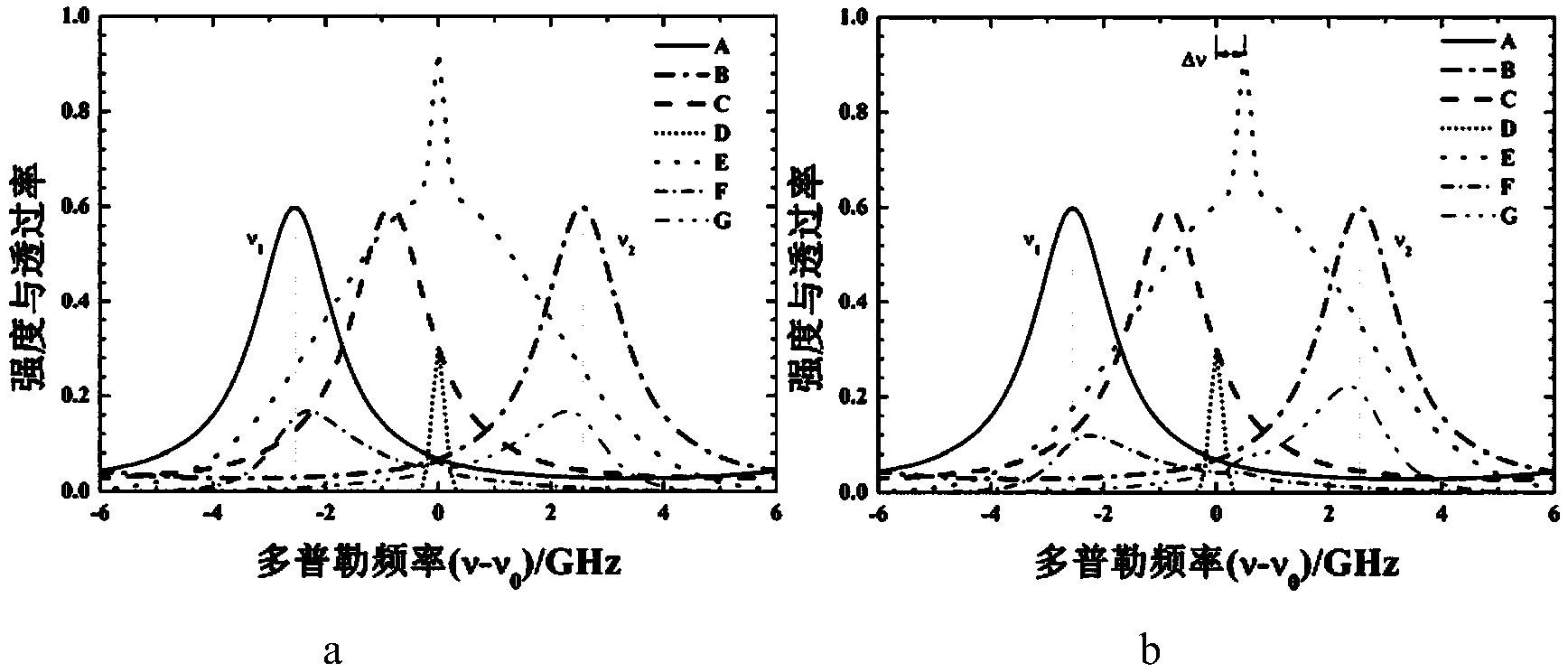
  • Figure 1
    Figure 1
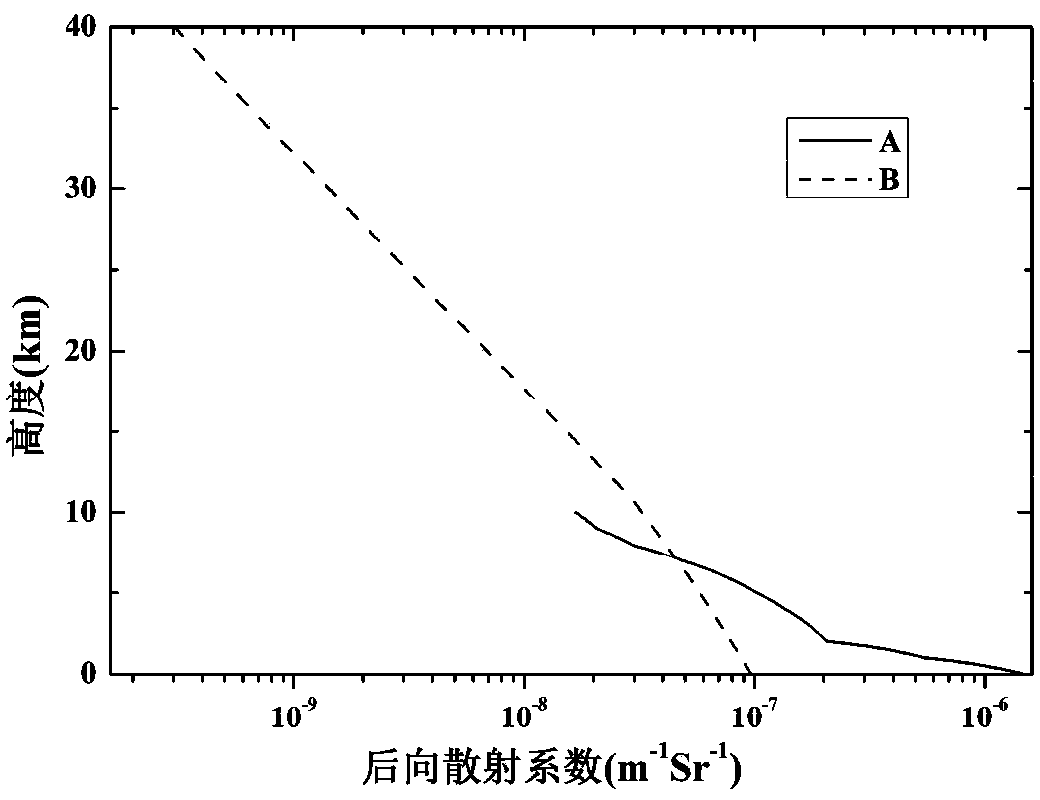
  • Figure 2
    Figure 2
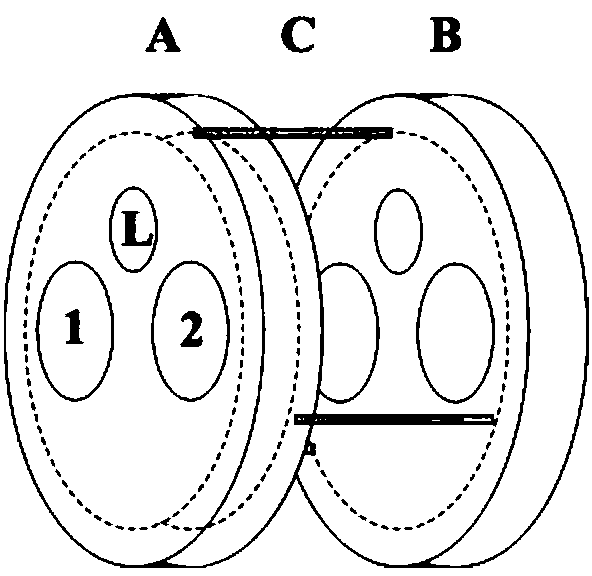
  • Figure 3
    Figure 3
Patent Text Reader

Abstract

A method for simultaneously detecting a frequency detector in a direct wind finding laser radar system in the high altitude and the low altitude includes the following steps of firstly, designing an improved Fabry-Perot etalon, wherein the improved Fabry-Perot etalon is composed of two parallel glass plates and provided with five channels which include two Mie scattered signal channels, two Rayleigh scattered signal channels and one laser frequency locking channel, namely, the channel L; secondly, selecting appropriate etalon parameters so that the requirements that the transmittance curve of the two Mie scattered signal channels is consistent with the transmittance curve of an optimized Mie scattered signal detection etalon, the transmittance curve of the two Rayleigh scattered signal channels is consistent with the transmittance curve of an optimized Rayleigh scattered signal detection etalon, the locking channel L has an effect on tracking both the relative laser frequency of the scattered signal channels R1 and the relative laser frequency of the scattered signal channels R2, and the detection height, especially the strength of Rayleigh backscattered signals, is ensured can be met.
Need to check novelty before this filing date? Find Prior Art

Description

Technical field

[0001] The invention relates to the technical field of photoelectric detection, and in particular to a method for realizing a frequency discriminator in a wind measurement lidar system. Background technique

[0002] For the detection of atmospheric wind field in the troposphere, stratosphere and above, direct detection of wind Lidar has been proved to be the most effective method to achieve high temporal and spatial resolution wind field detection. The basic principle is: laser emission enters the atmosphere and interacts with it. Due to the movement of the atmosphere, the laser Doppler effect is generated. The receiving telescope collects the atmospheric backscattered signal and compares it with the frequency of the emitted laser. The frequency difference is Is the Doppler frequency shift caused by the radial wind speed, and the radial wind speed is obtained from this frequency shift.

[0003] There are two main frequency discrimination technologies for direct det...

Examples

Embodiment Construction

[0044] As an implementation example, the present invention uses the fundamental frequency 1064nm laser of the Nd:YAG laser to detect the low-level atmospheric wind field, and uses the triple-frequency light 354.7nm laser to detect the middle and upper atmospheric wind field. The parameters of the resolution and edge spacing of the respective signal channels of the etalon are shown in Table 1.

[0045] (1) Free spectral distance (FSR) of etalon

[0046] Considering that the discriminator not only needs to distinguish the Mie backscattered signal with a narrower spectral width, but also the Rayleigh backscattered signal with a wider spectral width, so choose a larger FSR. The value of the optimized FSR is 12 GHz, and from equation (1), the cavity length of the etalon is 12.5 mm.

[0047] (2) Edge spacing

[0048] For the Mie scattering channel in the discriminator, the peak spacing of the two transmittance curves is 200MHz; the peak spacing of the two Rayleigh scattering channel transm...