Unlock instant, AI-driven research and patent intelligence for your innovation.
Inkjet infiltrating glazed porcelain tile and preparation method thereof
What is Al technical title?
Al technical title is built by PatSnap Al team. It summarizes the technical point description of the patent document.
A technology of porcelain tiles and bleeding, which is applied in the field of architectural ceramics and can solve problems such as poor hardness, poor chemical corrosion resistance, and poor antifouling.
Active Publication Date: 2015-12-23
MONALISA GRP CO LTD
View PDF6 Cites 21 Cited by
Summary
Abstract
Description
Claims
Application Information

AI Technical Summary
This helps you quickly interpret patents by identifying the three key elements:
Problems solved by technology
Method used
Benefits of technology
Problems solved by technology
[0003] The present invention aims to overcome the defects of existing inkjet bleed glazed ceramic tiles with corrugated surface after polishing, and the defects of poor chemical corrosion resistance, poor antifouling and poor hardness of once-fired supercrystalline stones.
Method used
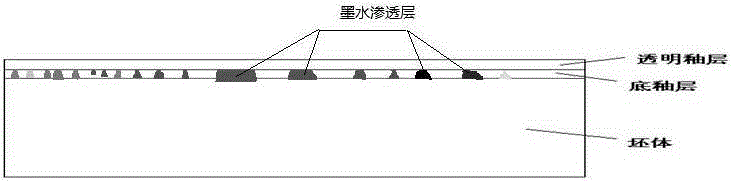
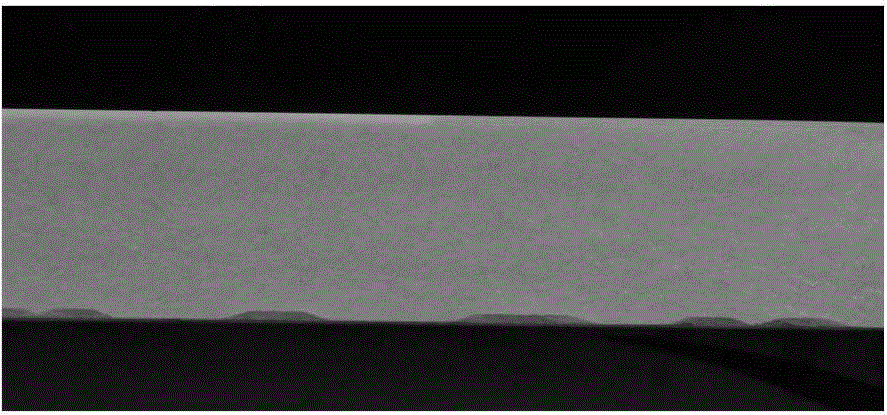
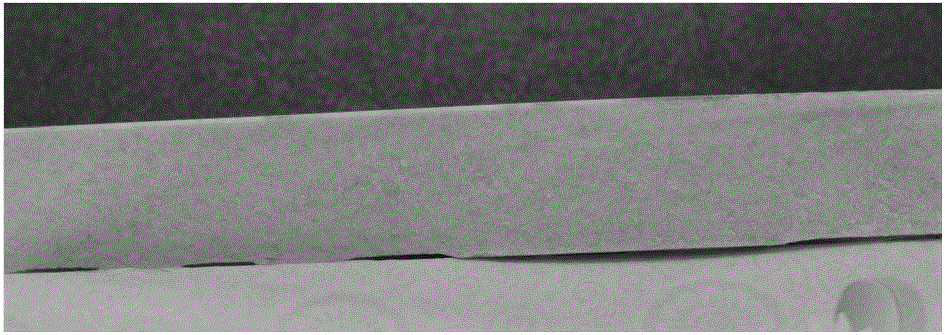
the structure of the environmentally friendly knitted fabric provided by the present invention; figure 2 Flow chart of the yarn wrapping machine for environmentally friendly knitted fabrics and storage devices; image 3 Is the parameter map of the yarn covering machine
View more
Image
Smart Image Click on the blue labels to locate them in the text.
Viewing Examples
Smart Image
Click on the blue label to locate the original text in one second.
Reading with bidirectional positioning of images and text.
Smart Image
Examples
Experimental program
Comparison scheme
Effect test
Embodiment 1
[0046] A method for manufacturing inkjet bleed glazed porcelain tiles and products thereof
[0047] 1: Preparation of the bottom glaze of the seepage porcelain tile: In order to match the color development of the seepage ink, no calcium, magnesium, zinc, barium and other raw materials are added to the glaze slurry. The formula is as follows: 44 parts of potassiumfeldspar, 12 parts of albite, 6 parts of kaolin, 22 parts of burnt clay, 12 parts of quartz, 4 parts of zirconiumsilicate, additive A: 0.5 parts, additive B: 4 parts. The chemical composition analysis of additive A is SiO 2 2.01%, Al 2 o 3 2.89%, Fe 2 o 3 0.03%, TiO 2 93.05%, CaO0.03%, MgO0.09%, K 2 O0.02%, Na 2 O0.06%, balance is 1.35% impurity. The chemical composition analysis of Additive B is SiO 2 94.41%, Al 2 o 3 0.14%, Fe 2 o 3 0.05%, TiO 2 0.05%, CaO0.08%, MgO0.06%, K 2 O0.04%, Na 2 O0.21%, balance is 4.59% impurity. The chemical composition analysis of the bottom glaze is SiO 2 64.88%, Al ...
Embodiment 2
[0063] A method for manufacturing inkjet bleed glazed porcelain tiles and products thereof
[0064]1: Preparation of the bottom glaze of the seepage porcelain tile: In order to match the color development of the seepage ink, no calcium, magnesium, zinc, barium and other raw materials are added to the glaze slurry. The formula is as follows: 47 parts of potassiumfeldspar, 13 parts of albite, 6 parts of kaolin, 21 parts of burnt clay, 12 parts of quartz, 5 parts of zirconiumsilicate, additive A: 0.5 parts, additive B: 3 parts. The chemical composition analysis of additive A is SiO 2 2.01%, Al 2 o 3 2.89%, Fe 2 o 3 0.03%, TiO 2 93.05%, CaO0.03%, MgO0.09%, K 2 O0.02%, Na 2 O0.06%, balance is 1.35% impurity. The chemical composition analysis of Additive B is SiO 2 94.41%, Al 2 o 3 0.14%, Fe 2 o 3 0.05%, TiO 2 0.05%, CaO0.08%, MgO0.06%, K 2 O0.04%, Na 2 O0.21%, balance is 4.59% impurity. The chemical composition analysis of the bottom glaze is SiO 2 65.54%, Al 2...
the structure of the environmentally friendly knitted fabric provided by the present invention; figure 2 Flow chart of the yarn wrapping machine for environmentally friendly knitted fabrics and storage devices; image 3 Is the parameter map of the yarn covering machine
Login to View More
PUM
Login to View More
Abstract
The invention relates to an inkjet infiltrating glazed porcelain tile and a preparation method thereof. The preparation method comprises the following steps: 1) preparing ground glazeslurry and transparent glazeslurry; 2) spraying the ground glazeslurry onto a blank, performing drying, coating a ground glaze layer with infiltrating ink and an infiltrating aid, and standing for more than 5 minutes to guarantee an infiltrating effect; 3) performing biscuit firing on the blank prepared in the step 2) at the temperature of 800 to 950 DEG C; 4) spraying the transparent glaze slurry onto the biscuit-fired blank in the step 3); 5) firing the blank, onto which the transparent glaze slurry is sprayed, prepared in the step 4) at the temperature of 1,150 to 1,230 DEG C, and then performing polishing to obtain the inkjet infiltrating glazed porcelain tile. Due to the fact that the ink infiltrates into the ground glaze layer after firing, the whole layer of transparent glaze is polished by a non-elastic module and then is polished to a ground glaze upper middle layer, so that local exposure can be avoided.
Description
technical field [0001] The invention relates to the technical field of building ceramics, in particular to an ink-jet bleed glazed porcelain tile and a preparation method thereof. Background technique [0002] At present, the bleed tile products mainly include screen, roller and inkjet bleed with surface paste. Screen and roller are relatively traditional, but due to their lack of rich decorative colors and poor anti-fouling performance, they are gradually replaced by inkjet bleeding. The patent application with the patent publication number 102795892A discloses an inkjet bleed porcelain tile and its production method. Fired and polished. Because it is polished with elastic modules, and the penetration depth of inkjet bleeding is limited, the deeper the penetration, the less clear the pattern, so the polishing depth is very shallow and the surface waves are obvious. Patent No. 103467103A discloses a production method of one-time fired supercrylic ceramic tiles and ceramic...
Claims
the structure of the environmentally friendly knitted fabric provided by the present invention; figure 2 Flow chart of the yarn wrapping machine for environmentally friendly knitted fabrics and storage devices; image 3 Is the parameter map of the yarn covering machine
Login to View More
Application Information
Patent Timeline
Application Date:The date an application was filed.
Publication Date:The date a patent or application was officially published.
First Publication Date:The earliest publication date of a patent with the same application number.
Issue Date:Publication date of the patent grant document.
PCT Entry Date:The Entry date of PCT National Phase.
Estimated Expiry Date:The statutory expiry date of a patent right according to the Patent Law, and it is the longest term of protection that the patent right can achieve without the termination of the patent right due to other reasons(Term extension factor has been taken into account ).
Invalid Date:Actual expiry date is based on effective date or publication date of legal transaction data of invalid patent.