
Method for detecting varietal complexity in kelp summer seedling refrigeration water process
A technology of kelp and varieties, applied in botany equipment and methods, horticulture, seaweed cultivation, etc., can solve the problems of mixed varieties
- Summary
- Abstract
- Description
- Claims
- Application Information
AI Technical Summary
Problems solved by technology
Method used
Image

Examples
Embodiment 1
[0021] Long-term preservation of vegetatively grown filamentous Laminaria monoclonal female gametophytes (for the acquisition and growth of female gametophytes, please refer to LiJing, PangShaojun, ShanTifeng, LiuFeng, GaoSuqin. Zoospore-derived monoecious gametophytes in Undariapinnatifida (Phaeophyceae). Chinese Journal of Oceanology and Limnology. 2014-35( 371. Records in the literature), placed in a high-speed breaker, and the filamentous female gametophyte was broken to 3-10 cells at a speed of 2000r / min. Subsequently, the crushed female gametes and 50cm seedling ropes were aerated and cultured in a 1L beaker, placed in PES medium, at a temperature of 12°C, a light intensity of 10-20μmolphotonsm-2s-1, and a photoperiod of 12:12 (L:D) cultured in a light incubator.
[0022] When the female gametophyte is firmly attached to the seedling rope, increase the culture light to 50-60 μmolphotonsm-2s-1, so that the female gametophyte develops and forms oocysts. Subsequently, duri...
Embodiment 2
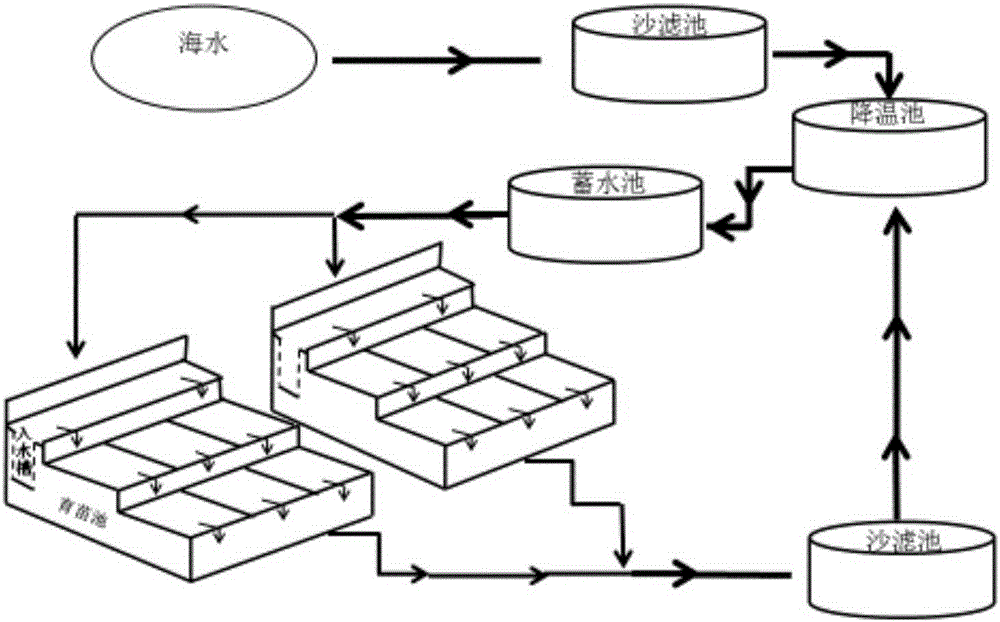
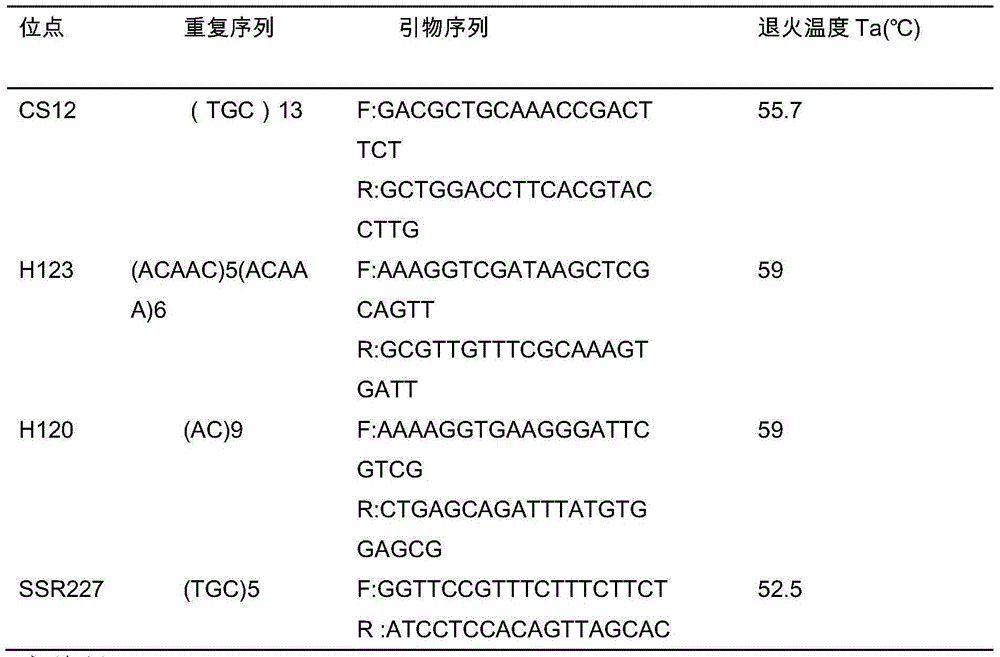
[0028] In August 2014, a kelp nursery enterprise in Rongcheng City, Shandong Province, my country carried out the detection of species mixing in the refrigeration water circulation system. The seedling ropes inoculated with female gametophyte clones were placed in the seedling ponds and water inlets of the low-temperature circulating water system, and the seedling ropes were collected later. The sporophytes of the progeny above were compared with the parthenogenetic sporophytes as a control. At the same time, using the microsatellite analysis method, four pairs of SSR primers were used to amplify, and the parental female gametophyte was used as a reference to analyze the genotype of the offspring sporophyte. It showed that the sporophytes of the offspring collected at the nursery pool and the water tank were normal in shape. In addition to the gene fragments of the parental female gametophytes, exogenous gene fragments were also detected in this sporophyte group, which proved to...
PUM
 Login to View More
 Abstract
Description
Claims
Application Information
 Login to View More