
Intelligent rehabilitation method and system
A rehabilitation method and intelligent technology, applied in the medical field, can solve the problems of insufficient intelligence and single function, and achieve the effect of shortening the time of rehabilitation training
- Summary
- Abstract
- Description
- Claims
- Application Information
AI Technical Summary
Problems solved by technology
Method used
Image

Examples
Embodiment Construction
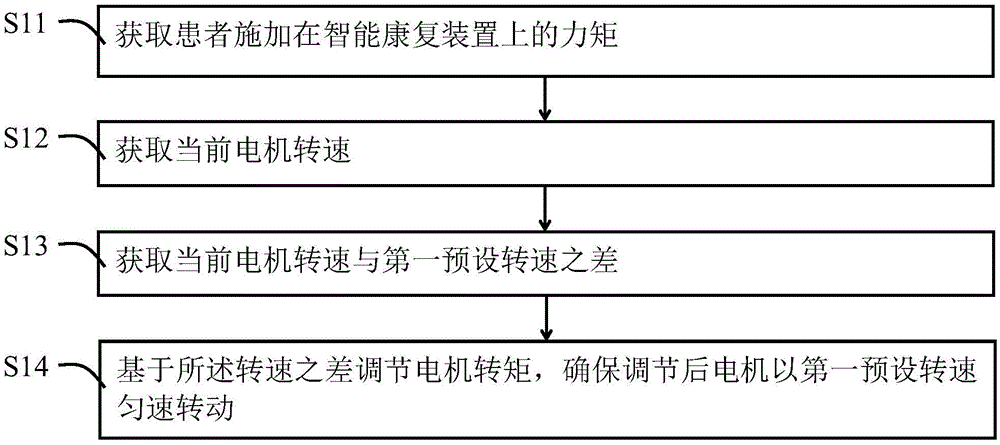
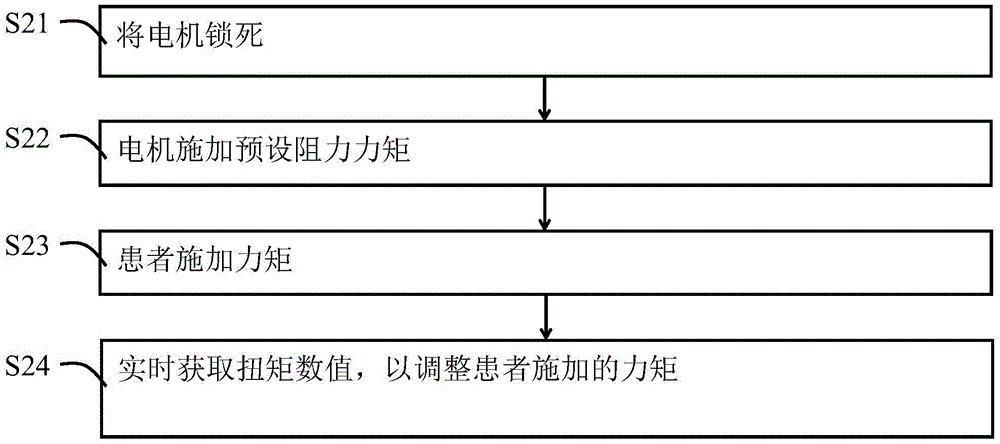
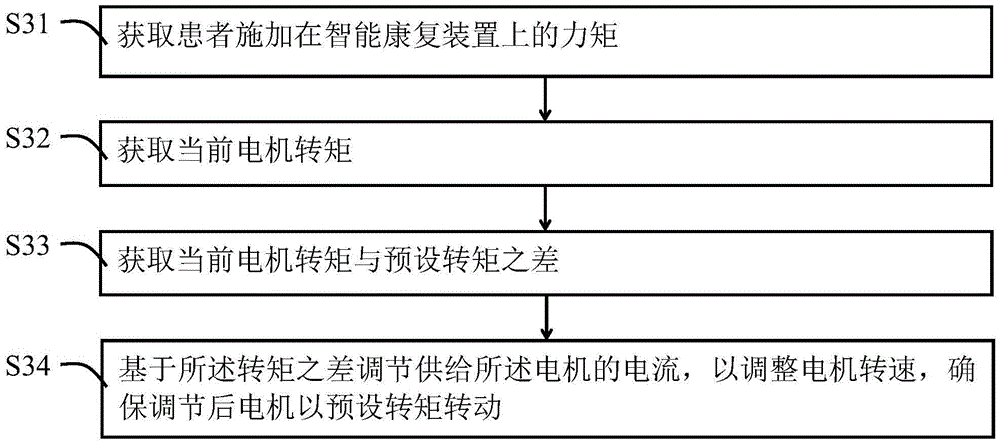
[0056] The present invention provides an intelligent rehabilitation method, specifically, the intelligent rehabilitation method includes: the patient performs one or more of the following exercise modes for training: 1) Isokinetic mode, in this mode: based on the torque applied by the patient in real time Adjust the motor torque to ensure that the motor 132 rotates at a predetermined speed at a constant speed; 2) isometric mode, in this mode: adjust the torque applied by the patient based on the preset resistance torque applied by the motor 132; 3) isotonic mode, in this mode Middle: adjust the motor speed in real time based on the torque applied by the patient to ensure that the motor torque remains unchanged; 4) passive mode, in this mode: adjust the voltage of the power supply motor 132 based on the speed of the motor 132 after the patient applies the torque to ensure that the motor speed is consistent with The preset rpm remains the same.
[0057] More specifically, as fi...
PUM
 Login to View More
 Abstract
Description
Claims
Application Information
 Login to View More