
Physical convex lens experimental demonstration device
A demonstration device and convex lens technology, which are applied to educational appliances, instruments, teaching models, etc., can solve the problems of high labor intensity, time-consuming and laborious, and the demonstration is not intuitive enough, and achieve the effect of intuitive demonstration and low labor intensity.
- Summary
- Abstract
- Description
- Claims
- Application Information
AI Technical Summary
Problems solved by technology
Method used
Image

Examples
Embodiment 1
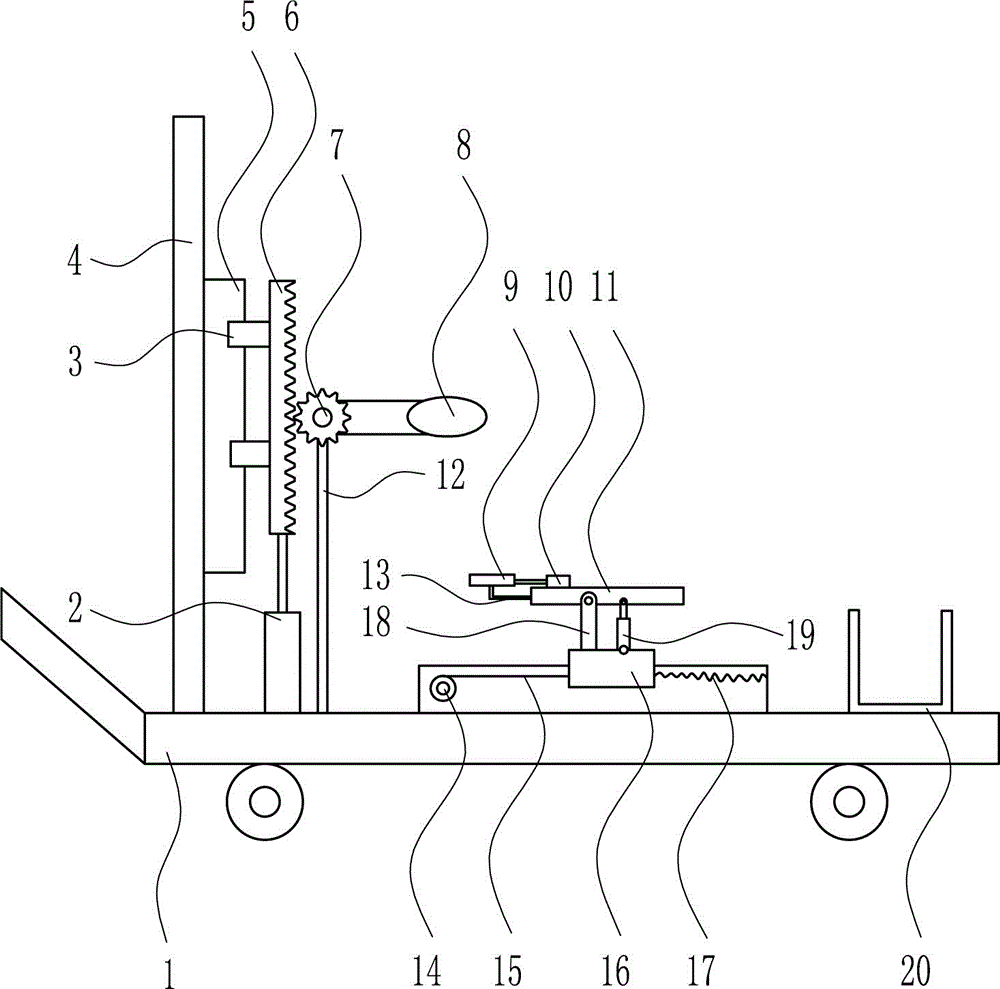
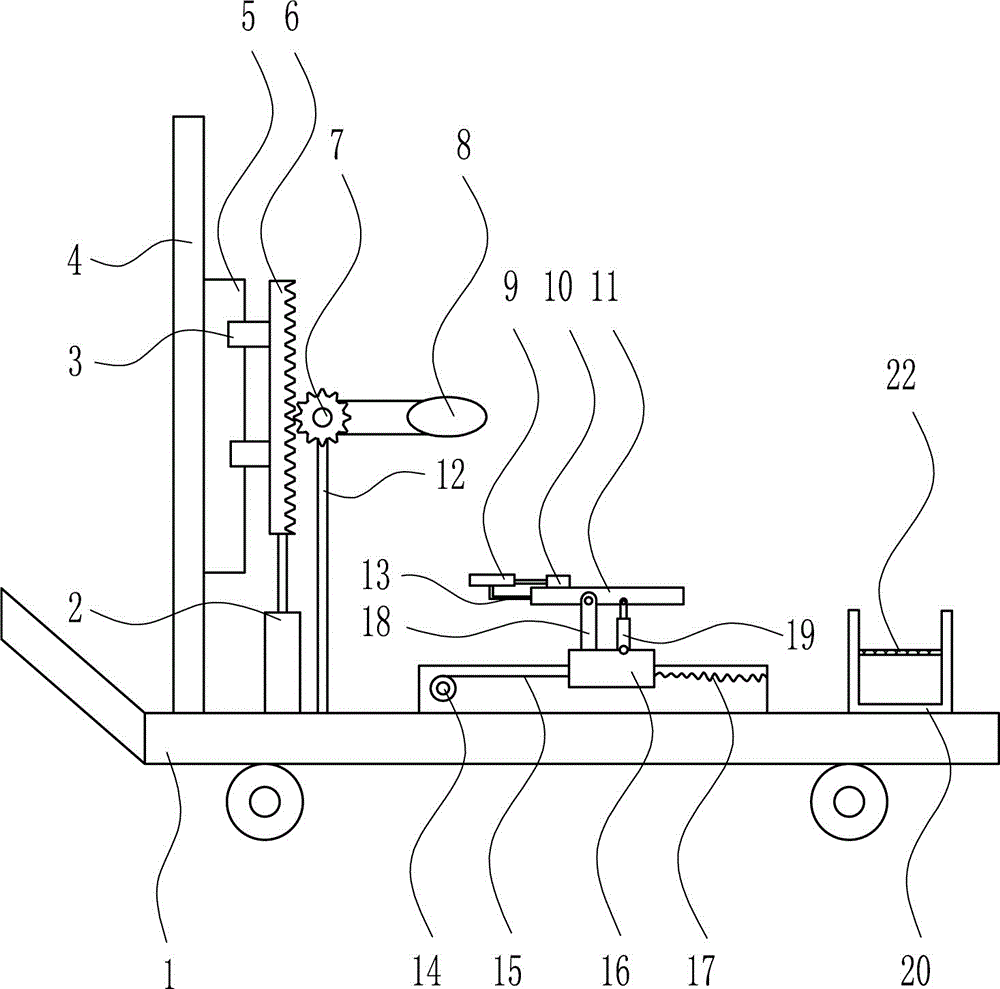
[0020] A physical convex lens experimental demonstration device, such as Figure 1-2 As shown, it includes cart 1, cylinder I2, slider I3, side plate 4, slide rail I5, rack 6, gear 7, convex lens 8, cylinder II 9, push plate 10, placement plate 11, support rod 12, connecting Rod Ⅰ 13, electric winding wheel 14, pull wire 15, slider Ⅱ 16, spring 17, connecting rod Ⅱ 18, cylinder Ⅲ 19, slide rail Ⅱ 20 and processing box 21. The cart 1 is provided with side plates 4 and cylinders from left to right. Ⅰ2, support rod 12, slide rail Ⅱ20 and processing box 21, side plate 4 is provided with slide rail I5, slide rail I5 is provided with slider I3, the upper end of cylinder I2 is connected with rack 6, and slide I3 and rack 6 are connected. Connected, the support rod 12 is rotatably provided with a gear 7, which meshes with the rack 6, a convex lens 8 is connected to the right side of the gear 7, a slider Ⅱ16 is arranged on the slide rail Ⅱ20, and a connecting rod is arranged on the slid...
PUM
 Login to View More
 Abstract
Description
Claims
Application Information
 Login to View More