
A kind of preparation method of zno-cuo composite nanomaterial
A composite nanomaterial, zno-cuo technology, applied in nanotechnology, analytical materials, nanotechnology, etc., can solve problems such as poor selectivity
- Summary
- Abstract
- Description
- Claims
- Application Information
AI Technical Summary
Problems solved by technology
Method used
Image

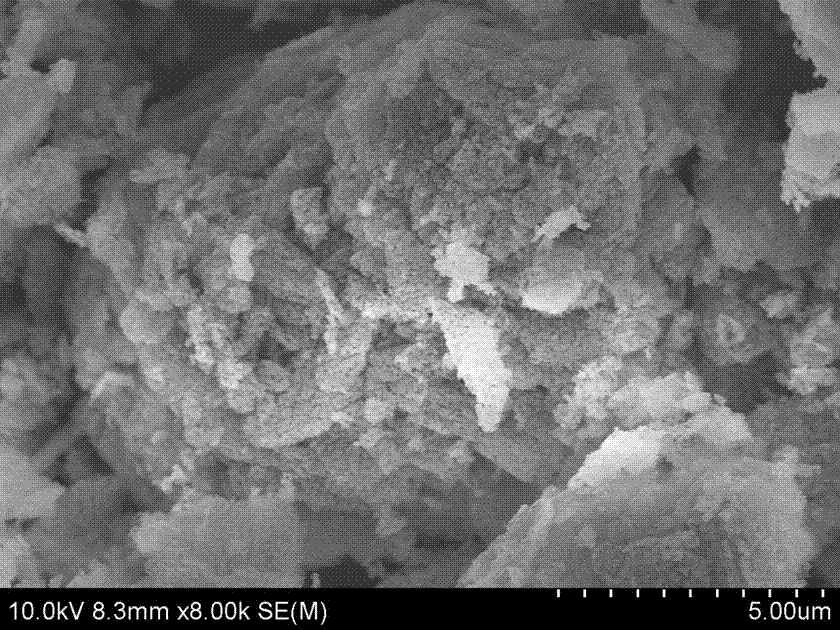
Examples
Embodiment 1
[0016] Prepare the aqueous solutions of zinc chloride and potassium ethyl xanthate with a concentration of 0.1 at a molar ratio of 1:1.1, drop the potassium ethyl xanthate solution into the zinc chloride solution while stirring, and continue stirring for half an hour; filter with suction , mix the obtained precipitate with deionized water, stir for a while, filter with suction, repeat 3-5 times, and obtain zinc ethyl xanthate powder after drying; prepare copper chloride and ethyl xanthate powder with a concentration of 0.1M respectively in a molar ratio of 1:1.1 Add the aqueous solution of potassium ethyl xanthate, drop the potassium ethyl xanthate solution into the copper salt solution while stirring, continue to stir for half an hour; filter with suction, mix the resulting precipitate with deionized water, filter with suction, repeat 3-5 times, after drying, copper ethyl xanthate powder is obtained;
[0017] Mix copper ethyl xanthate and zinc ethyl xanthate at a molar ratio ...
Embodiment 2
[0022] Mix the aqueous solutions of zinc chloride and potassium ethyl xanthate with a concentration of 0.3 at a molar ratio of 1:1.5, drop the potassium ethyl xanthate solution into the zinc chloride solution while stirring, and continue stirring for half an hour; filter with suction , mix the obtained precipitate with deionized water, stir for a while, filter with suction, repeat 3-5 times, and obtain zinc ethyl xanthate powder after drying; prepare copper chloride and ethyl xanthate powder with a concentration of 0.3M in a molar ratio of 1:1.5, respectively. Add the aqueous solution of potassium ethyl xanthate, drop the potassium ethyl xanthate solution into the copper salt solution while stirring, continue to stir for half an hour; filter with suction, mix the resulting precipitate with deionized water, filter with suction, repeat 3-5 times, after drying, copper ethyl xanthate powder is obtained;
[0023] Mix copper ethyl xanthate and zinc ethyl xanthate at a molar ratio of...
Embodiment 3
[0028] Prepare the aqueous solutions of zinc chloride and potassium ethyl xanthate with a concentration of 0.2 at a molar ratio of 1:1.3, drop the potassium ethyl xanthate solution into the zinc chloride solution while stirring, and continue stirring for half an hour; filter with suction , mix the resulting precipitate with deionized water, stir for a while, filter with suction, repeat 3-5 times, and obtain zinc ethyl xanthate powder after drying; prepare copper chloride and ethyl xanthate powder with a concentration of 0.2M respectively in a molar ratio of 1:1.3 Add the aqueous solution of potassium ethyl xanthate, drop the potassium ethyl xanthate solution into the copper salt solution while stirring, continue to stir for half an hour; filter with suction, mix the resulting precipitate with deionized water, filter with suction, repeat 3-5 times, after drying, copper ethyl xanthate powder is obtained;
[0029] Mix copper ethyl xanthate and zinc ethyl xanthate at a molar ratio...
PUM
 Login to View More
 Abstract
Description
Claims
Application Information
 Login to View More