Differential medium for acetobacter and Gluconobacter cerinus

A technology for identifying culture medium and Acetobacter, which is applied in the field of differentiating culture medium for Acetobacter and Glucobacterium, which can solve the problems of being unable to be widely applied and popularized, laborious, and high requirements for instruments and equipment, and achieves fast and convenient screening and counting, and shortens separation The effect of identifying time and shortening color development time

A technology for identifying culture medium and Acetobacter, which is applied in the field of differentiating culture medium for Acetobacter and Glucobacterium, which can solve the problems of being unable to be widely applied and popularized, laborious, and high requirements for instruments and equipment, and achieves fast and convenient screening and counting, and shortens separation The effect of identifying time and shortening color development time

CN106916875AActive Publication Date: 2017-07-04QINGDAO AGRI UNIV

Image

Smart Image Click on the blue labels to locate them in the text.
Viewing Examples
Smart Image
  • Differential medium for acetobacter and Gluconobacter cerinus
  • Differential medium for acetobacter and Gluconobacter cerinus
  • Differential medium for acetobacter and Gluconobacter cerinus

Examples

Experimental program
Comparison scheme
Effect test

Embodiment 1

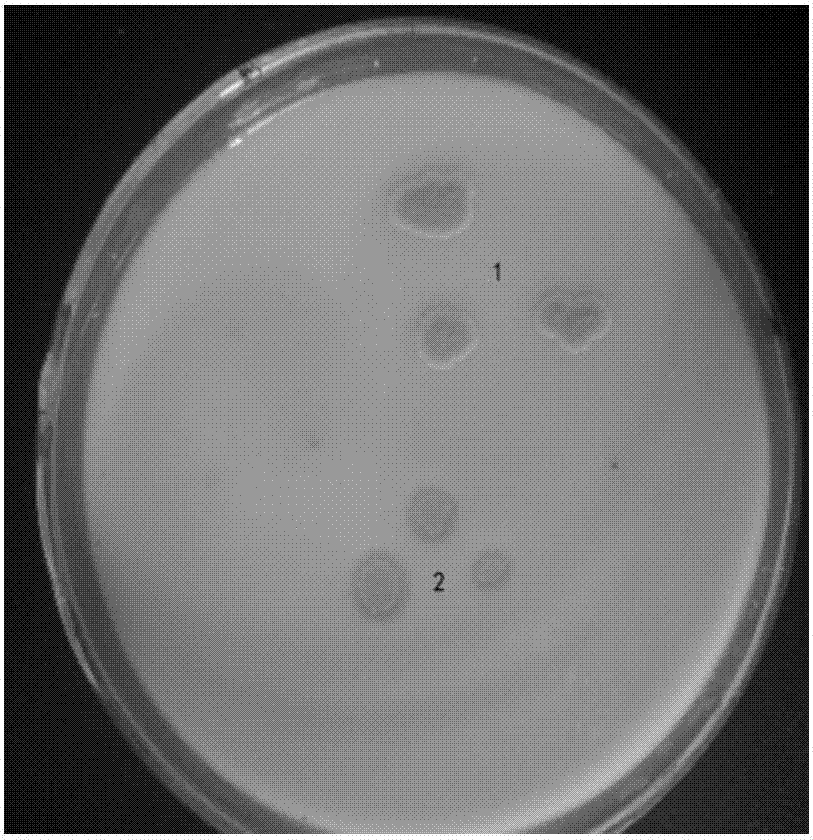
[0023] Embodiment 1: Acetobacter and Glucobacterium medium identification experiment

[0024] 1. Strains

[0025] Acetobacter pasteurianus Huniang 1.01.

[0026] Lactobacillus plantarum

[0027] 2. Medium

[0028] (1) Traditional separation medium: yeast powder 1%, glucose 1%, calcium carbonate 2%, agar 1.5-2.0%, pH 4.5, sterilized at 121°C for 15 minutes.

[0029] (2) Identification medium of Acetobacter and Glucobacterium: yeast extract 1-1.5%, glucose 1-1.5%, calcium carbonate 1-2%, ferric chloride 0.05-0.25%, sodium chloride 0.2-0.3%, Dipotassium hydrogen phosphate 0.04-0.1%, magnesium sulfate 0.2-0.5%, agar 1.5-2.0%, pH 4.0-4.5, sterilized at 121°C for 15 minutes. After sterilization, add 3-5% ethanol and 50-200 μg / mL cycloheximide.

[0030] 3. Screening

[0031] Take the slopes of Acetobacter pasteuriani Huyong 1.01 and Lactobacillus plantarum, inoculate them into traditional isolation medium and differential medium respectively, culture them at 30°C for 36-48 hour...

Embodiment 2

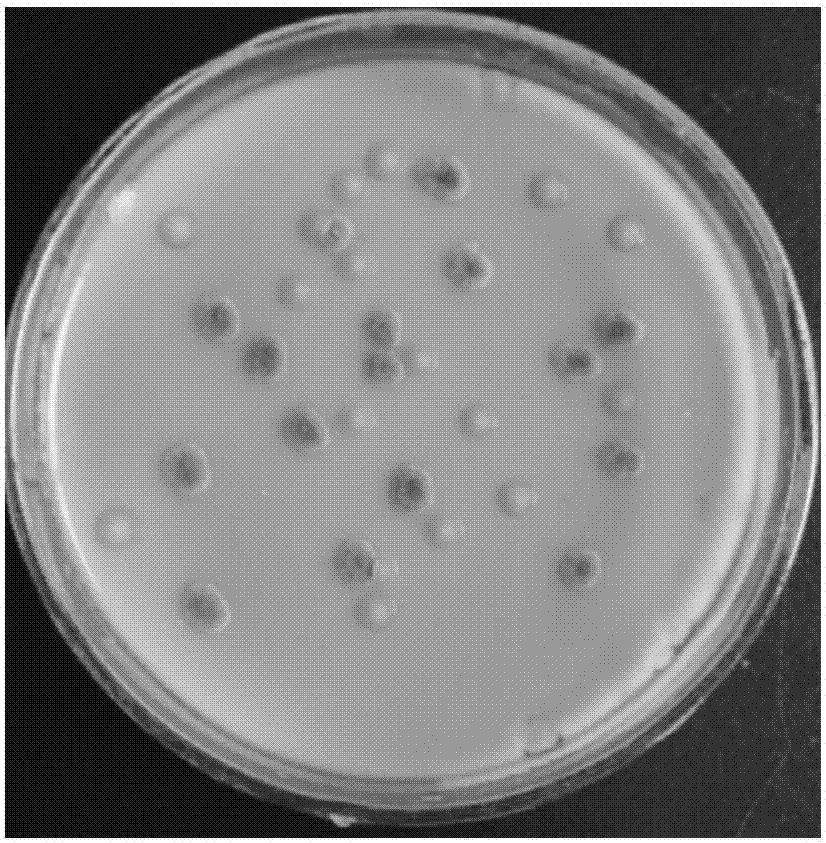
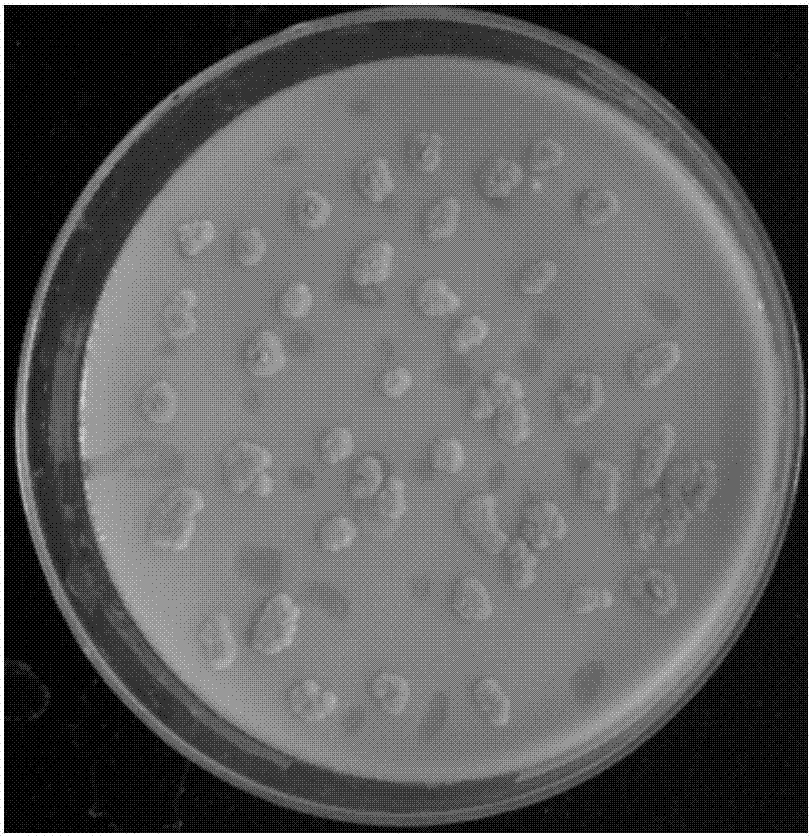
[0032] Embodiment 2: Application experiment of the separation, detection and enumeration of acetic acid bacteria in solid vinegar fermented grains in the identification medium of Acetobacter and Gluconobacter

[0033] 1. Culture medium:

[0034] (1) Identification medium of Acetobacter and Gluconobacter: yeast extract 1-1.5%, glucose 1-1.5%, calcium carbonate 1-2%, ferric chloride 0.05-0.25%, sodium chloride 0.2-0.3%, Dipotassium hydrogen phosphate 0.04-0.1%, magnesium sulfate 0.2-0.5%, agar 1.5-2.0%, pH 4.0-4.5, sterilized at 121°C for 15 minutes. After sterilization, add 3-5% ethanol and 50-200 μg / mL cycloheximide.

[0035] (2) Acetic acid fermentation medium: 1% glucose, 1% yeast extract, pH 4.5, sterilized at 121°C for 15 minutes. Add ethanol 5% after sterilization.

[0036] 2. Treatment of solid vinegar unstrained spirits

[0037] Weigh 10g of solid vinegar unstrained spirits, put it into a 90mL sterile water triangular flask with glass beads, shake it for 20 minutes ...

the structure of the environmentally friendly knitted fabric provided by the present invention; figure 2 Flow chart of the yarn wrapping machine for environmentally friendly knitted fabrics and storage devices; image 3 Is the parameter map of the yarn covering machine
Login to View More

PUM

No PUM Login to View More

Abstract

The invention provides a detection medium for acetobacter and Gluconobacter cerinus. Detection functional ingredients in the medium comprise yeast extract, glucose, inorganic salt, ethanol and cycloheximide. During detection of acetobacter and Gluconobacter cerinus, the ingredients of the medium show characteristic red, thus enhancing the effect of isolation and identification. By adding sodium chloride, dipotassium hydrogen phosphate and magnesium sulfate as ingredients of the differential medium, color developing time of the acetobacter and Gluconobacter cerinus is shortened, and the isolation and identification efficiency is enhanced. By adding calcium carbonate as an ingredient of the differential medium, the differential medium can be used in isolation and identification of acetobacter and Gluconobacter cerinus for high yield of acetic acid, and is applicable to the industry of edible vinegar and acetic acid.

Description

technical field [0001] The invention belongs to the technical field of microorganism culture, and in particular relates to a differentiation medium suitable for Acetobacter and Glucobacterium and its application. Background technique [0002] The genera Acetobacter and Glucobacterium widely exist in nature, and they are important microorganisms in vinegar, acetic acid and Daqu liquor industries, as well as common pollutants in wine and beer industries. Acetobacter and Glucobacterium are strict aerobic bacteria with fast reproduction speed, strong acid production ability and acid resistance ability, can quickly oxidize alcohol into acetic acid, and have weak ability to decompose acetic acid and other organic acids, and can be used at higher temperatures Under the growth and fermentation, the alcohol is fully converted into acetic acid. [0003] With the improvement of people's living standards, the requirements for the quality of fermented products are increasing day by day....

Claims

the structure of the environmentally friendly knitted fabric provided by the present invention; figure 2 Flow chart of the yarn wrapping machine for environmentally friendly knitted fabrics and storage devices; image 3 Is the parameter map of the yarn covering machine
Login to View More

Application Information

Patent Timeline
04 Jul 2017
Publication
CN106916875A
IPC
C12Q1/04
CPC
C12Q1/04; C12Q1/045; G01N2333/195
Inventors
谭海刚; 李静