
Canonical correlation analysis-based multi-element seismic damage potential assessment method
A canonical correlation analysis and typical technology, applied in special data processing applications, instruments, electrical digital data processing, etc. True reflection of structural failure status and other issues
- Summary
- Abstract
- Description
- Claims
- Application Information
AI Technical Summary
Problems solved by technology
Method used
Image

Examples
Embodiment Construction
[0026] The specific implementation manners of the present invention will be further described in detail below in conjunction with the accompanying drawings and embodiments. The following examples are used to illustrate the present invention, but are not intended to limit the scope of the present invention.
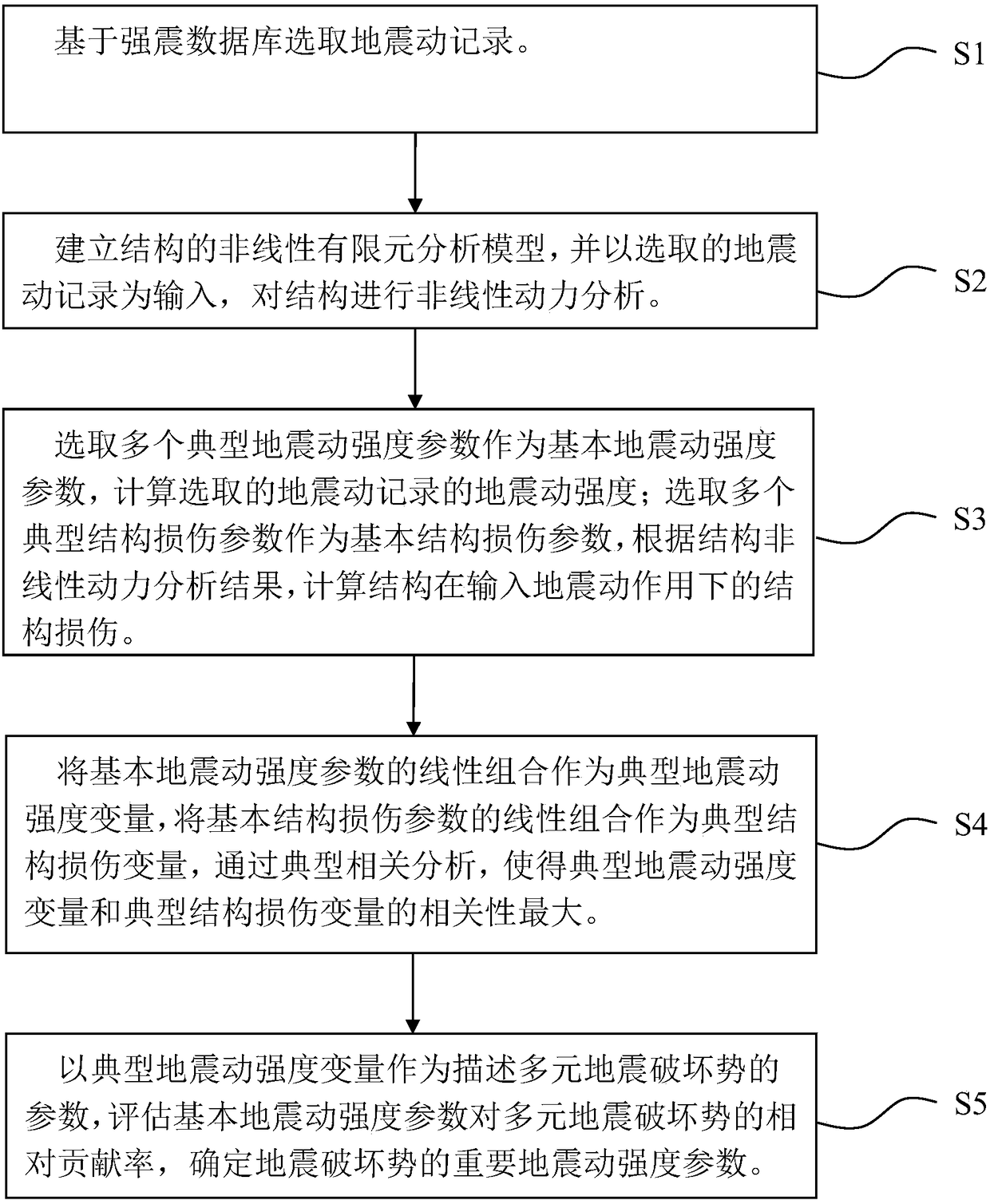
[0027] ginseng figure 1 As shown, the present embodiment provides a multivariate earthquake damage potential assessment method based on canonical correlation analysis, including the following steps:
[0028] Step S1, selecting earthquake motion records based on the strong earthquake database;
[0029] Step S2, establishing a nonlinear finite element analysis model of the structure, and using the selected seismic motion records as input to perform nonlinear dynamic analysis on the structure;
[0030] Step S3, select a plurality of typical earthquake intensity parameters as the basic earthquake intensity parameters, calculate the earthquake intensity of the selected earthq...
PUM
 Login to View More
 Abstract
Description
Claims
Application Information
 Login to View More