
Anthracene derivative, and preparation method and application thereof
An anthracene derivative and reaction technology, which is applied in the field of anthracene derivatives and their preparation, can solve the problems such as the need to improve the aggregated fluorescence quantum efficiency of solid-state thin films, the unbalanced carrier injection and transmission, and the like, so as to be beneficial to factory production. Preparation, beneficial to popularization and application, the effect of significant economic value
- Summary
- Abstract
- Description
- Claims
- Application Information
AI Technical Summary
Problems solved by technology
Method used
Image

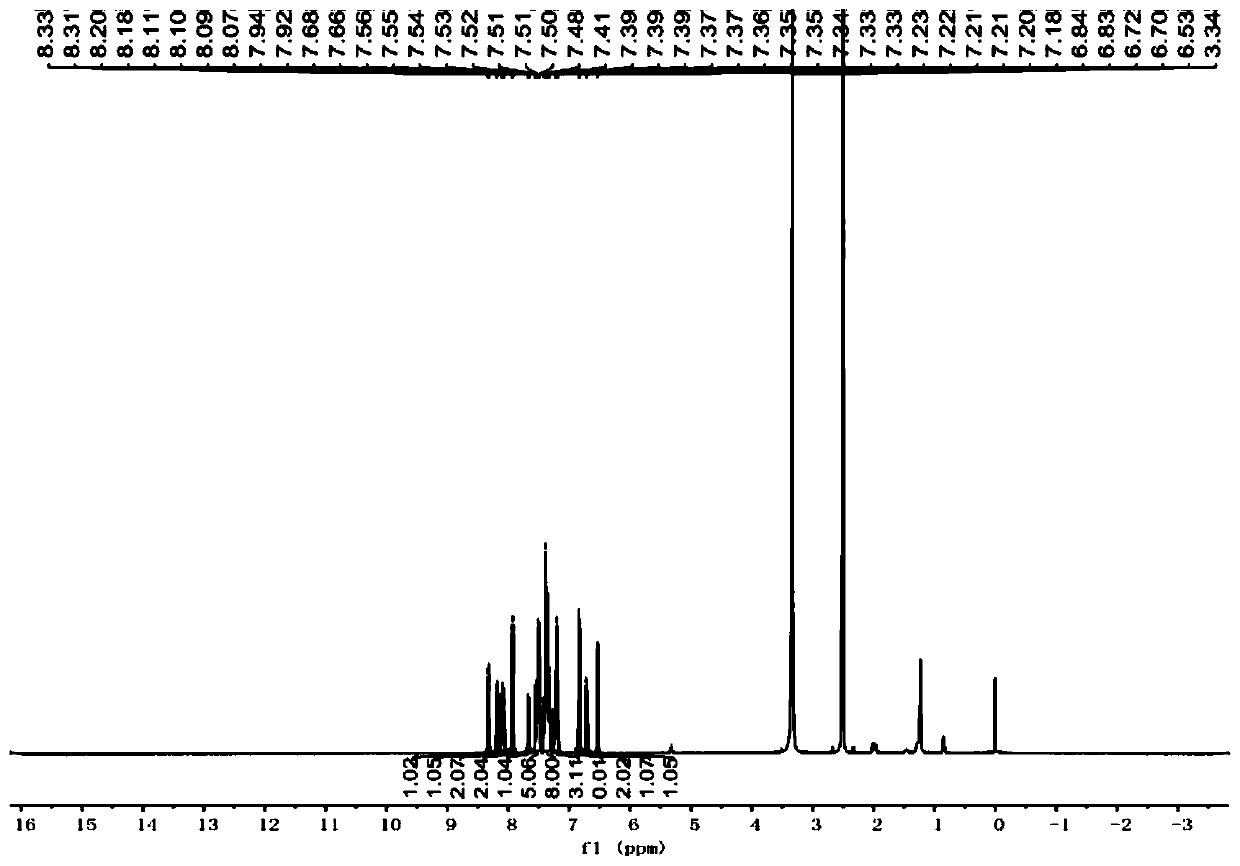
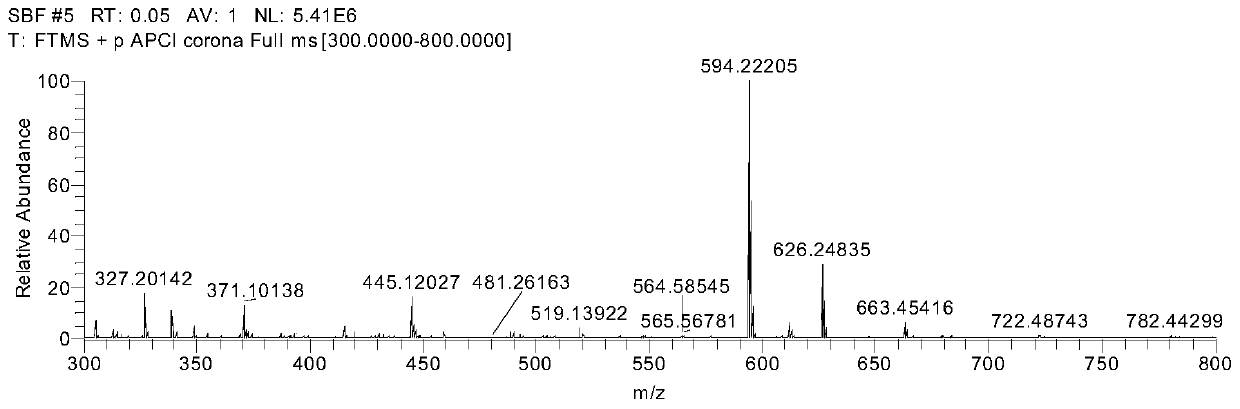
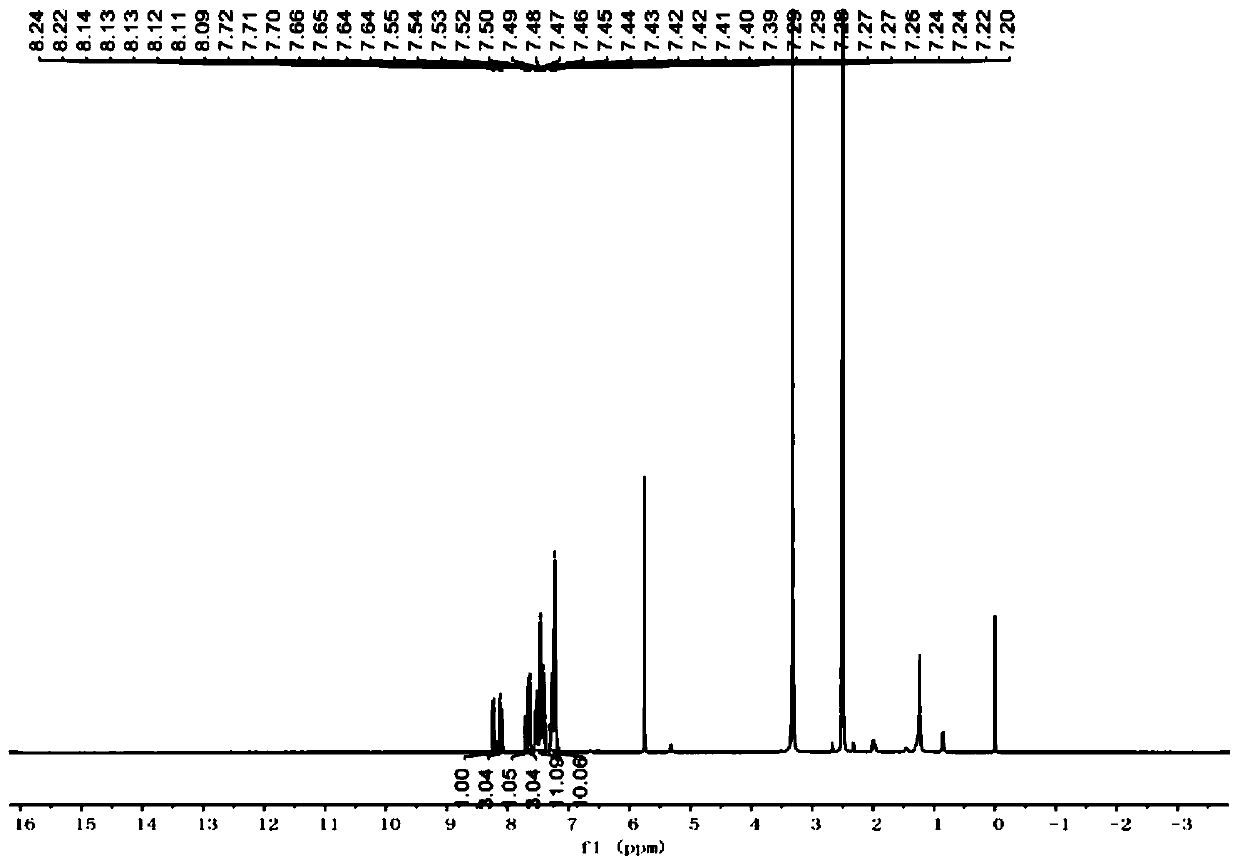
Examples
Embodiment 1
[0066] Example 1 Preparation of 4-(10-(9,9'-spirobis[fluorene]-2-yl)anthracen-9-yl)benzonitrile
[0067] Step 1: Preparation of 4-(10-bromoanthracen-9-yl)benzonitrile:
[0068] Add 9,10-dibromoanthracene (1.67g, 5mmol), 4-cyanophenylboronic acid (0.74g, 5mmol), and tetrakistriphenylphosphine palladium (0.115g, 0.1mmol) into a 250mL two-necked flask in sequence, and The flask was evacuated under vacuum and replaced three times under dry nitrogen, then 40 mL of toluene was added and 10 mL of saturated K 2 CO 3 aqueous solution. The reaction was heated to reflux at 90° C. and stirred for 12 hours. Extract with saturated brine and dichloromethane. Distilled under reduced pressure to obtain a yellow solid, using silica gel powder as a stationary phase and petroleum ether / dichloromethane as an eluent, 0.89 g of a white powder was obtained by column chromatography (yield 50%).
[0069] The reaction equation is as follows:
[0070]
[0071] Step 2: Preparation of 2-boryl-9,9'...
Embodiment 2
[0082] Example 2 Preparation of 4-(10-(9,9-diphenyl-9H-fluoren-2-yl)anthracen-9-yl)benzonitrile
[0083] Step 1 of the present embodiment is the same as embodiment 1, and step 2 and step 3 are as follows:
[0084] Step 2: Preparation of 2-boryl-9,9-diphenyl-9H-fluorene
[0085] 2-Bromo-9,9-diphenyl-9H-fluorene (1.18g, 3mmol), biboronic acid pinacol ester (1.02g, 4mmol), catalyst [1,1'-bis(diphenylphosphine) Ferrocene] palladium dichloride dichloromethane complex (0.073, 0.09mmol), potassium acetate (0.882g, 9mmol) were successively added to a 100mL two-necked flask, and the flask was evacuated under vacuum and replaced three times in dry nitrogen , then 1,4-dioxane (20 mL) was added. After stirring the reaction at 85°C for 8 hours, it was extracted with saturated brine and dichloromethane. Distilled under reduced pressure to obtain a black solid, using silica gel powder as a stationary phase and petroleum ether / dichloromethane as an eluent, 1.02 g of a white oil was obtaine...
PUM
 Login to View More
 Abstract
Description
Claims
Application Information
 Login to View More