Pedestrian re-identification method for solving part misalignment

A pedestrian re-identification and pedestrian technology, applied in the field of machine learning and computer vision, can solve problems such as misalignment of components

CN110781817AActive Publication Date: 2020-02-11NANJING UNIV
13 Cites 2 Cited by

Patent Information

Authority / Receiving Office
CN · China
Current Assignee / Owner
Publication Date
2020-02-11

Smart Images

  • Figure 1
    Figure 1
  • Figure 2
    Figure 2
  • Figure 3
    Figure 3
Patent Text Reader

Abstract

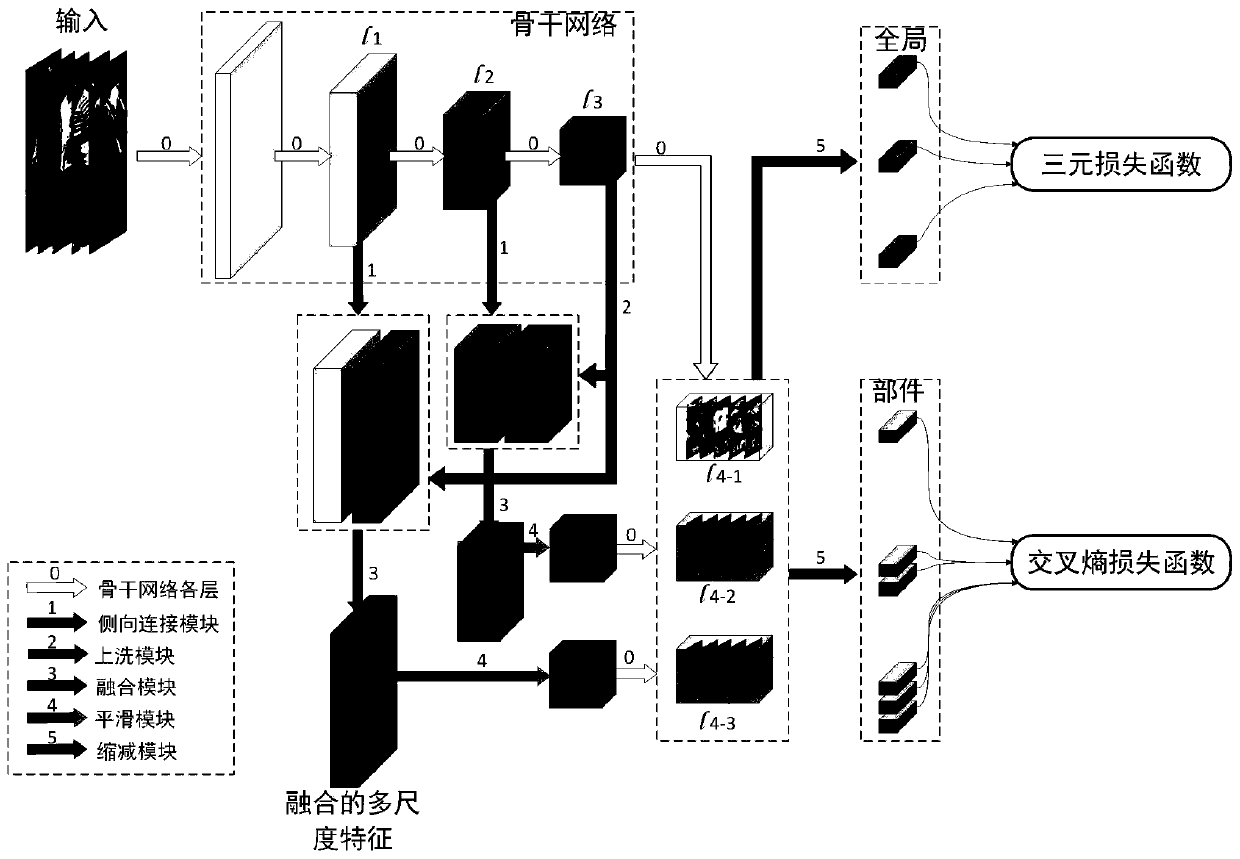
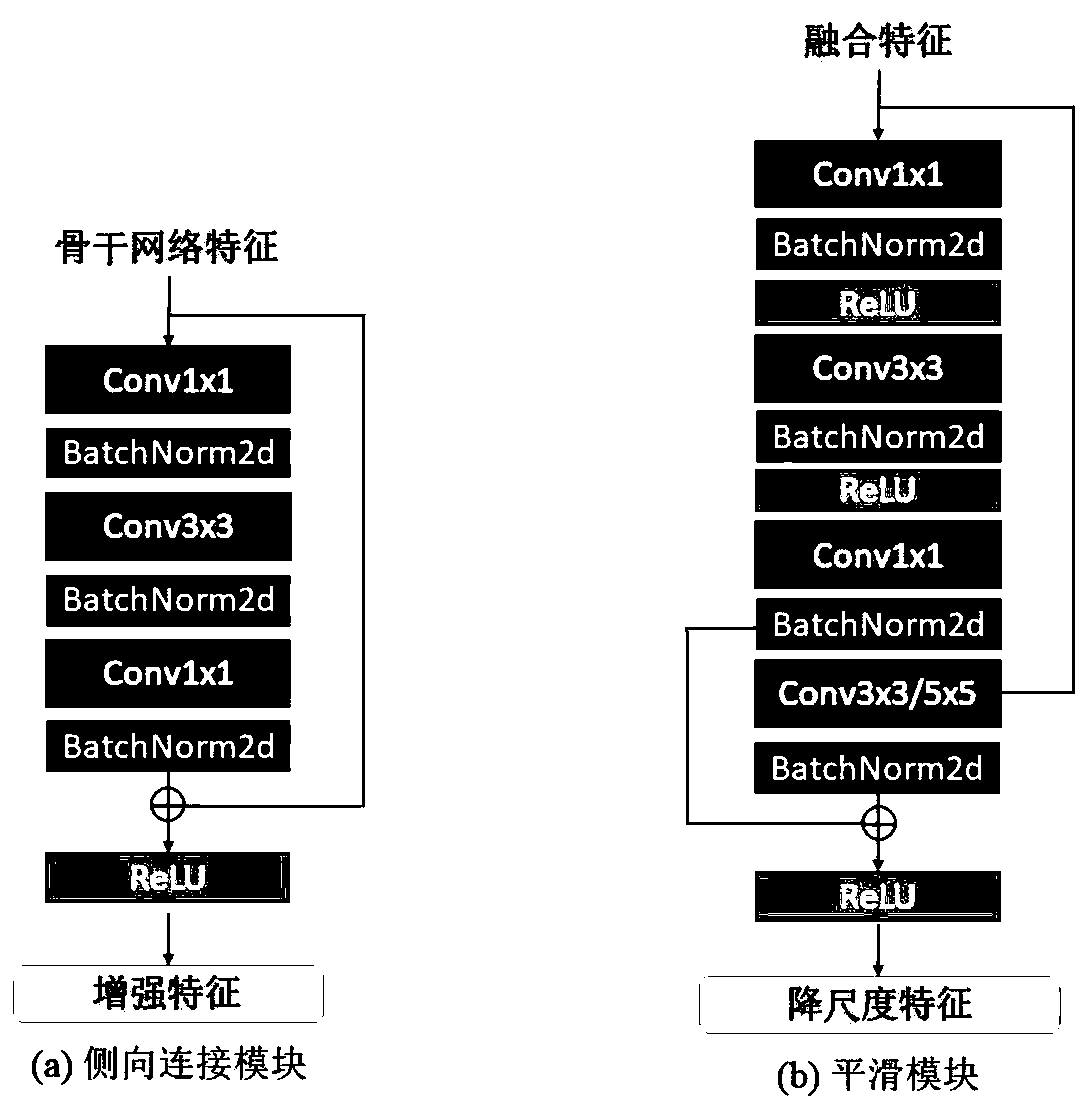
The invention discloses a pedestrian re-identification method for solving part misalignment, and the method comprises the steps: carrying out the data preprocessing of a pedestrian image, adjusting the size of the pedestrian image, carrying out the data enhancement, and carrying out the data standardization processing; constructing a pedestrian re-identification network model, namely constructingdeep representation of a pedestrian image, extracting multilayer features through a backbone network model, enhancing and fusing the multilayer features by using sub-modules to form a multi-branch structure, and extracting component features and global features of each branch; training the constructed network model, defining experiment-related configuration, and optimizing model parameters of thenetwork model; and pedestrian re-identification: extracting the depth representation of the query image through the trained network model, and returning the identification result of each query image according to the similarity between each query image and the queried set after using the second normal form normalization. The pedestrian re-identification method based on fusion of multi-scale features to solve the problem of component misalignment realizes the optimal pedestrian re-identification performance at the present stage.
Need to check novelty before this filing date? Find Prior Art

Description

technical field

[0001] The invention relates to the fields of machine learning and computer vision, in particular to a method for solving the problem of component misalignment. Background technique

[0002] With the development of modern society, public safety has gradually attracted people's attention. Shopping malls, apartments, schools, hospitals, office buildings, large plazas and other places with dense crowds and prone to public safety incidents have installed a large number of surveillance camera systems. The research on surveillance video is mainly reflected in the identification of visible objects, especially is pedestrian recognition. This is because pedestrians are generally the target of surveillance systems. More precisely, the task of the surveillance system is to search for a specific pedestrian in the surveillance video data, that is, the task of pedestrian re-identification.

[0003] However, on the one hand, the data volume of surveillance video is often...

Examples

Embodiment Construction

[0077] In order to make the above objects, features and advantages of the present invention more comprehensible, the present invention will be further described in detail below in conjunction with the accompanying drawings and specific embodiments.

[0078] The embodiment of the present invention discloses a pedestrian re-identification method to solve the misalignment of components. This method is applied to quickly analyze the monitoring video data of public safety places, and automatically find specific pedestrians, which can significantly improve the quality of monitoring, and is of great importance to urban construction and social security. meaning.

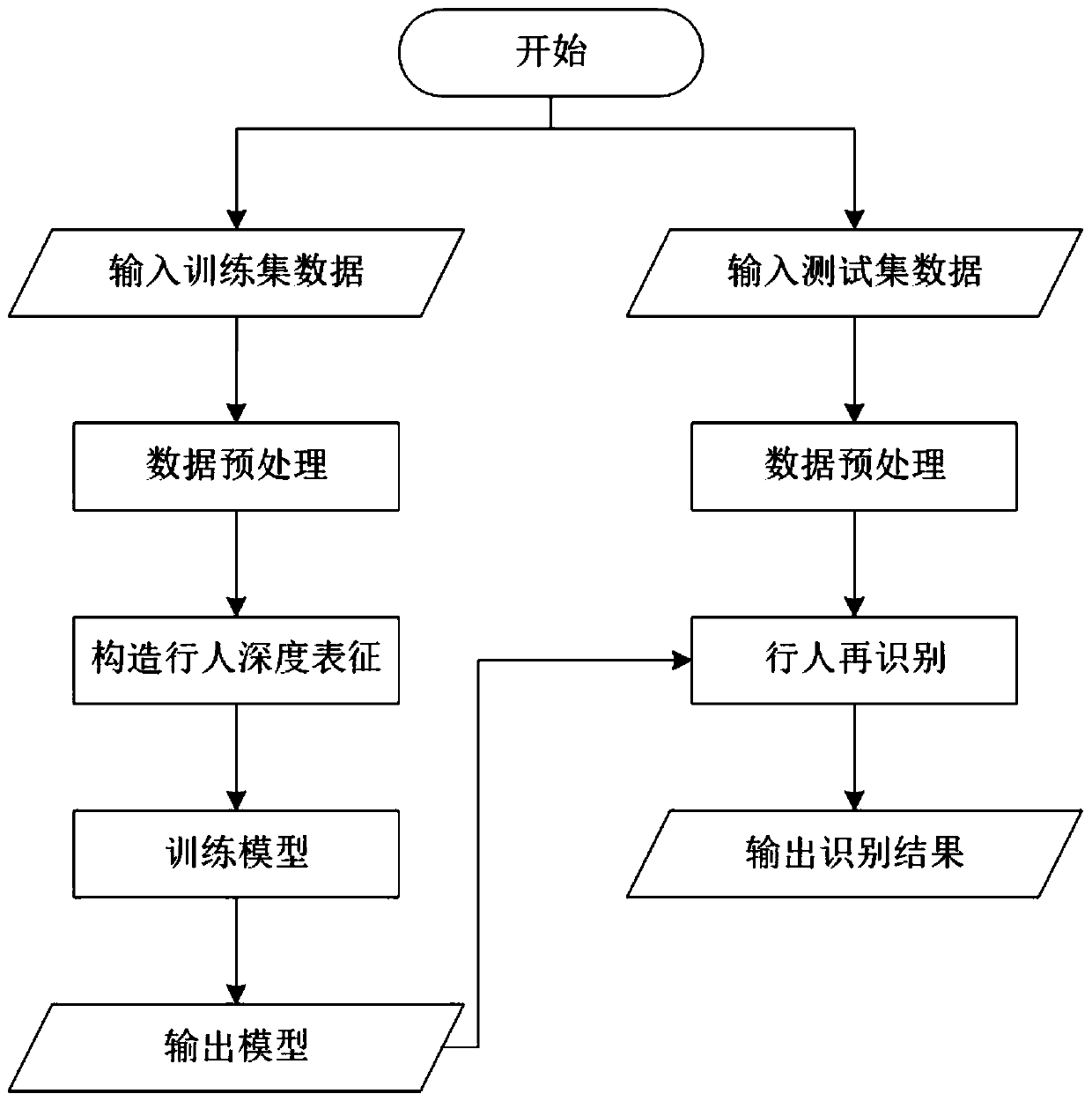
[0079] Such as figure 1 As shown, it is a schematic workflow diagram of a pedestrian re-identification method for solving component misalignment provided in the embodiment of the present invention. This embodiment discloses a pedestrian re-identification method for solving component misalignment, including:

[0080]Step 1. ...