Wheel anti-skid control method and system based on energy distribution model

A technology of energy distribution and wheels, applied in the direction of control drive, control device, electric energy management, etc., can solve the problems of sensitivity to changes in resistance and body weight, practicability of control methods, and dependence on vehicle parameters, etc., to achieve high adaptability and good anti-skid Control Effects, Effects of Smooth Control Effects

CN110893774AActive Publication Date: 2020-03-20NANJING UNIV OF SCI & TECH
6 Cites 1 Cited by

Patent Information

Authority / Receiving Office
CN · China
Patent Type
Applications(China)
Current Assignee / Owner
Publication Date
2020-03-20

Smart Images

  • Figure 1
    Figure 1
  • Figure 2
    Figure 2
  • Figure 3
    Figure 3
Patent Text Reader

Abstract

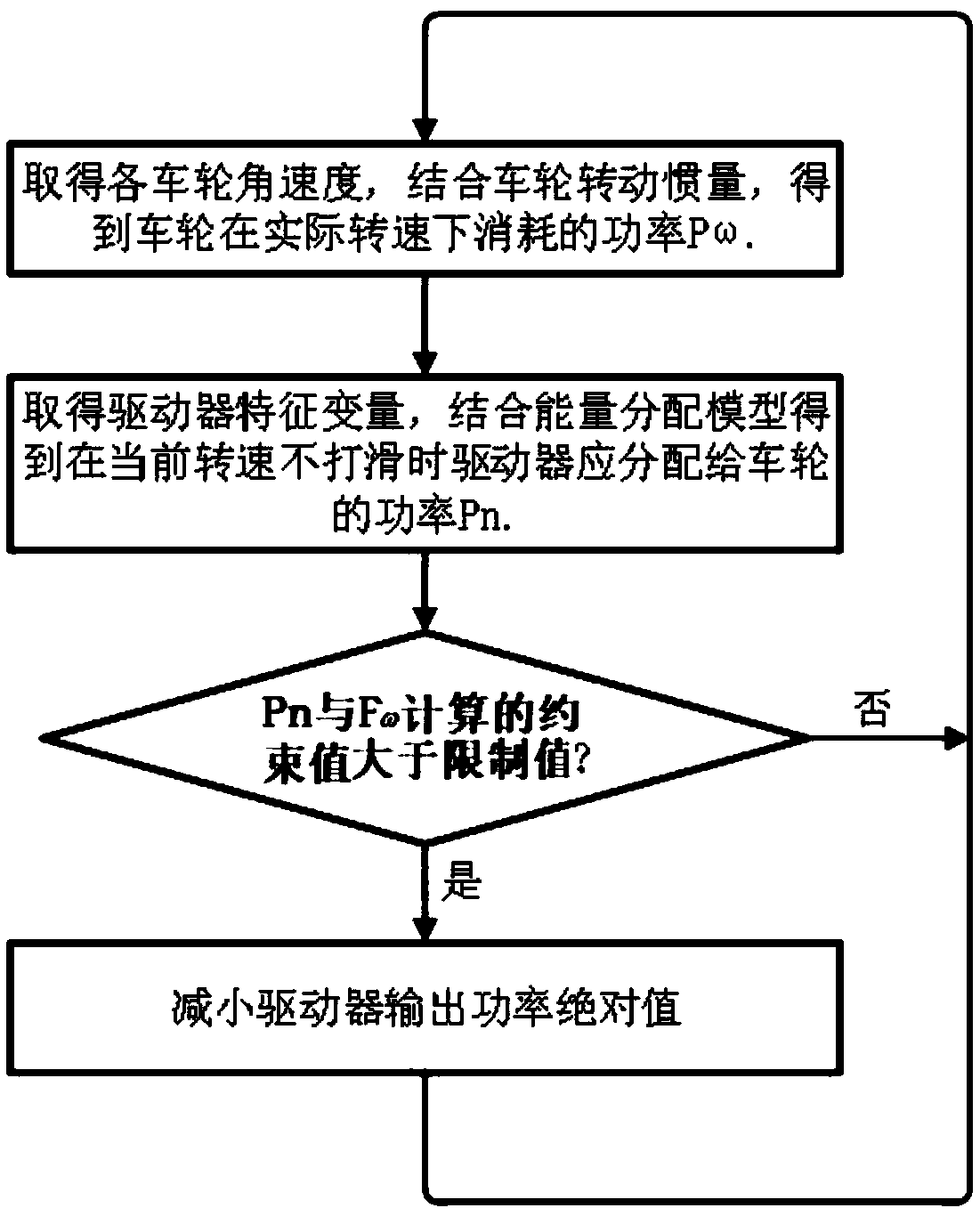
The invention provides a wheel anti-skid control method based on an energy distribution model. The wheel anti-skid control method comprises the steps of obtaining the mechanical power consumed by wheels at the actual rotating speed according to the angular speed and the rotational inertia of the wheels of a vehicle; acquiring the power allocated to the wheel by the motor when the wheel does not slip at the current rotating speed; obtaining constraint power by comparing the mechanical power consumed at the actual rotating speed with the power which should be distributed to the wheels by the motor when the wheels do not slip; constraining the power control adjustment upper-layer power output request value to generate a power instruction value; and obtaining torque output for controlling thedriving wheel according to the power instruction value.
Need to check novelty before this filing date? Find Prior Art

Description

technical field

[0001] The invention relates to a vehicle driving / braking control technology, in particular to a wheel anti-slip control method based on an energy distribution model. Background technique

[0002] Vehicle braking systems with electronic anti-skid control functions belong to the prior art. Known vehicle braking systems can brake the individual wheels of the vehicle independently of the driver's wishes, such as anti-lock brakes to prevent wheel locking System (ABS), Traction Distribution Control System (TCS) for rationally distributing traction, Formal device for stabilizing the vehicle (Electronic Stability System (ESP) for the vehicle), Elimination of slippage at the driving wheels (ASR) etc. etc. These are all bottom-level wheel controls, which need to be performed based on the wheel slip ratio (Slip Ratio). However, the calculation of slip ratio often requires the use of information from other wheels. When all the wheels are in working state (driving / brak...

Examples

Embodiment Construction

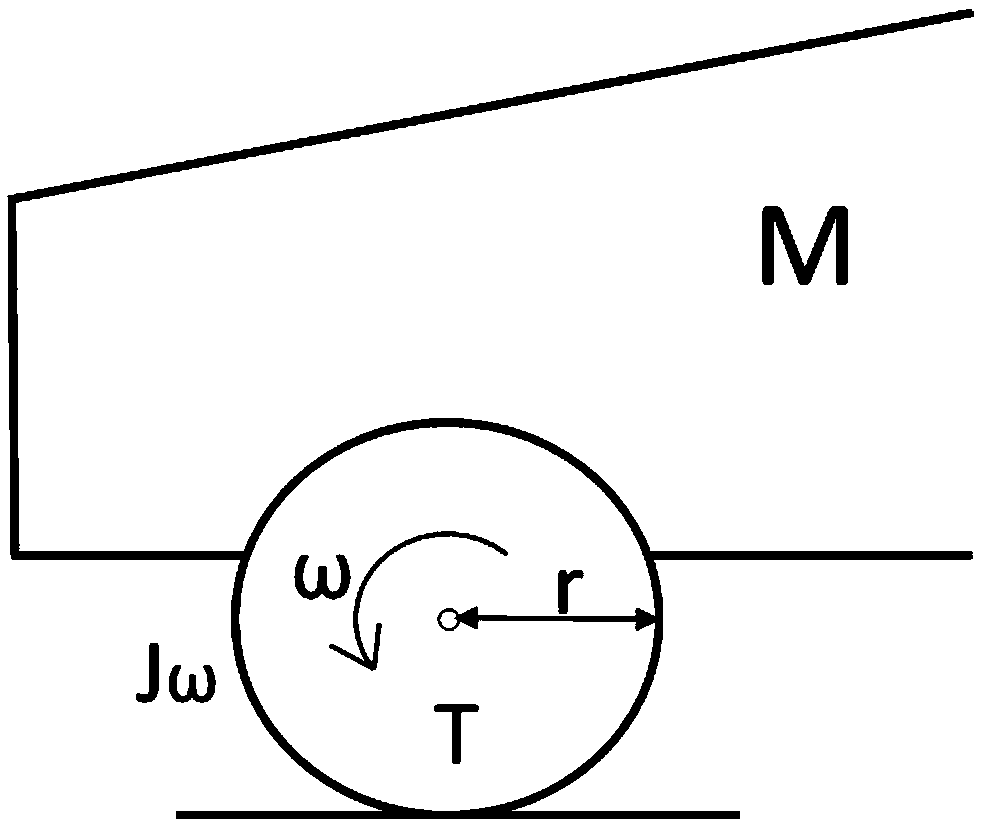
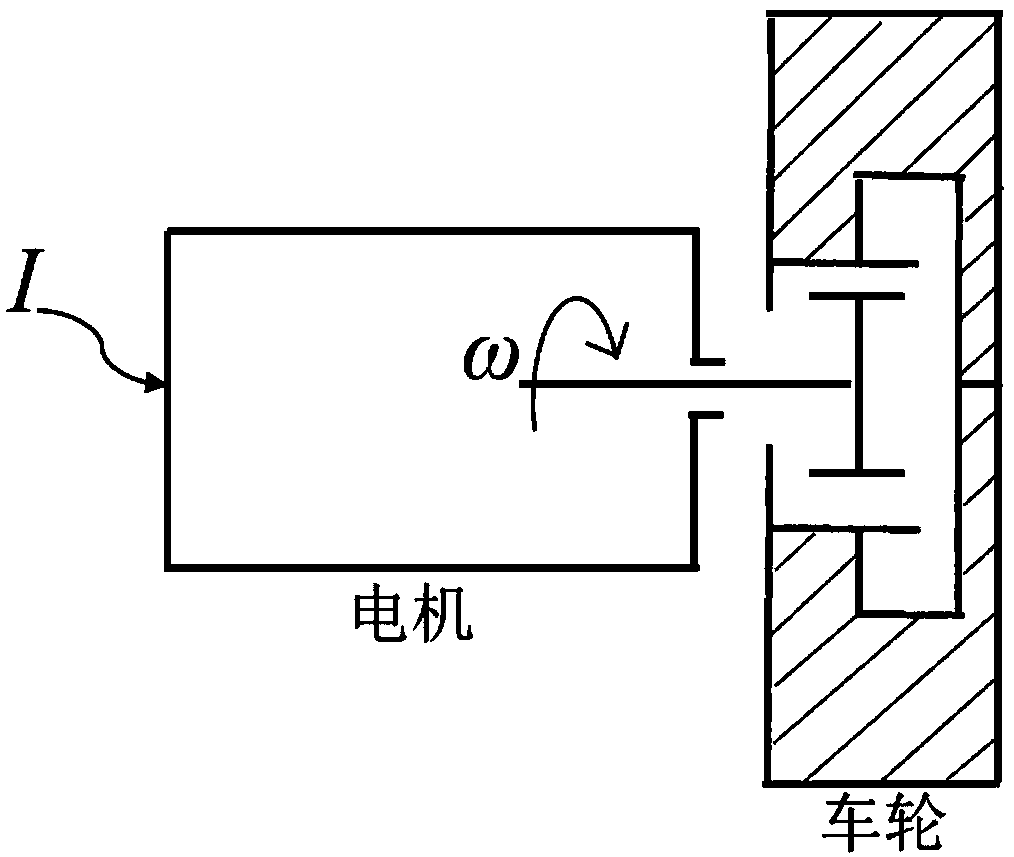
[0015] A wheel anti-slip control method based on the motor energy distribution model, which obtains the angular velocity ω of each wheel of the vehicle, and combines the moment of inertia J of the wheel ω , to get the mechanical power P consumed by the wheel at the actual wheel speed ω ; Obtain the motor current value I, and combine the motor energy distribution model to obtain the power P that the motor should distribute to the wheels when the current speed does not slip n ;By comparing the mechanical power P consumed by the wheels at the actual vehicle speed ω and the power P that should be distributed to the wheels when there is no slip at the actual wheel speed n , to adjust the motor output power size P d , and then control the torque output T of the driving wheel d , to achieve anti-skid wheels.

[0016] Based on this control strategy, use the motor current value that is relatively easy to measure to calculate the power that the motor should provide to the wheel when...