Check patentability & draft patents in minutes with Patsnap Eureka AI!

Large-scale MIMO downlink user scheduling method based on deep learning

A user scheduling and deep learning technology, applied in the field of communication, can solve problems such as high computing delay and a large amount of computing resources

Active Publication Date: 2020-04-14
SOUTHEAST UNIV
View PDF5 Cites 5 Cited by
  • Summary
  • Abstract
  • Description
  • Claims
  • Application Information

AI Technical Summary

Problems solved by technology

[0003] In addition, the maximum approximation and rate scheduling method based on statistical CSI is an iterative exhaustive search algorithm. With the increase of the number of users in the system, its computational complexity increases exponentially. Traditional calculation methods require a large number of computing resources and high computational latency

Method used

the structure of the environmentally friendly knitted fabric provided by the present invention; figure 2 Flow chart of the yarn wrapping machine for environmentally friendly knitted fabrics and storage devices; image 3 Is the parameter map of the yarn covering machine
View more

Image

Smart Image Click on the blue labels to locate them in the text.
Viewing Examples
Smart Image
  • Large-scale MIMO downlink user scheduling method based on deep learning
  • Large-scale MIMO downlink user scheduling method based on deep learning
  • Large-scale MIMO downlink user scheduling method based on deep learning

Examples

Experimental program
Comparison scheme
Effect test

Embodiment Construction

[0041] Below in conjunction with accompanying drawing and specific embodiment the present invention is described in further detail:

[0042] The present invention designs a large-scale MIMO downlink user scheduling method based on deep learning, which solves the problem of high calculation delay in traditional user scheduling methods, and the proposed deep learning network model can be predicted online according to the statistical channel information of each user in the system Scheduling scheme to obtain higher system throughput with lower calculation delay.

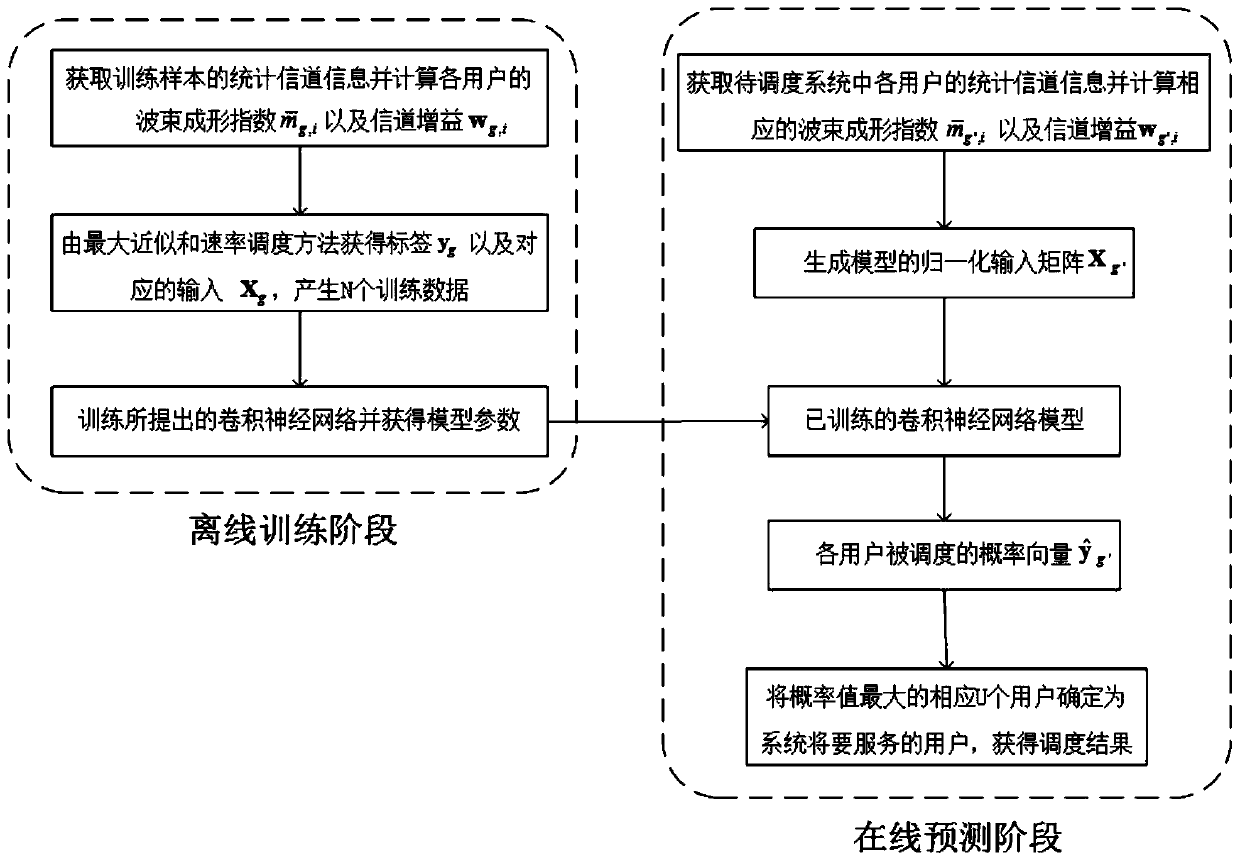
[0043] Such as figure 1 As shown, the present invention discloses a large-scale MIMO downlink user scheduling method based on deep learning, which specifically includes the following steps:

[0044] Step 1. The base station configures a uniform linear antenna array, which includes M horizontal antenna elements, and adjacent antennas

[0045] The distance between the array elements is the half-wavelength of the carrier,...

the structure of the environmentally friendly knitted fabric provided by the present invention; figure 2 Flow chart of the yarn wrapping machine for environmentally friendly knitted fabrics and storage devices; image 3 Is the parameter map of the yarn covering machine
Login to View More

PUM

No PUM Login to View More

Abstract

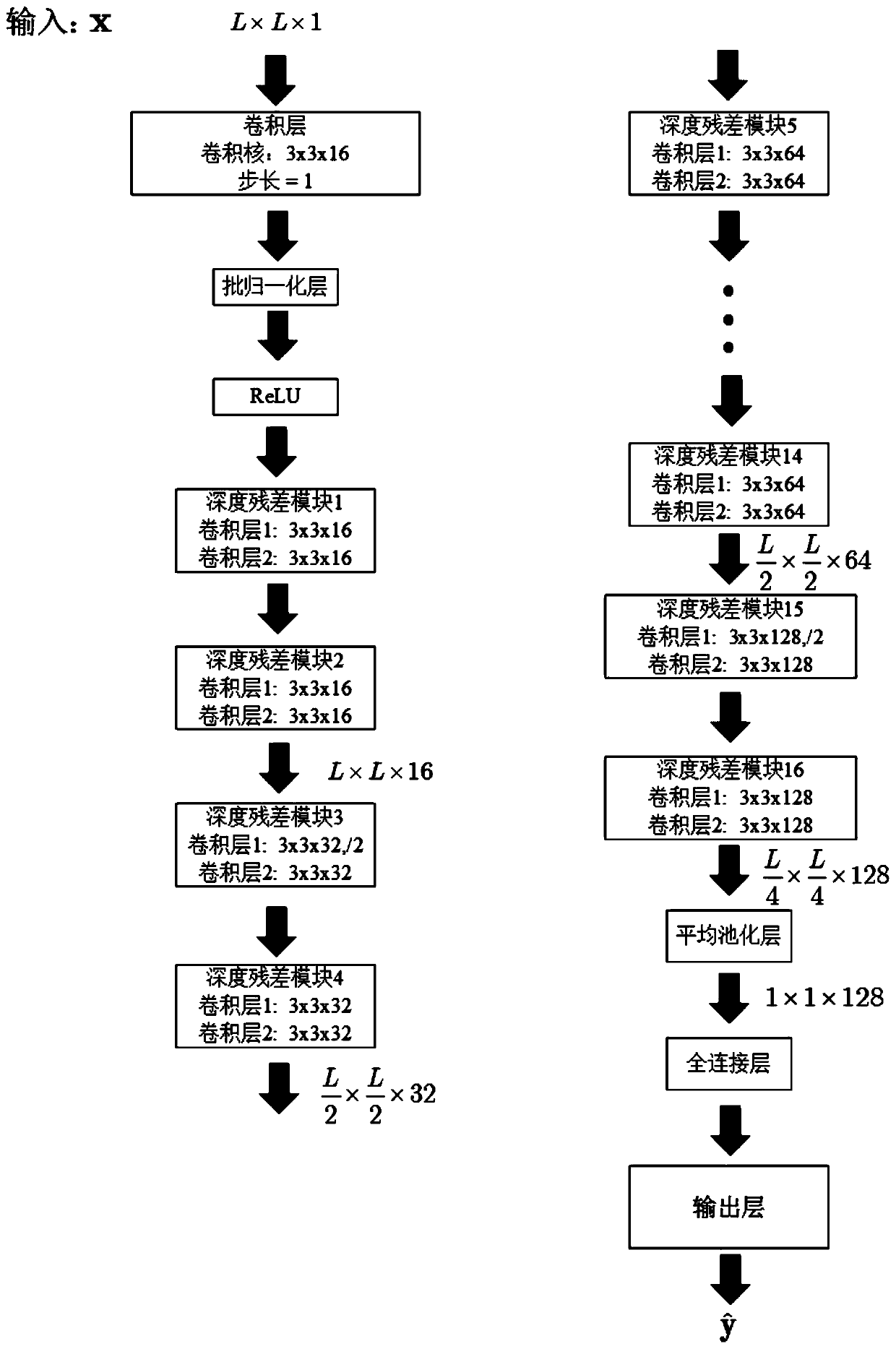
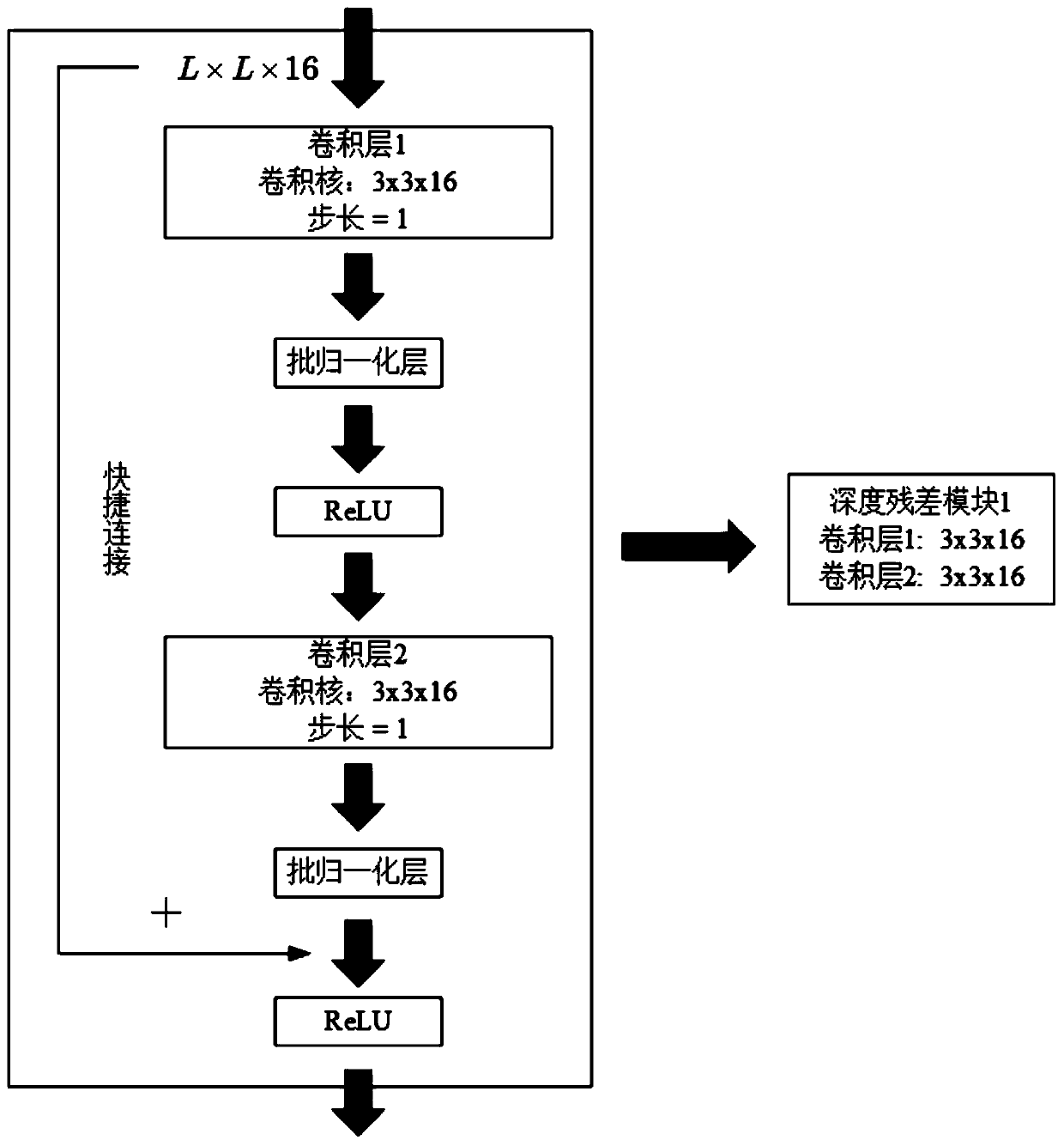
The invention discloses a large-scale MIMO downlink user scheduling method based on deep learning, and the method comprises the steps: obtaining group users, wherein each group comprises the statistical channel information of a plurality of users, and calculating the beam forming index and channel gain of each user; carrying out user scheduling on each group of users by adopting a maximum approximation sum rate method to generate training data; constructing a convolutional neural network model of a prediction system user scheduling scheme and performing offline training, so that each user scheduling probability vector predicted by the model is close to a label, so as to obtain the parameters of the model; calculating a beam forming index and a channel gain of each user by utilizing statistical channel information of all the users in a to-be-scheduled system, and generating a normalized input matrix of the model; predicting the probability that each user is scheduled on line by the trained model, determining the corresponding number of users with the maximum probability value as the users to be served by the system, and obtaining a scheduling result.

Description

technical field [0001] The present invention relates to the field of communication technology, in particular to a massive MIMO downlink user scheduling method based on deep learning. Background technique [0002] With the vigorous development of the mobile Internet and the rapid popularization of smart terminals, the amount of wireless communication data has grown exponentially, and people have put forward higher requirements for transmission quality and system capacity for wireless communication systems. Massive multiple-input multiple-output (MIMO) transmission technology is one of the key technologies in 5G communication systems. This technology replaces multi-antenna arrays with large-scale antenna arrays to obtain higher spectral efficiency and transmission reliability. However, as the number of antennas increases, it is very difficult for the base station to obtain complete channel state information in a timely manner. In recent years, researchers have carried out ef...

Claims

the structure of the environmentally friendly knitted fabric provided by the present invention; figure 2 Flow chart of the yarn wrapping machine for environmentally friendly knitted fabrics and storage devices; image 3 Is the parameter map of the yarn covering machine
Login to View More

Application Information

Patent Timeline
no application Login to View More
Patent Type & Authority Applications(China)
IPC IPC(8): H04B7/06H04B7/0413G06N3/04G06N3/08
CPCH04B7/0617H04B7/0413G06N3/08G06N3/045
Inventor 李潇余肖祥金石
Owner SOUTHEAST UNIV
Features
  • R&D
  • Intellectual Property
  • Life Sciences
  • Materials
  • Tech Scout
Why Patsnap Eureka
  • Unparalleled Data Quality
  • Higher Quality Content
  • 60% Fewer Hallucinations
Social media
Patsnap Eureka Blog
Learn More