

Rate smoothing to enhance atrial synchronous pacing in a ventricular pacemaker
A pacemaker, ventricular technology, applied in the direction of cardiac stimulators, applications, sensors, etc.
- Summary
- Abstract
- Description
- Claims
- Application Information
AI Technical Summary
Problems solved by technology
Method used
Image


Examples
Embodiment Construction
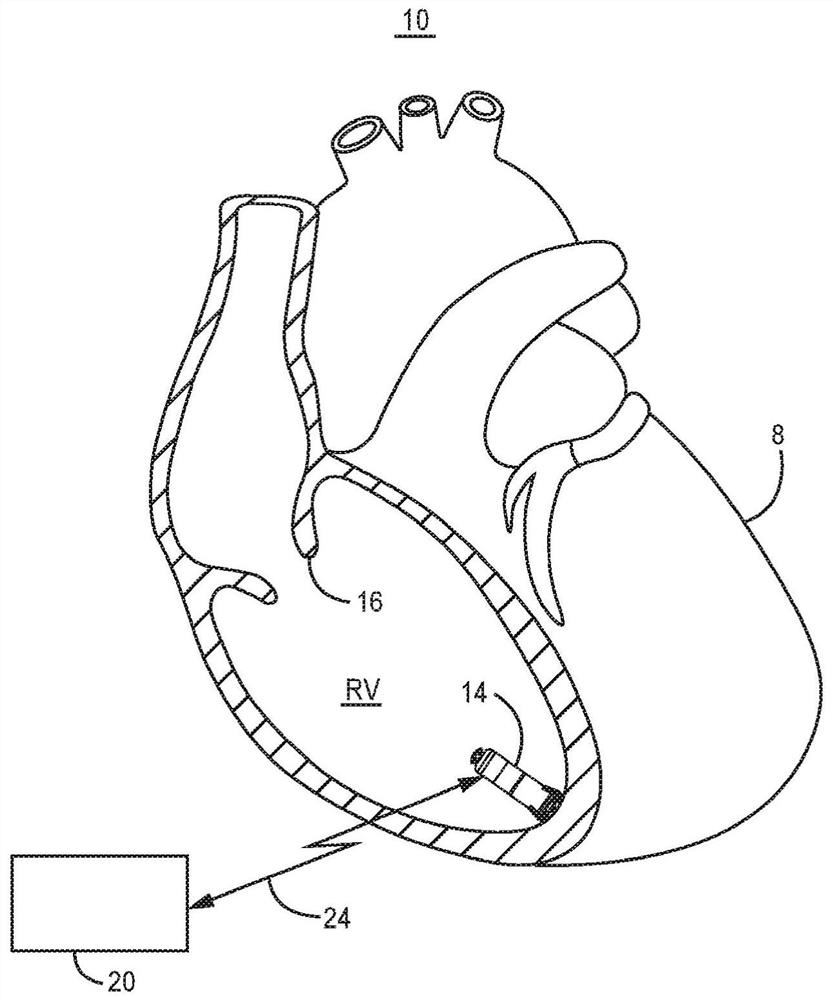
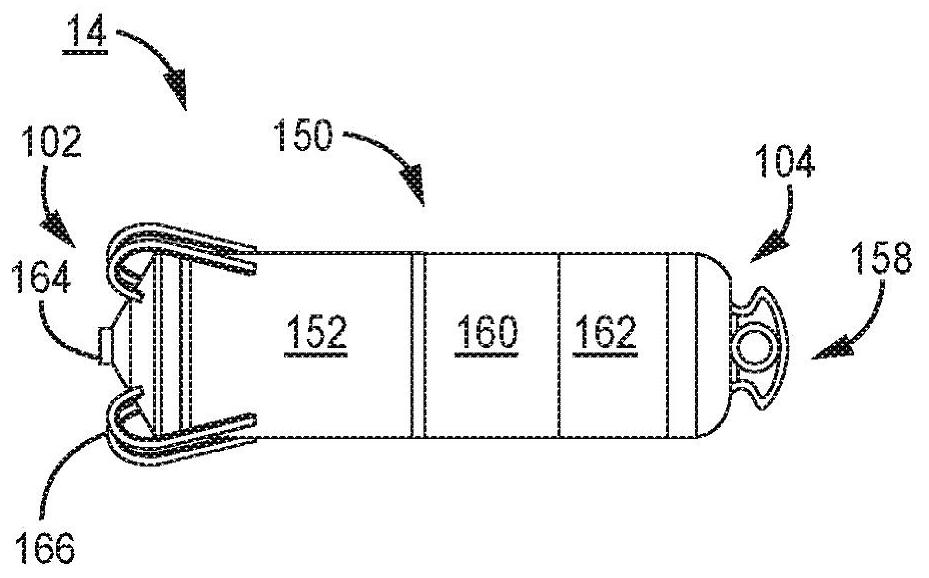
[0021] In general, this disclosure describes techniques for controlling ventricular pacing, generally referred to as "rate smoothing," for avoiding sudden changes in ventricular rate and promoting atrial-synchronous ventricular pacing. In the illustrative examples presented herein, an intracardiac ventricular pacemaker is configured to sense atrial systolic events for use in synchronizing ventricular pacing pulses with atrial rate. As described below, atrial systolic events can be sensed from signals generated by the motion sensor, including atrial systolic event signals corresponding to phases of mechanical atrial contraction and active ventricular filling, sometimes referred to as "atrial expelling". In other examples, atrial systolic event sensing may be performed using other techniques, such as sensing an atrial systolic event from another cardiac mechanical signal (e.g., pressure signal, acoustic signal, impedance signal, etc.) Polarized P waves of the heart's electrical ...
PUM
 Login to View More
 Abstract
Description
Claims
Application Information
 Login to View More