
Video coding method based on perception noise channel model
A video coding and noise channel technology, applied in digital video signal modification, image communication, electrical components, etc., can solve problems such as ignorance and insufficient exploration of perceptual redundancy
- Summary
- Abstract
- Description
- Claims
- Application Information
AI Technical Summary
Problems solved by technology
Method used
Image

Examples
Embodiment Construction
[0068] The present invention will be further explained in detail with reference to the accompanying drawings.
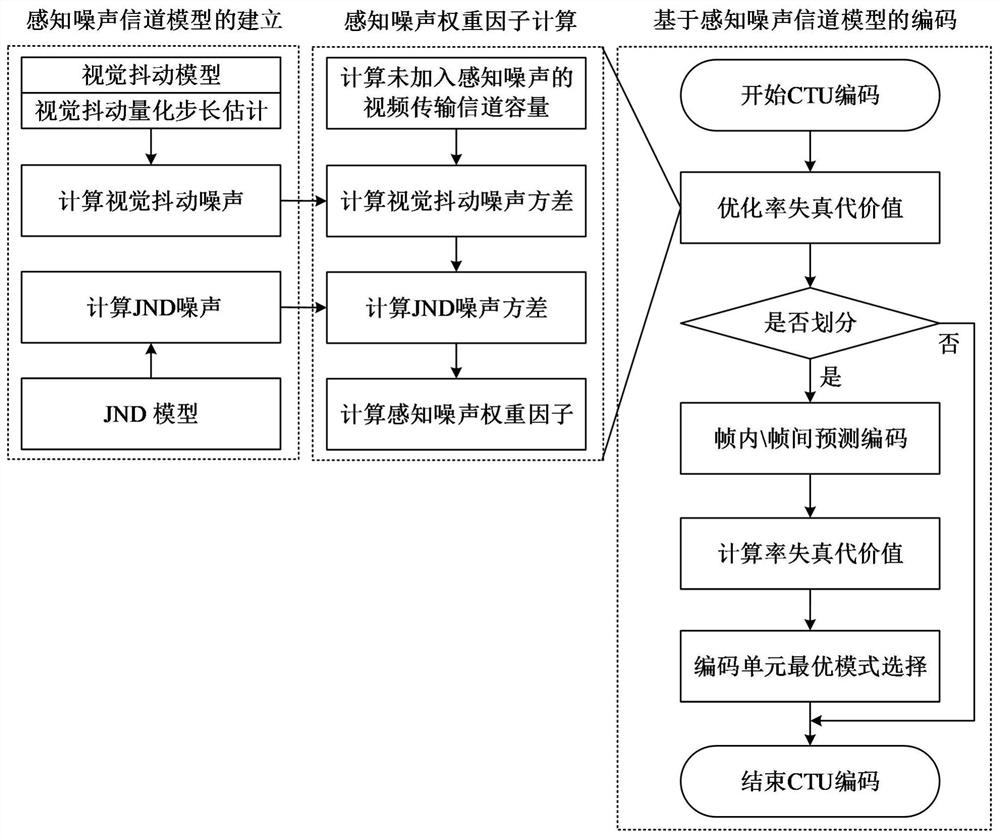
[0069] such as Figure 1 As shown, a video perceptual coding method based on a perceptual noise channel model includes:
[0070] S1, establishing a perceptual noise channel model considering visual jitter noise and just perceptible distortion noise;
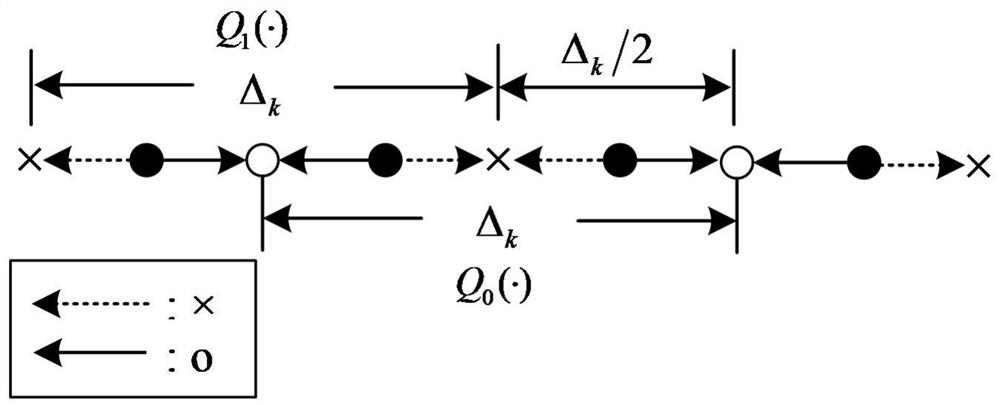
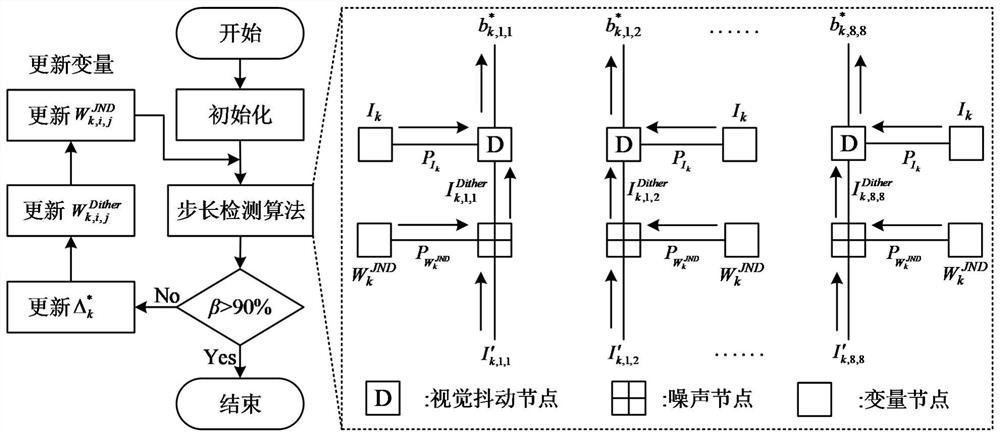
[0071] S2, dynamically estimating the quantization step length of visual jitter, and calculating visual jitter noise and JND noise;
[0072] S3, calculating the perceived noise weight factor;
[0073] S4, optimizing the rate-distortion cost function according to the perceived noise weight factor;
[0074] S5, coding tree unit coding based on the optimized rate-distortion cost function.
[0075] The invention first designs a perceptual noise channel model, then designs a perceptual control factor based on the perceptual noise channel model to control the rate-distortion optimization process of coding, and improves the compres...
PUM
 Login to View More
 Abstract
Description
Claims
Application Information
 Login to View More