
Application of benzodifuranone compound in treatment of intractable epilepsy
A technology of benzodifuranone and refractory epilepsy, which is applied in the field of medicine, can solve problems such as limitations and high costs, and achieve an obvious synergistic effect
- Summary
- Abstract
- Description
- Claims
- Application Information
AI Technical Summary
Problems solved by technology
Method used
Image

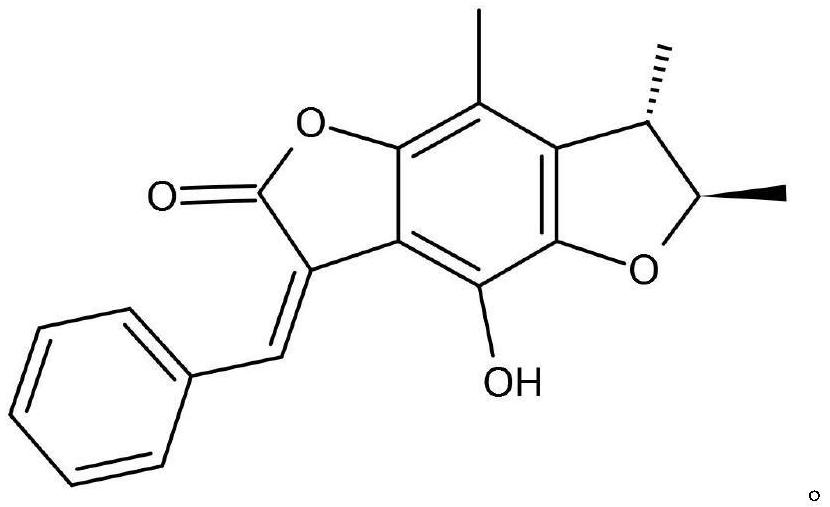
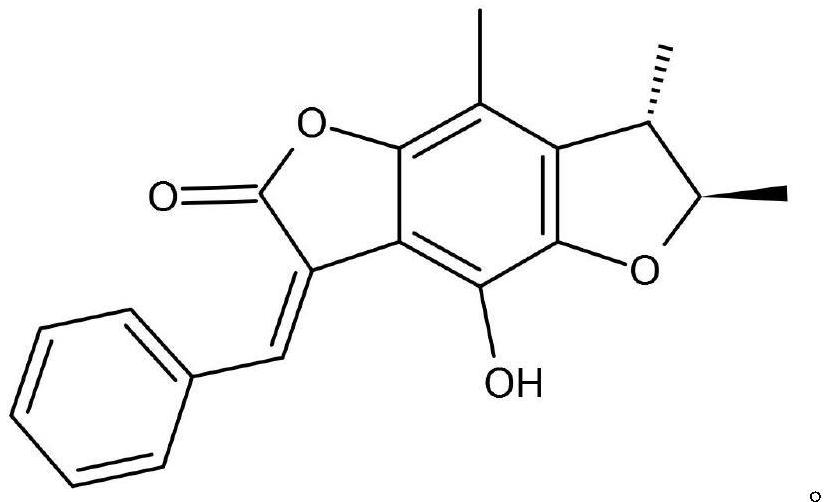
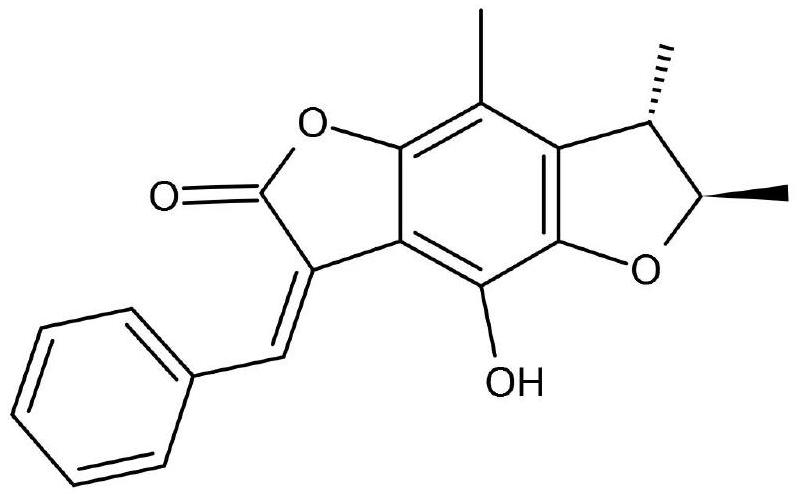
Examples
Embodiment 1
[0015] Example 1 Effect test of Aspeterreurone A on cell model of intractable epilepsy
[0016] The hippocampal neurons cultured to the 7th day were randomly divided into normal control group (group C), model group (group M), model+0.1μMAtrA group (AtrA1 group), model+1μMAtrA group (AtrA2 group), model+10μMAtrA group group (AtrA3 group), model+100 μM AtrA group (AtrA4 group). In the normal control group, the medium was changed to normal extracellular fluid for 3 hours and then returned to 2 mL of maintenance medium culture. In the model group, the medium was changed to magnesium-free extracellular fluid after 3 hours of culture and then returned to 2 mL of maintenance medium culture. Magnesium extracellular fluid was cultured for 3 hours and then restored to maintenance medium containing final concentrations of 0.1 μM, 1 μM, 10 μM, and 100 μM Speterreurone A, and the six-well plate was returned to the incubator for 24 hours of further culture.
[0017] Maintenance medium comp...
Embodiment 2
[0022] Example 2: Study on the curative effect of Aspeterreurone A on lithium-pilocarpine refractory epilepsy rats
[0023]Pilocarpine is a muscarinic receptor agonist, which can activate cholinergic neurons and disrupt the balance of glutamate and γ-aminobutyric acid. Lithium chloride can enhance the function of pilocarpine. Temporal lobe epilepsy is the most common treatment-resistant epilepsy, and the lithium-pilocarpine model is often used to study temporal lobe epilepsy. The pathological features of the lithium-pilocarpine model include inflammation, glial cell proliferation, massive loss of neurons, and mossy fiber sprouting, which are similar to the neuropathological features of temporal lobe epilepsy. Therefore, the present invention selects the lithium-pilocarpine rat model for pharmacodynamic experimental research.
[0024] Healthy male SD rats with body weight in the range of 180-220g. After the experiment started, the lithium chloride-pilocarpine hydrochloride r...
PUM
 Login to View More
 Abstract
Description
Claims
Application Information
 Login to View More